





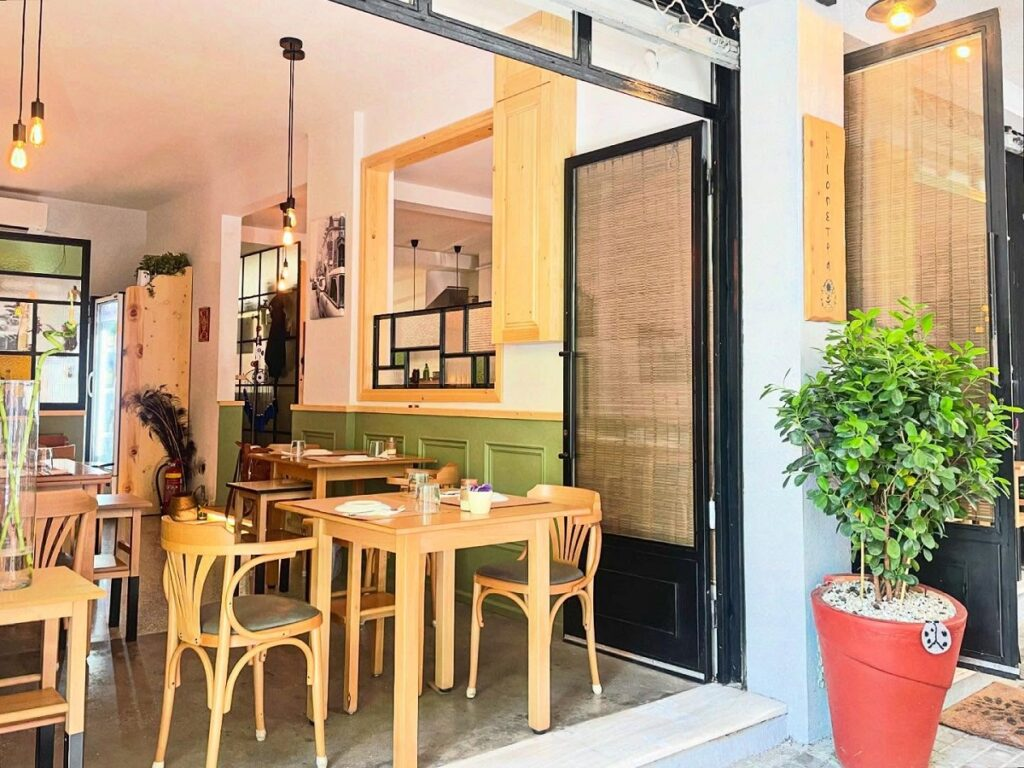
Nestled in the Agios Dimitrios neighborhood, right at the foothills of Ano Poli in Thessaloniki, this small but mighty restaurant has been making waves among locals and visitors alike. With just a handful of tables, a no-frills approach to dining, and a menu that defies labels, Iliopetra has quickly become one of the city’s most talked-about food spots.
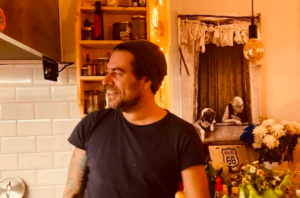
At the heart of it all is chef and owner Giorgos Zannakis, a man who believes in cooking with passion, embracing the unexpected, and letting the ingredients tell their own story. Our conversation starts with a trip down memory lane:
“I started out as a waiter at a restaurant called Ermis, a classic two-story neoclassical spot serving home-cooked meals, pasta, and grilled dishes like rosemary lamb chops with mashed potatoes. That’s where I fell in love with cooking and decided to switch to the kitchen. After culinary school, I worked in various Thessaloniki restaurants, but every summer, I’d escape to the island of Leipsoi. It was during one of those trips that I got a call from Giannis Loukakis, inviting me to join the team at Mourga. I spent two years there, and if I hadn’t opened Iliopetra, I’d probably still be there.”
What’s the Buzz About?
Iliopetra was born in the middle of the pandemic, and despite the odds, it has built a dedicated following. But what exactly is it? A modern taverna? A bistro? A new wave Greek eatery? Zannakis waves off the need for labels:
“First and foremost, Iliopetra is a restaurant. I avoid all the categories people try to put us into. I don’t know if people talk about us or not—that’s never been my concern. My only goal is to cook delicious food every day and make people curious enough to visit us.”
Zannakis describes his menu as “a little all over the place,” reflecting his own cravings when he eats out. Home-style dishes, pies, and raw preparations all share space on a constantly evolving list, without lengthy descriptions or overcomplicated plating. The unifying theme? Surprise.
“I want every dish to have an element of the unexpected. That’s what keeps people coming back. And, of course, it helps that we’re a tight-knit team, like a big family. My wife Vassia, our friend Vasso, and the entire kitchen crew—we’ve all known each other for years.”
As we chat, one of the restaurant’s newest creations arrives at the table: a traditional cod pie with caramelized onions and leeks, wrapped in hand-rolled phyllo and served with a Florina pepper paste. Simple, rustic, yet packed with layers of flavor.
A Culinary Philosophy Rooted in Authenticity
For Zannakis, opening Iliopetra was about making his mark on the Greek food scene in his own way:
“I always wanted to do my own thing, away from strict definitions. Take our dolma-sushi and goat dumplings, for example—both dishes reflect my love for reinventing forgotten ingredients. I love working with goat, giving it a fresh perspective. But I also adore pies, and I want to keep making more of them. Our taramasalata with crab meat and our potato salad with pancetta and mackerel have also been big hits.”
No Trends, Just Good Food
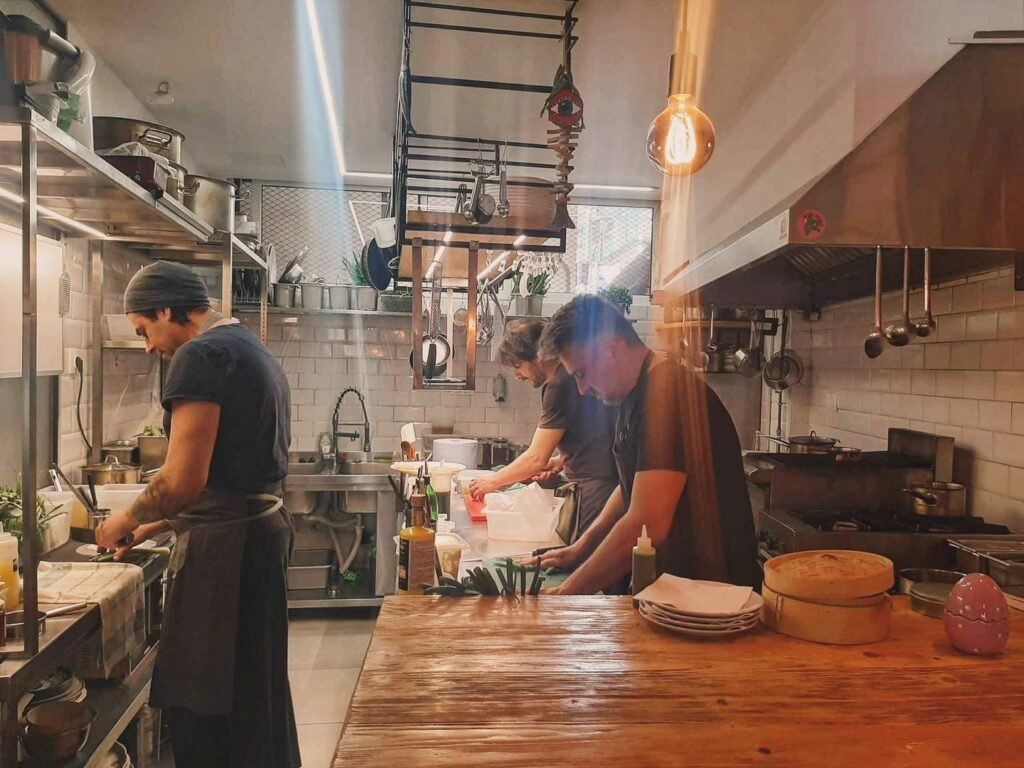
Unlike many chefs chasing the next big culinary trend, Zannakis is uninterested in fitting into a specific mold.
“I don’t follow any particular restaurant ‘formula.’ My cooking is global yet rooted in respect for the ingredients. I work with only three main suppliers—a fisherman, a butcher, and a greengrocer—all of whom have been my friends for years. If an ingredient isn’t up to par, I simply won’t serve that dish.”
At this point, one of Iliopetra’s signature plates lands on the table: vinegared rice, wasabi, vegetables, cod, and grape leaves—a Greek-Japanese fusion known as sushi-dolma.
Who Comes to Iliopetra?
“We get all kinds of guests—twenty-something friend groups, older couples, and everyone in between. Most people come in with high expectations, having heard something about us. Some leave thrilled, others a bit let down—usually not by the food, but by the location or the space itself. It’s funny because in other countries, some of the best restaurants are in remote villages or industrial areas. Here, people sometimes expect something more polished. Personally, I don’t mind. I’d rather see fewer dishes on the table and know they’re truly appreciated than have an excess of half-eaten plates.”
Are We in the Golden Age of the Modern Taverna?
Zannakis believes in a return to traditional Greek dining but without overcomplicating things.
“To me, a true taverna is about nostalgia. You go there for specific, comforting dishes—giant beans, soutzoukakia with rice, dolmades, pork stew. No fancy steak cuts, no extensive wine lists, no expensive glassware. Just good retsina served in simple glasses and fair prices. I don’t really relate to terms like ‘neo-taverna’ or ‘gastro-taverna.’”
What Defines a Great Dish?
“Flawless execution, strong emotion, and deep love for cooking. You have to feel the ingredients, touch them, observe their changes daily. No ingredient is ever truly the same.”
As we wrap up, Zannakis shares a final thought:
“Washing dishes is actually one of my favorite moments in the kitchen. There’s something incredibly satisfying about seeing empty plates come back to me.”
And just like that, our conversation ends—leaving behind the taste of Iliopetra’s unexpected, delicious, and ever-evolving journey.
Ask me anything
Explore related questions




