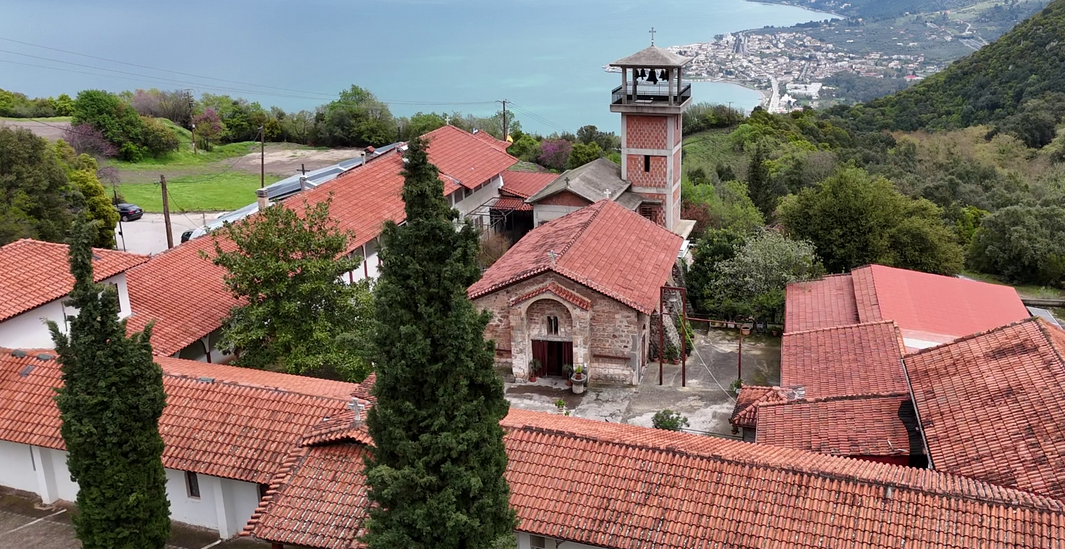
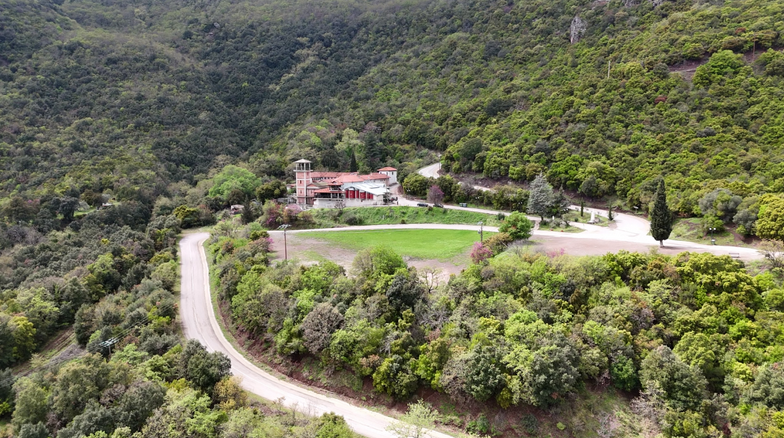
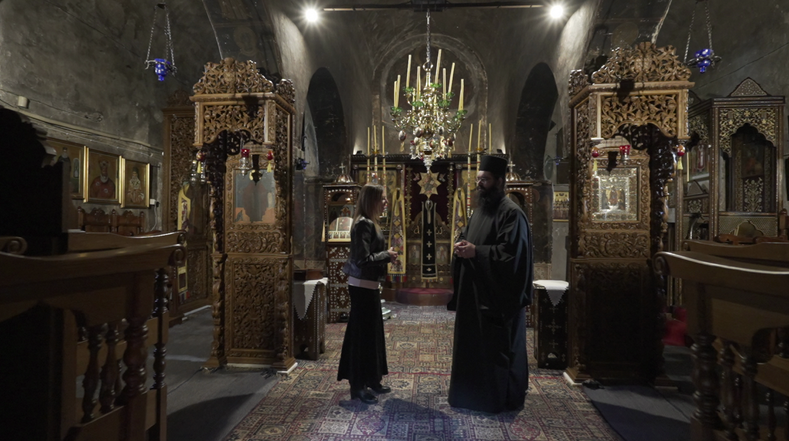
On the slopes of Mount Knimida, above the spa town of Kamena Vourla, in a stunning natural setting with panoramic views, the Holy Monastery of the Transfiguration of the Saviour has stood for a thousand years.
This monastery is the focus of the latest installment in the protothema.gr documentary series, which captures the deeply spiritual atmosphere that pervades the Holy Week in the monasteries of our country.
The History of the Holy Monastery of the Transfiguration of the Saviour
The founder of the Monastery is believed to be Saint Nikitas, who initially lived as a hermit in a cave on Mount Knimida. Gradually, other monks began to join him, but the space was no longer sufficient. They moved to a lower altitude, at 310 meters, where the ruins of a 7th-century temple were located—according to oral tradition, this temple had been dedicated to the goddess Artemis. Using the ruins of the older temple, they proceeded to build a new church.
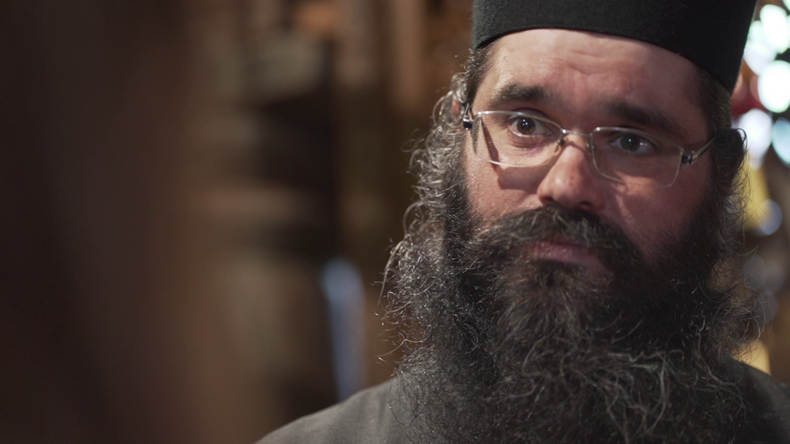
Over the centuries, the number of monks increased—eventually exceeding one hundred—and numerous miracles were reported. “The monastery was a place of sanctification, a place where many miracles occurred. That is why it came to be known as Agia. This was also the reason why many people flocked to the Monastery, and why the Turks grew envious of it,” recounts Father Damaskinos, hieromonk of the Holy Monastery of the Transfiguration of the Saviour – Agia, to Proto Thema.
Inside the church, there is a crypt that was used during Ottoman rule. From the chanter’s stand, someone could climb up via a rope ladder to the crypt, which led to the roof of the narthex, where the ceiling of the pronaos is hollow. There, the monks would hide children, rebel leaders, and anyone else seeking shelter and refuge. “It operated as a secret school,” notes Father Damaskinos. In fact, where the bell tower now stands, there used to be a watchtower. A monk would sit there and keep watch over the path. When he saw the Turks approaching, he would sound the alarm.
In 1600 AD, the Turks attacked the Monastery with cannon fire, causing significant damage to the church — including the destruction of the dome and part of the roof. However, as Father Damaskinos emphasizes, “Every cloud has a silver lining. Thanks to this, a great miracle occurred: when the Turks destroyed the Monastery and then tried to leave by ship, their vessels ‘turned to marble’ in the sea. They couldn’t move. I can’t explain exactly what ‘turned to marble’ means—perhaps it was a tide, a current, something—I don’t know. But they couldn’t leave. So they returned to the Monastery, repaired the damage, and at the same time issued a firman (imperial decree) which concluded with the phrase that the monastery should never again be disturbed by a Turk.”
Between 1725 and 1757 AD, the current frescoes of the Katholikon (main church) were painted by an anonymous iconographer. Above the entrance, the following inscription is written:
“The divine and all-holy church of the Transfiguration of our Lord Jesus Christ was decorated with frescoes under the episcopacy of the Most Reverend Bishop of Agios Mendenitsa, Lord Grigorios, with the support and at the expense of the Most Pious Abbot Kyros Arsenios, in the year 1757, November 15.”
The Closure of the Monastery and the Destruction That Followed
The Holy Monastery of the Transfiguration of the Saviour ceased operation in 1833, following the decree issued by King Otto concerning the “dissolution of the monasteries.” It remained abandoned for 150 years, was re-established in 1964, and officially restored in 1975—a process that was far from easy, considering the extent of the damage it had suffered over the years.
In particular, the 1894 earthquakes in Atalanti dealt a heavy blow to the Monastery. All of its buildings collapsed—except for the oldest structure: the church itself. The cracks still visible inside the church are a testament to the miracle that occurred at that time.
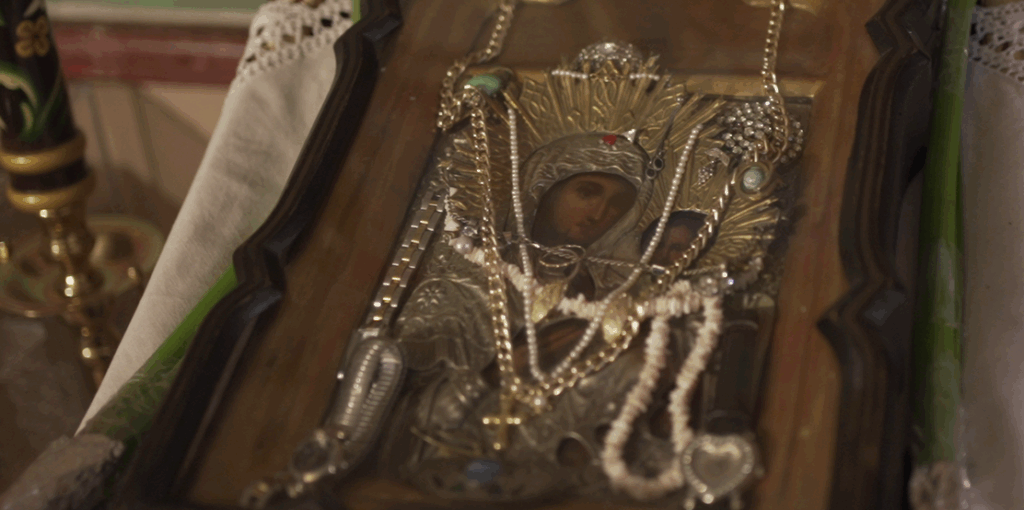
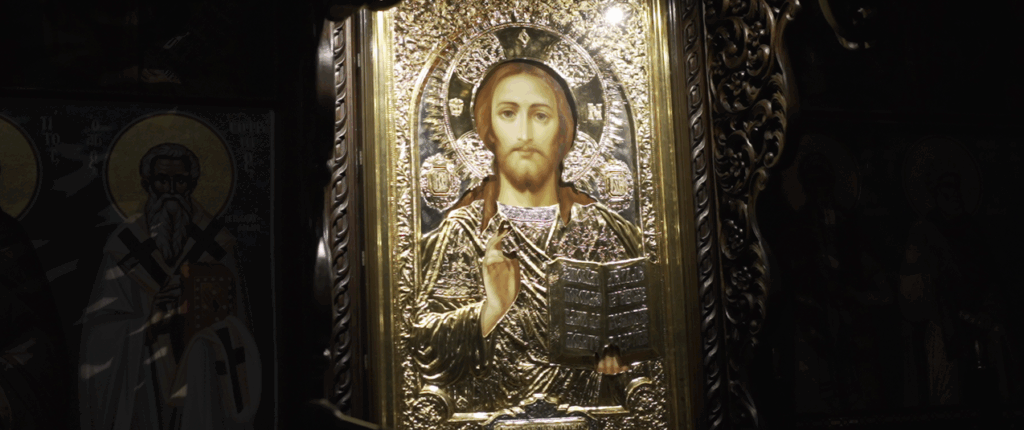
But beyond natural disasters, the Monastery also endured theft. In 1952, someone stripped the Monastery of its relics and even removed the frescoes from both aisles. As Father Damaskinos informed us, “Today, all the relics of the Monastery are on display in museums in Germany. The only relic that was miraculously saved is the icon of the Virgin Mary, which now stands in the shrine. It comes from the old iconostasis of the Monastery. It was completely black—just two dark wooden panels, the image torn in half. We found it being used as shelves in a cupboard. That’s how it was preserved.”
The Monks’ Message
And while the history of the Holy Monastery of the Transfiguration of the Saviour is indeed rich, we departed from the Monastery spiritually and internally enriched through our conversations with Father Damaskinos and Elder Seraphim, the abbot of the Monastery, who has now lived there for over 51 years.
Today is Holy Thursday, and the Divine Passion nears its climax. In the church, we commemorate:
The Washing of the Disciples’ Feet by Jesus
The Last Supper, where He instituted the Sacrament of the Holy Eucharist
The Prayer in the Garden of Gethsemane
And the Betrayal by Judas
The words of the two fathers—are they a source of knowledge? Of wisdom? One thing is certain: they prompt reflection in the heart of every believer, and ultimately bring peace to anyone who listens attentively and allows the wings of their soul to open.
Father Damaskinos – Hieromonk of the Holy Monastery of the Transfiguration of the Saviour – Agia, Kamena Vourla:
“When someone tries to be liked by the world, the logic of the world drives them mad. Only God gives us true peace.”
“The monastery is a spiritual treasure and a place of strength and enlightenment for people. They come here and recharge—whether by attending a service or simply by sharing what’s on their mind. That is the monastery’s greatest offering: to support people spiritually.”
“We are monks, but not solitary.”
“For us Orthodox Christians, a trial—whether an illness, a hardship, or anything else—is a visitation from God, a blessing. God comes and heals things that we, as parents, sometimes cannot correct in our children, or that we ourselves are unwilling to face within. God comes and performs a kind of surgery inside us.”
“Easter is the greatest feast of Christianity. It is the feast of our departed loved ones. Because Christ trampled death and gave life in the tombs. Isn’t that so?”
Elder Seraphim – Abbot of the Holy Monastery of the Transfiguration of the Saviour – Agia, Kamena Vourla:
“God is love,” says the founder of the monastery when one enters. And when people say to one another, ‘I love you,’ they are saying ‘God.’ Have we understood that? Perhaps not?”
“Our religion is alive. It’s not a philosophy or a fan club. It’s a way of life. It’s directness. It’s an experience. We are the body of Christ.”
“When God calls you, you don’t go seeking comfort. You go seeking rest for the soul. And He is the one who, having made the call, also provides the rest.”
“Prayer, with the grace of God—who deems us worthy and accepts it—is offered for all souls: for the devout pilgrims, for our spiritual children, for our spiritual fathers and brothers, and for the entire Holy Church of Christ. For, ‘a brother helped by a brother is like a fortified city.’”
“Christ does not dwell in whether you fasted, or how many prostrations you made, or even how many hours you spent in church. There are people who can be physically in church, yet their mind is elsewhere. And there are others who, because of work, cannot be in church, but their mind and heart are fully present.”
“Easter is the majesty of Orthodoxy—the abolishment of death, the Resurrection of Christ together with our own resurrection. Because as children of Christ, we too shall rise. All are resurrected in the same age.”