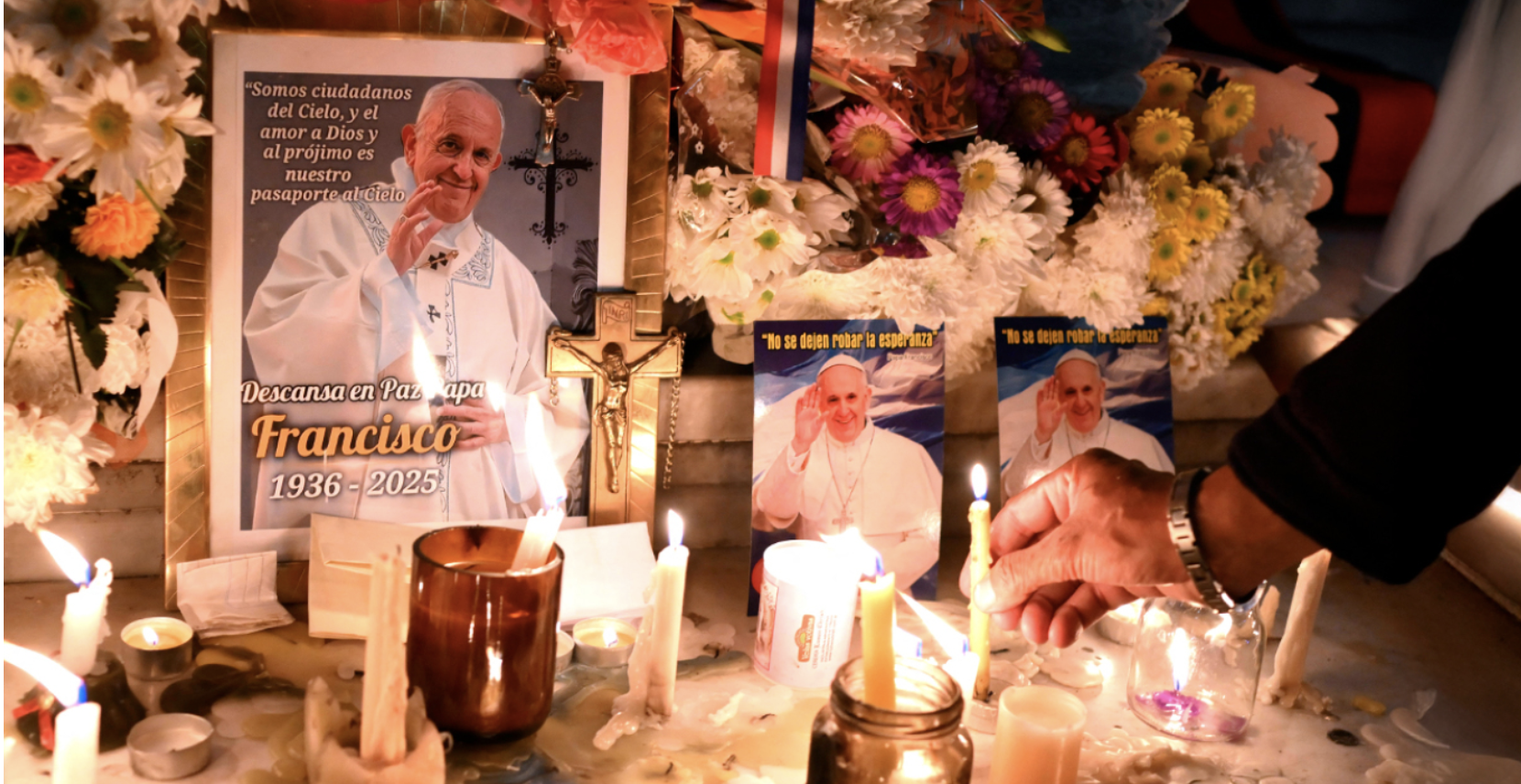
At the Santa Marta guesthouse in the Vatican, the official papal residence, the door has been sealed with a red ribbon and wax. Just hours after the death of Pope Francis from a stroke and heart failure, the Catholic Church is preparing for the funeral of the Pontiff who went down in history as “the Pope of the poor.”
Humble Departure for a Humble Pope
Just as he lived and led the Church humbly, Pope Francis will also be buried humbly, inaugurating a new, simplified ritual that he himself requested. His funeral is expected to take place 4 to 6 days after his passing, in St. Peter’s Square — just as was done with Pope John Paul II, who passed away on April 2, 2005, and whose funeral was held on April 8.
Details of Pope Francis’ funeral remain scarce. What is known is that numerous dignitaries will attend, including former U.S. President Donald Trump and First Lady Melania Trump. “Melania and I will be attending the funeral of Pope Francis in Rome. We look forward to being there,” Trump announced in a message, having previously expressed strong support for Catholics.
High-Profile Attendees and Global Attention
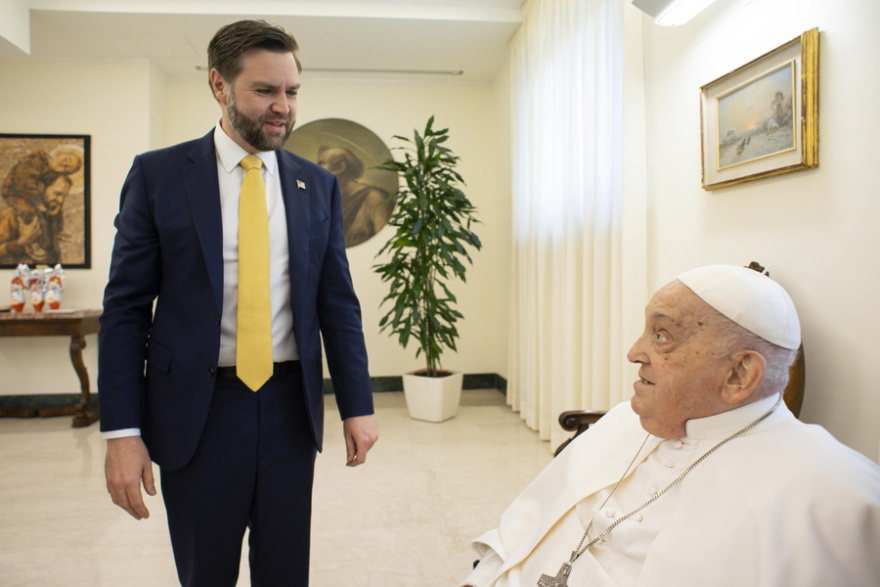
Also expected is U.S. Vice President J.D. Vance, a Catholic who reportedly met with the ailing 88-year-old Pope a day before his death during a Good Friday visit to the Vatican. Among the last to meet Pope Francis was King Charles of the UK and Queen Camilla, though they are unlikely to attend the funeral. The British Royal Family will likely be represented by Prince William, heir to the throne. Numerous royal representatives, heads of state, and religious leaders are expected to attend.
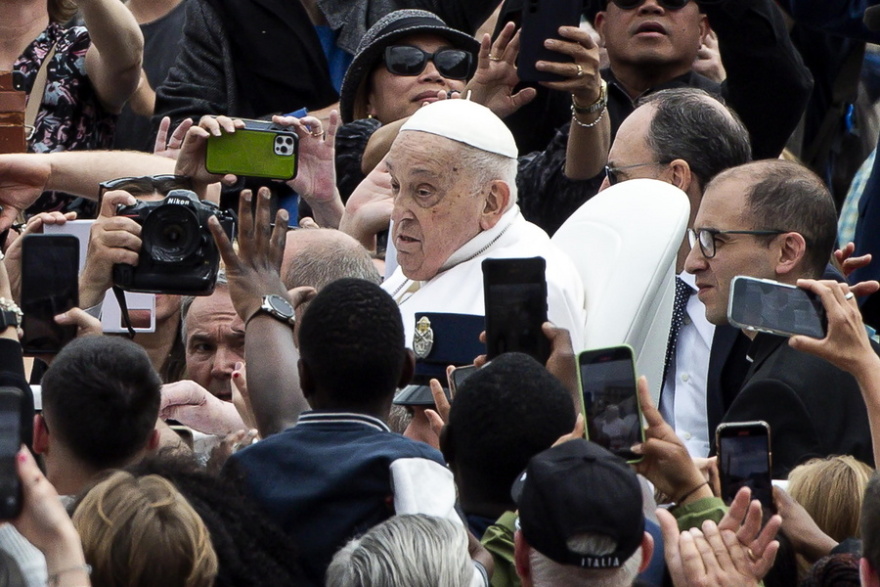
Already, crowds of faithful have begun gathering in St. Peter’s Square — the site of the Pope’s final public appearance just 19 hours before his death, where the crowd chanted “Viva il Papa” (“Long live the Pope”). The funeral will likely take place midweek in the same square.
Before the Funeral: A Final Goodbye
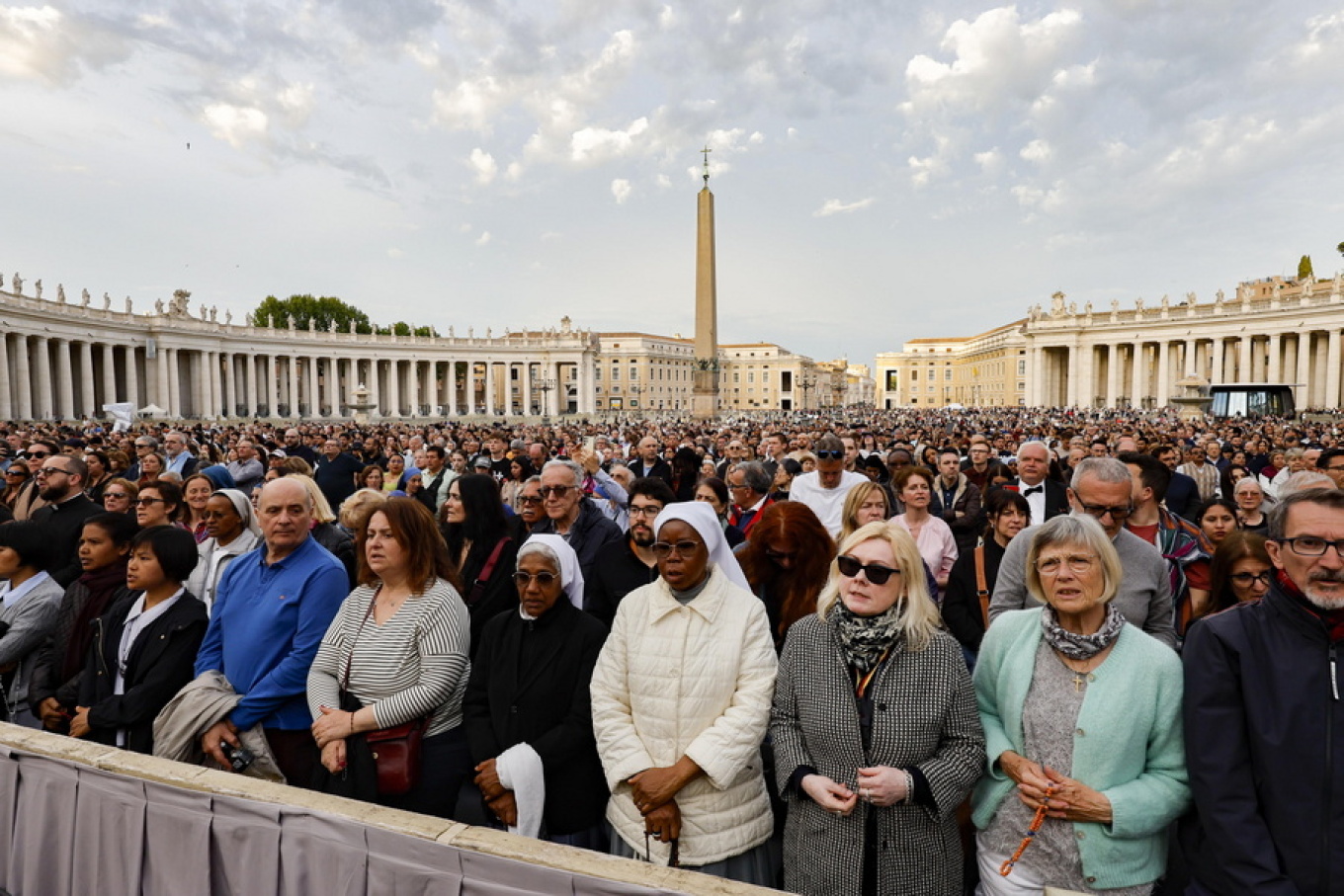
Before the funeral, the Pope’s body will lie in state at St. Peter’s Basilica for three days. Regardless of where a Pope passes away, the funeral always takes place at the Vatican — outdoors in St. Peter’s Square, weather permitting. Alongside the funeral, a massive security operation will be underway. For comparison, approximately 4 million people attended Pope John Paul II’s funeral in 2005, with 8,000 security personnel deployed, including 2,000 uniformed police and 1,400 in plain clothes.
The Swiss Guard, which has protected the Pope and Apostolic Palace since 1506, will kneel for the consecration of the Eucharist — bread and wine that, according to Catholic belief, become the body and blood of Christ. A homily about the Pope’s life will be delivered — although not officially labeled a eulogy.
A Ritual of Simplicity and Faith
The ritual will follow Catholic tradition, though Pope Francis had recently simplified it to highlight the funeral as that of “a shepherd and disciple of Christ” rather than a worldly leader, as explained by Archbishop Diego Ravelli, head of the Vatican’s liturgical ceremonies. Francis had often emphasized the need for simpler, more faith-centered ceremonies.
The service will last around two and a half hours and largely follow the conventional Latin Catholic funeral liturgy, with some papal additions. It will be presided over by the Dean of the College of Cardinals, currently 91-year-old Italian Cardinal Giovanni Battista Re, with his deputy, 81-year-old Argentine Cardinal Leonardo Sandri, assisting. All 252 cardinals are expected to attend.
The Final Resting Place and What Comes Next
After the funeral, the Pope’s body will be taken through the “door of death” to the left of the altar in St. Peter’s Basilica, as a ten-ton funeral bell tolls. The choir will sing psalms, including Psalm 117 (“Open for me the gates of righteousness”) and Psalm 41 (“With the joyful company of the saints, I shall go to the house of God”).
Unlike recent papal tradition, Pope Francis requested to be buried in the Basilica of Saint Mary Major, citing a deep personal connection to the ancient church, which lies outside the Vatican walls. However, the final decision rests with the College of Cardinals. Notably, Pope John Paul II had asked to be buried in his native Poland, a wish the Cardinals did not grant.
A New Pope on the Horizon
Roughly 15 to 20 days after Pope Francis’ death, the Conclave will convene. Derived from the Latin “con clave” (“with keys”), this tradition dates back to Pope Gregory X in 1274, requiring the electors to be locked in until a new pope is chosen. Up to 120 Cardinals under the age of 80 will participate, staying until white smoke rises from one of the Vatican chimneys, signaling habemus papam — “we have a pope.”
Ask me anything
Explore related questions