The new Pope is not expected to make rapid changes, say experts, unlike the US president, Donald Trump, who seized every opportunity to dismantle his predecessor’s policies, the new head of the Roman Catholic Church is unlikely to destroy Pope Francis’s legacy, even if he adopts a conservative stance, experts believe.
“It’s not like in the US government, where the president replaces the entire cabinet,” says clergy member Thomas Reese, a Religion News Service commentator and author of “Inside the Vatican,” a reference book on the organization of the Roman Catholic Church.
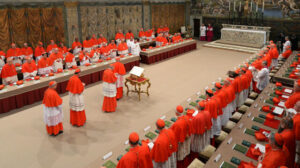
The conclave to elect the new pope will start next week. Although the new pope will assume his duties immediately, significant changes are not expected. Vatican officials are appointed for a five-year term and must resign upon the pope’s death. However, the new pontiff usually renews existing mandates.
Pope John Paul II, elected in 1978, took about seven years to replace all members of the central administration (the Curia) at the Vatican. During the initial period after ascending to the papal throne, the messages the new pope sends through gestures or spontaneous comments—such as whom he chooses to meet or address—are particularly significant.
For example, Pope Francis’s historic statement of tolerance towards gay people—”Who am I to judge?”—just five months after his election caused reactions from conservative cardinals.
German Cardinal Gerhard Müller, whom Francis removed from his position as head of the Doctrine of the Faith tribunal and who will participate in the conclave, commented that Francis was involved in many issues, causing confusion among the faithful. “What’s important is that the (next) pope be the global leader of the (Roman Catholic) Church, not everyone’s personal priest,” he told Reuters.
More progressive than Müller, Swedish Cardinal Lars Anders Arborelius, also participating in the conclave, acknowledged that “not everyone is as open and receptive” as Francis was. If the next pope is conservative, Arborelius told Reuters, “he won’t be able to change Francis’s legacy.” He will try to leave his mark on various social issues, but this takes time.
The most significant way a new pope can change the Church is through the appointment of bishops worldwide. However, these changes also require several years. A bishop is not dismissed unless they have committed a serious offense. Usually, the Vatican waits until the bishop’s death or until they reach the age of mandatory retirement (75) to appoint a successor.
After his election in 1978, Pope John Paul II believed that the appointment of bishops worldwide had become overly liberal after the Second Vatican Council in 1965. Accordingly, he took decisions regarding bishop appointments. His successor, Pope Benedict XVI, followed a similar approach.
Francis adopted a more progressive stance but also appointed over 80% of the cardinals who will elect the new pope. The number of cardinals under 80 years old eligible to participate in next week’s conclave is 133. Two others with voting rights will not participate due to health reasons.
Ask me anything
Explore related questions