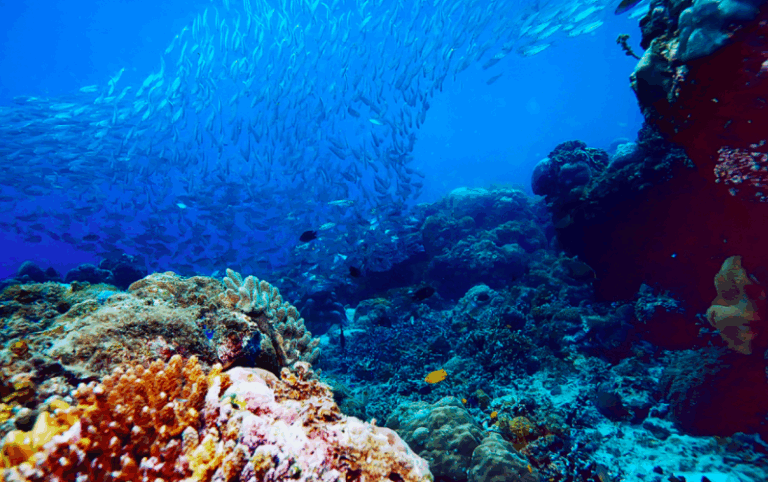
Humans have visually observed less than 0.001% of the global seabed in the last 70 years, an area approximately one-tenth the size of Belgium. This finding comes from a study published in the journal “Science Advances.”
The ocean bears the primary impacts of human-induced climate change, and while much is known about the effect of global warming on the surface and shallower waters, less is understood about its influence on the deep ocean, i.e., at depths greater than 200 meters.
Researchers compared 43,681 records from submarine missions conducted since 1958 across 14 countries, 120 Exclusive Economic Zones (EEZs), and the open sea. At best, the data captured only 0.001% of the seabed.
The study highlights geographic disparities in the collected data, as most observations have been made within 200 nautical miles of the United States, Japan, and New Zealand. These same three countries, along with France and Germany, accounted for 97.2% of all dives. “This small and biased sample is problematic when attempting to characterize, understand, and manage the global ocean,” note the authors.
Their calculations suggest it would take over 100,000 years to map the ocean floor in situ. “These estimates demonstrate that we need a fundamental change in how we explore and study the deep global ocean,” they conclude.
Ask me anything
Explore related questions