





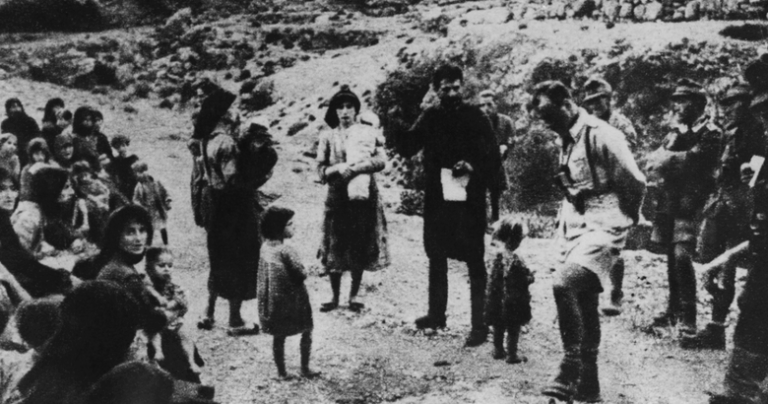
Crete awoke on May 20, 1941, under the shadow of thousands of German paratroopers falling from the sky.
It was the first large-scale airborne invasion in history, which unfolded into a harrowing and bloody battle that left a significant mark on World War II — the Battle of Crete.
The German forces launched Operation “Merkur” (Hermes) — a daring plan to seize Crete using only paratroopers and air-transported troops. During those ten days of battle (May 20 – June 1, 1941), the island’s defenders — British, New Zealanders, Australians, Greek soldiers, and ordinary Cretan civilians — put up fierce resistance. Although Crete was eventually captured, the victory came at a Pyrrhic cost for the Germans, and the brave resistance of the Cretan people went down in history.
Strategic Reasons for the Attack and Operation “Merkur”
Three weeks after the fall of mainland Greece, Hitler decided to capture Crete at all costs, aiming to secure control over the Eastern Mediterranean. Holding Crete gave the British significant advantages: the safe harbor of Souda Bay as a naval base and a launchpad for the RAF to strike the oil fields of Ploiești in Romania.
With Crete in Allied hands, the southern flank of the Axis remained vulnerable ahead of the upcoming invasion of the Soviet Union (Operation Barbarossa). Therefore, for the Germans, neutralizing this “threat” was of vital importance.
The invasion plan — code-named “Merkur” — was drawn up by the pioneer of German airborne troops, General Kurt Student, and reluctantly approved by Hitler on April 25, 1941 (Directive No. 28). Although Hitler initially had reservations, foreseeing heavy casualties, he eventually gave the green light under the condition that preparations for the Russian campaign would not be delayed.
The entire operation was to be conducted by the Luftwaffe: about 550 bombers and fighter aircraft were allocated for support, along with 10 squadrons of Junkers Ju-52 transport aircraft to carry the troops. In total, 22,750 German soldiers would take part in the assault, including 14,000 paratroopers, supported by a regiment of air-transported mountain commandos.
The Germans considered two scenarios: either concentrate all forces in the western sector (Maleme–Chania) to establish a quick foothold, or simultaneous drops across various parts of the island to capture key points by surprise. A compromise was eventually chosen: the attack would target four main objectives — Maleme, Chania, Rethymno, and Heraklion — in two successive waves on the same day.
The first wave, early in the morning of May 20, involved Group “Comet” (targeting Maleme airfield) and the first echelon of Group “Aris” (targeting the city of Chania and the port of Souda). The second wave, in the afternoon, involved the second echelon of Group “Aris” at Rethymno (Perivolia airfield) and Group “Orion” at Heraklion (city and airfield).
The objective was to seize the airfields quickly so that reinforcements (units of the 5th Mountain Division) could land, consolidate the German forces, and trap the Allies.
Forces and Disposition of the Defenders
The available Allied forces on the island numbered approximately 43,000 men. Of these, around 31,500 were British and Commonwealth troops (British, New Zealanders, Australians), while about 11,500 were Greek.
However, these numbers were misleading in terms of actual strength: many of the British and Commonwealth soldiers were evacuees from the mainland Greece campaign, who had arrived on Crete without heavy equipment — many were only armed with personal weapons, and some were unarmed altogether.
The Invasion on Four Fronts
May 20, 1941 – Morning (1st wave):
Shortly after 07:00, a heavy aerial bombardment began in western Crete, and waves of gliders and paratroopers flooded the areas around Maleme airfield and the city of Chania. The bombings were so intense that they were reportedly visible even across the sea in the Peloponnese. In Maleme, about 600 New Zealand defenders held positions around the airstrip, especially at the strategic Hill 107, which overlooked the airfield.
The first Nazi paratroopers suffered heavy losses upon landing — many fell directly onto Allied positions.
Cretan civilians from the surrounding area, alongside the New Zealanders, fought with fury: villagers, the elderly, even women, armed with knives, stones, farming tools, old rifles, and improvised bayonets, rushed against the invaders.
By midday, the Germans had failed to capture either the Maleme airfield or the city of Chania, while their casualties mounted alarmingly. Within the first 24 hours, about 1,800 elite soldiers of the Third Reich lay dead, without having achieved any of their primary objectives (airfields, ports). This was the first major shock to Hitler, and the prestige of the renowned Fallschirmjäger (paratroopers) suffered a serious blow.
Maleme – The Critical Battle for the Airfield
The most decisive battle of the invasion took place around Maleme airfield in western Crete. The New Zealand and Greek defenders held Hill 107 firmly throughout the first day, repelling wave after wave of Germans attempting to reach the runway. The German paratroopers had even been exhausted fighting near the bed of the Tavronitis River, suffering terrible losses.
However, during the night, a fatal miscommunication disrupted Allied lines: lacking adequate contact with headquarters, the commanders on Hill 107 believed they were at risk of being encircled and ordered a withdrawal.
This key position was abandoned in the early hours of May 21 — just as the Germans were preparing to retreat, unaware that the defenders had already pulled back! The abandonment of the hill proved decisive: the Germans captured it with little resistance and immediately gained control of the Maleme airfield.
Following the plan, once the runway was secured, dozens of Ju-52 transport aircraft risked emergency landings — some even on beaches or fields — unloading reinforcements (troops from the 5th Mountain Division) and heavy weaponry. The balance had now tipped: Maleme had become the Germans’ “gateway” to the conquest of Crete.
Despite heroic counterattacks in the following days, the Allies were forced to retreat eastward, abandoning the Chania region.
Chania – Fighting Around the Capital
In the Chania sector, where the Greek headquarters was also based, the German drops (part of Group “Ares”) occurred at various points: in the city’s outskirts, near the Agyia prison area, and close to Souda Bay.
The scattered groups of paratroopers that landed here suffered heavy casualties from the fire of New Zealand and Greek forces, as well as from furious armed civilians. A German unit that attempted to surprise the Souda camp was repelled with significant losses.
By the evening of May 20, the surviving German forces in the Chania area had entrenched themselves defensively around Agyia, awaiting a counterattack that never came. The Allies maintained control of Chania city for two more days. However, after the fall of Maleme, their position became untenable: fresh German reinforcements from Maleme began advancing eastward, threatening to encircle the city. On May 27, under orders from General Freyberg, Allied forces abandoned Chania and retreated southward (towards the Sfakia region) in search of an evacuation route.
May 20, 1941 – Afternoon (2nd Wave)
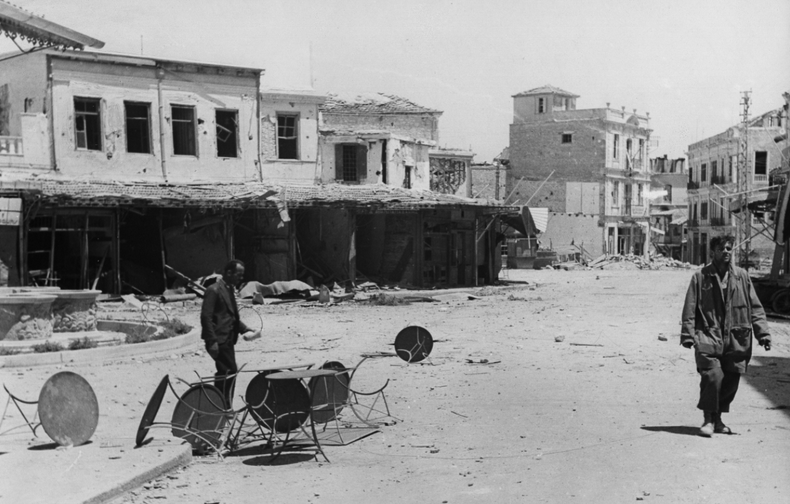
The second wave of the invasion unfolded in the afternoon, targeting central and eastern Crete. Around 16:00, large formations of Ju-52 aircraft appeared over Rethymno and Heraklion, dropping hundreds of paratroopers. Simultaneously, Heraklion suffered a fierce aerial bombardment lasting an hour, causing extensive damage to the city.
Rethymno – A Victory for the Defenders, but No Follow-Up
In Rethymno, the paratroopers targeted the small Perivolia airfield to the east of the city. Around 161 transport aircraft dropped German troops and supplies in the area.
One group of invaders initially managed to occupy the nearby villages of Perivolia and Kastellakia, but their advance toward Rethymno city was decisively halted by a Greek Gendarmerie Battalion stationed there.
On a hill west of the airfield, Greek gendarmes and Australian soldiers repelled multiple assaults, even launching a counterattack that resulted in the capture of about 80 German prisoners.
German casualties in this sector were so severe (losing nearly one-third of their fighting force) that they were forced to abandon the effort to take the city. However, small pockets of invaders remained active near the airfield (in Ambelakia village and a hill east of the runway), tying down part of the Allied forces.
The defenders of Rethymno – both Greeks and Australians – held their ground for ten days, effectively preventing the enemy from making any use of the airfield. Unfortunately, their isolation from other Allied units meant that after the fall of other fronts, they were left surrounded. On May 30, with no ammunition or supplies left, the Rethymno forces surrendered, even though the overall battle had already been decided.
Heraklion – Repelled Attack and Dramatic Evacuation
In the Heraklion sector, the German Group “Orion” launched its attack around 15:00, with intense bombing. The city of Heraklion suffered heavily from the air raids, but the excessive aerial bombardment inadvertently warned the defenders of the coming assault.
When, an hour later, the paratroopers began to fall around the airfield and in the surrounding countryside, they encountered well-prepared defenses. An entire German battalion attempting to seize Heraklion airfield was completely annihilated by British and Australian defenders. Two other paratrooper companies that landed in fields south of the city were pinned down and forced into defense, under attack by armed civilians, gendarmes, and troops of the Greek 7th Regiment.
By nightfall, Heraklion remained in Allied hands, with the invaders having utterly failed in their objectives and fighting to survive outside the city. The people of Heraklion felt temporary relief, unaware that the situation in the west had already turned. As the Germans captured Chania and advanced east, holding Heraklion became impossible.
During the night of May 29–30, a bold evacuation operation was organized by the British Navy: 4,000 troops boarded warships and escaped from Heraklion harbor to Egypt.
However, the Luftwaffe detected the evacuation — the convoys came under aerial attack, resulting in many sailors killed and several ships sunk. On the morning of May 30, the Germans entered a deserted Heraklion, effectively completing the conquest of eastern Crete.
June 1, 1941: Final Act in Sfakia
On the remote southern coast of Crete, in the Sfakia region, the final act of the battle unfolded. There, the remaining Allied troops who had not escaped elsewhere had regrouped. Around 5,000 exhausted soldiers (British, Australians, New Zealanders, and Greeks) surrendered on June 1, as there were no more Allied ships available for their evacuation. The Battle of Crete was over.
The Role of Cretan Civilians in the Defense
One of the most distinctive features of the Battle of Crete — making it unique in the history of World War II — was the mass spontaneous participation of Cretan civilians in resisting the invaders. From the very first hours of the attack, men and women of all ages, many without any military training, grabbed whatever weapons they could find: rifles from the Albanian campaign, knives, axes, sickles, even stones and wooden clubs — and threw themselves into the fight alongside Allied troops.
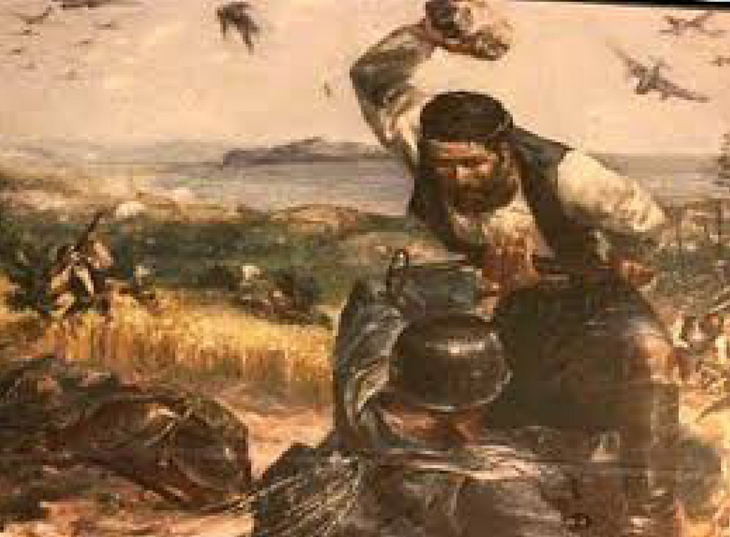
Eyewitness accounts abound: In the village of Galia, an elderly priest is said to have impaled a German paratrooper with his shepherd’s staff; in the area of Maleme, teenagers and women attacked soldiers landing in the fields with sickles. Even in the city of Heraklion, groups of civilians armed with whatever they had helped neutralize invaders who had landed on the outskirts. It was the first time in the war that the Germans faced such widespread civilian resistance during an occupation operation.
The contribution of civilians was critical in many instances—it slowed advances, led to the capture of dozens of prisoners, and boosted the morale of fighting soldiers. But this spontaneous bravery came at a heavy cost. Civilians who took up arms were not protected by the Geneva Convention or the laws of war; in the eyes of the Nazis, they were considered “illegal bandits.” After their victory, the Germans launched brutal reprisals across Crete.
On June 3, 1941, the village of Kandanos in Chania—where locals had killed a platoon of paratroopers—was completely leveled. At the entrance to the ruined village, the Germans erected a sign proclaiming: “Here stood Kandanos… destroyed in retaliation for the murderous ambush against German paratroopers by men and women.” A few days earlier, in the village of Kondomari, a group of Germans under Lieutenant S.B. Bauer carried out the first mass execution of civilians in occupied Europe, executing dozens of male villagers in retaliation.
Similar tragedies unfolded in other parts of Crete (in Galatas, Amari, Viannos, etc.) during the ensuing occupation. The bloody resistance of the Cretan people has since become part of the island’s collective memory and identity.
Despite the unspeakable sacrifices—thousands of executed civilians and burned villages—the Cretans did not yield. On the contrary, the seed of resistance took deep root: immediately after the battle, the first guerrilla groups began to form, continuing the struggle against the occupiers until 1945.
Consequences for Nazi Military Strategy
The Battle of Crete, although it ended in an Axis victory, had unexpected strategic consequences. Hitler himself is said to have been shocked by the scale of the losses suffered by his elite paratroopers.
The conquest of the island, which he expected to be completed in a single day, ultimately took nearly two weeks and cost so much blood that Hitler decided he would never again risk such an operation. After Crete, he ordered a halt to all major airborne assault operations in the future.
The once-legendary Fallschirmjäger (German paratroopers) would no longer be used en masse as an independent capture force; instead, they were reassigned to conventional infantry roles on the Eastern Front. This shift had a ripple effect on future Axis operations.
Malta, for example, never faced the planned German airborne invasion (Operation “Herkules”), as the Wehrmacht leadership hesitated to repeat the Cretan experience. Some historians argue that the delays and losses in Crete indirectly affected the German attack on the Soviet Union, as the Germans lost valuable time and transport aircraft—factors that may have weakened their logistical capacity ahead of the harsh winter of 1941.
On the other hand, the Allies learned valuable lessons. Impressed by the audacity and tactical effect of the German airborne forces, they immediately began organizing their own paratrooper units. By 1942, Britain and the United States had established parachute and air-assault divisions, which would prove crucial later (e.g., Normandy, Netherlands 1944, etc.).
A bitter irony: the battle that revealed the limits of the German paratroopers became the catalyst for the Allies to fully develop and exploit this innovative form of warfare.
Casualties and Symbolism of the Battle
The Battle of Crete proved incredibly costly in human lives and materiel. According to official data from the Greek Army’s Historical Directorate, Allied losses included approximately 1,742 British and Commonwealth dead, 1,737 wounded, and over 11,800 captured.
Greek losses were also heavy: at least 426 Greek soldiers were killed in action, while an unknown number were wounded or captured.
At sea, the Royal Navy paid a steep price trying to block enemy reinforcements and evacuate the defeated: the Germans sank 2 British cruisers and 6 destroyers, killing over 2,000 sailors.
However, it was the German losses that shocked the world. Thousands of elite paratroopers would never return to their bases. Exact figures vary by source: General Student reported about 4,000 German dead and missing, while other estimates put the total toll at 6,500 men. At the German war cemetery in Maleme alone, 4,465 German soldiers from the battle and occupation are buried.
Additionally, the Luftwaffe lost over 220 aircraft completely, with around 150 more heavily damaged during the operation—aerial losses deemed irreparable for a single battle.
Ask me anything
Explore related questions




