Greece’s parliament, after a stormy debate on 19 June, voted 154‑13 (with one “present” and 61 abstentions) to set up a pre‑investigative committee solely for former infrastructure minister Kostas Ach. Karamanlis, approving New Democracy’s motion to probe a misdemeanour breach‑of‑duty charge related to the 2023 Tempi rail disaster; all alternative motions—some calling for felony counts such as manslaughter with possible intent against Karamanlis and eight other politicians, including former premier Kyriakos Mitsotakis—were defeated in a marathon secret ballot that used 14 urns and over 4,200 ballot papers, leaving the inquiry narrowly confined to the single offence that met the Constitution’s absolute‑majority threshold of 151 votes required under Article 86 for parliamentary prosecutions.
The debate in the Hellenic Parliament over the Tempi rail tragedy reached a dramatic climax on Wednesday, marked by sharp political confrontations and personal attacks. Justice Minister Giorgos Floridis delivered a blistering rebuke to Zoe Konstantopoulou, recalling that in 2000, following the Samina ferry disaster, the Synaspismos party—then led by her father, Nikos Konstantopoulos—refused to support even a parliamentary inquiry, citing the jurisdiction of the judiciary. Floridis further referenced the controversial “cheese pie rapist” case, in which Konstantopoulou’s law office was involved, accusing her of subjecting the victims to prolonged legal trauma.
In a highly charged address, former transport minister Kostas Ach. Karamanlis, the sole political figure now facing a parliamentary inquiry, declared that the night of the Tempi crash had “marked” him deeply and urged MPs to support the New Democracy motion—even those who considered the referral unfair. “I will not hide behind immunity or a government majority,” he said, asserting his innocence and calling for judicial review to clear his name.
Former SYRIZA transport minister Christos Spirtzis also endured judicial scrutiny, insisting that had the rail network operated in 2023 as it did in June 2019, “57 lives would not have been lost.” He rejected claims that New Democracy spared him due to statute-of-limitations issues, arguing that Article 86 of the Constitution allows for accountability beyond parliamentary procedures.
Meanwhile, Marina Chrysoveloni, a former SYRIZA deputy minister and one of the politicians named in PASOK’s broader referral motion, accused the party of engaging in a “politically opportunistic fireworks display” aimed at spreading blame indiscriminately. She described PASOK’s proposal as poorly drafted and politically motivated, intended to serve narrow partisan goals rather than justice.
In a continuation of the heated parliamentary debate over the Tempi rail disaster, former Deputy Minister Marina Chrysoveloni defended her record, stating unequivocally that during her tenure—from February to November 2016—she had no involvement in the contract at the center of the investigation, nor any authority over the offenses outlined in Article 291 of the Penal Code. She stressed that responsibility for the controversial contract 717 lay exclusively with then-Minister Christos Spirtzis, who, she argued, handled it with “great consistency and effectiveness.” Chrysoveloni accused New Democracy of sidelining railway safety and contrasted this with SYRIZA’s investment of over €1 billion in rail projects during its time in power, despite harsh austerity conditions. She concluded with a call for the full abolition of ministerial immunity and the transfer of prosecutorial authority to the courts, as part of a long-overdue constitutional reform.
The plenary session is currently underway to debate three motions for the establishment of a parliamentary preliminary investigative committee regarding the Tempi train tragedy.
This marathon parliamentary procedure is unfolding in an unprecedented political landscape, shaped by a 297-seat Parliament and the emergence of an unorthodox new political bloc formed by Konstantopoulou, Velopoulos, Natsios, and Kasselakis.
The Greek Parliament is currently holding a plenary session to debate three separate proposals to form a preliminary investigation committee regarding the Tempi train tragedy. The session, which began with a delay due to technical issues, unfolds in a politically charged atmosphere shaped by an unprecedented parliamentary composition of 297 MPs and a newly formed opposition bloc led by Konstantopoulou, Velopoulos, Natsios, and Kasselakis.
Speaker of Parliament Nikitas Kaklamanis clarified the voting process, emphasizing that each of the three proposals—submitted by New Democracy (ND), PASOK, and the opposition alliance of four parties—will be voted on individually, in line with constitutional requirements and long-standing parliamentary procedure.
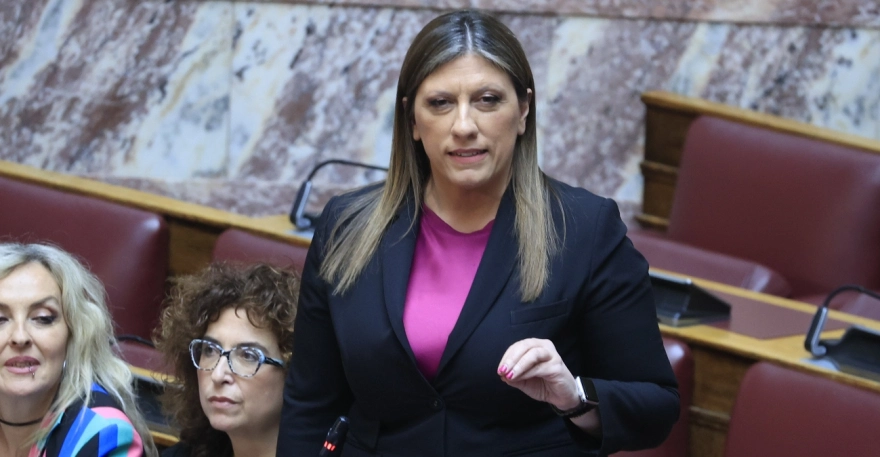
Tensions escalated as Zoe Konstantopoulou, leader of Plefsi Eleftherias, accused the government and PASOK of procedural manipulation to shield key political figures—specifically Mitsotakis and Karamanlis—from accountability. Her sharp criticism prompted pushback from PASOK’s parliamentary representative, who called for focus on substance rather than inter-opposition disputes.
SYRIZA, through MP Christos Giannoulis, argued that the process limits the ability of majority MPs to genuinely investigate the actions of former minister Karamanlis. The KKE also criticized the procedure as arbitrary, while Greek Solution MP Kostas Chitas emphasized the symbolic presence of victims’ families in the chamber.
Responding, Speaker Kaklamanis reiterated that the process follows precedent and is mandated by Article 86 of the Constitution and parliamentary rules.
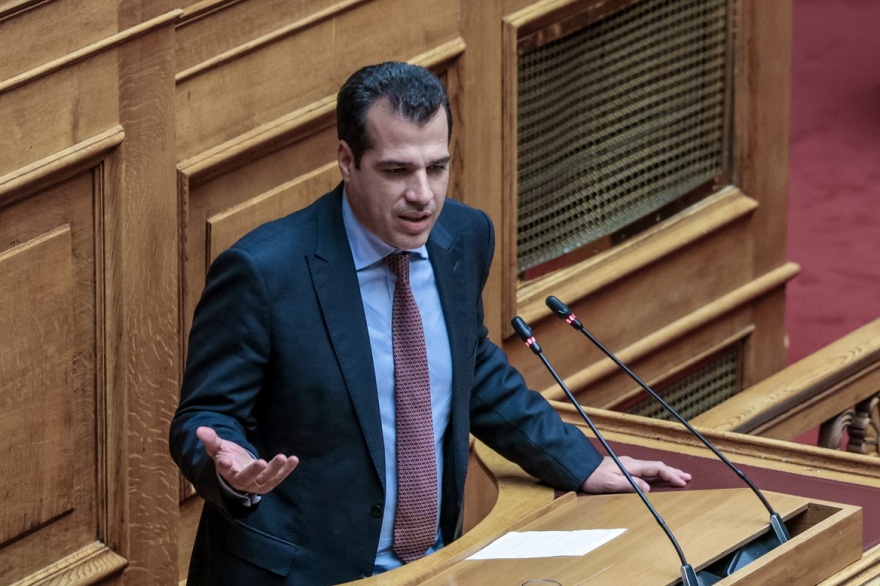
Former Health Minister Thanos Plevris submitted a written statement defending his actions, asserting that his role post-accident was limited to coordinating hospital and health services, and that his conduct was lawful. His name appears in the joint proposal by the opposition alliance calling for a deeper inquiry into possible offenses including breach of duty and concealment of crimes.
This session marks a pivotal moment in Parliament’s pursuit of accountability for the Tempi disaster, highlighting deep political divisions over transparency, institutional responsibility, and justice for the victims.
In a climate of extreme tension and fierce debate, today’s plenary session is expected to be held to discuss the three proposals to set up a preliminary investigation committee on the Tempi case.
The marathon procedure is taking place in the unprecedented political environment formed by the House of 297 MPs and the new heterogeneous pole formed by Konstantopoulou, Velopoulos-Natsios, and Kasselakis.
The four presidents of the Eleftheria Plevsis, Hellenic Solution, Victory, and the Movement for Democracy set aside their clear ideological differences and joined together in a common front in order to charge serious offences and even hand down sentences for high treason. The protagonists of the ‘alliance of 4’ are united by the almost identical theories they have cultivated over the last two years about the pyrosphere, xylene, tullolite for hiding dead bodies, and disappearing wagons. On the other hand, the Maximos building estimates that the latest developments in the Tempi case, with the Karoni finding and the videos of the fatal freight train, put a definitive end to the theories about the transportation of illegal flammable material and exposed those who were trafficking them. In this light, government officials believe that the content and offences of the “4” proposal are to remove all those who “attempted to build a political career on the tragedy”. Given that the proposal accuses the prime minister of “ultimate treason”, it is quite likely that Kyriakos Mitsotakis will intervene today.
However, according to the schedule, the debate will start at 9 am with an ambitious goal to be completed by 9 pm, followed by a secret ballot. Recall that the 3 proposals from ND, PASOK, and the “4” alliance concern a total of 14 political persons and 10 offences.
The proposal of the majority concerns only Mr. Karamanlis, the PASOK proposal calls for a preliminary investigation for Mr. Karamanlis, and Spirtzis and 6 more deputy ministers of the period 2016-2023, while the proposal of the “4” asks for an audit for the prime minister and 10 more political persons. According to the parliamentary “choreography” for the secret ballot, the limit of which is maintained at 151 despite the fact that the parliament now operates with 297 members, 14 ballot boxes will be set up, as many as the persons for whom a preliminary investigation is requested.
Each Member will receive 14 ballot papers corresponding to separate persons and will be directed to a different ballot box. For this reason, moreover, the relevant parliamentary services have printed a total of more than 12,000 ballot papers. For example, in the ballot box numbered “1”, the vote will be cast only for former Minister of Infrastructure and Transport Costas Ach. Karamanlis. MPs will choose on the ballot paper number “1” the proposal of the ND, PASOK, the “4” coalition, or all 3 – depending on which they consider to contain the most sound reasoning and offences. According to the Bureau’s estimates, the voting process will take about two and a half hours and about two hours of counting. Provided the process goes smoothly, the final results of the voting are expected to be announced by 2 a.m.
What the parties will vote on
The vote to set up preliminary investigation committees is a secret ballot, but the 297 MPs will go to the 14 polling stations with a given “party line”. ND, PASOK, and the “4” MPs are expected to vote only on the motions tabled by their parties.
MPs from SYRIZA, the New Left, and probably the KKE will abstain from voting. Of the 19 independents, Nikos Papadopoulos and Areti Papaioannou have expressed their support for the “4” proposal.
Intervention by Karamanlis
According to the balance of power at the end of the procedure, only the ND proposal is expected to be approved by 154 members of the government majority (i.e., Karamanlis does not participate in the vote of impeachment). It is recalled that the text of the “blue” CoM proposes the impeachment of former Minister of Infrastructure and Transport Kostas Ach. Karamanlis for the misdemeanour of breach of duty. Mr Karamanlis is also the central figure in the proceedings as he is included in all three proposals.
The former minister appears determined to appear before the national delegation, to maintain his innocence, but to request that he be referred to the Judicial Council as the only body competent to control and judge his handling of the case. For this reason, and to remove any doubt fostered by rumours of leaks from the ‘blue’ CO, he will ask his party members to vote in favour of the majority proposal. At the same time, Karamanlis will denounce the opposition for vulgar exploitation of the tragedy with “lies and diabolical lies” while fully separating the relatives of the victims. He is also expected to present documents and decisions to substantiate his claims about the situation he has taken charge of and the initiatives he has taken to ensure railway safety.
Ask me anything
Explore related questions