





Update: An Iranian lawmaker on the Majles National Security and Foreign Policy Committee, Benham Saeedi, has warned that Tehran is actively considering closure of the Strait of Hormuz as a retaliatory measure against “the actions of the enemies of the Islamic Republic.” Speaking to the Mehr news agency, Saeedi said the option is “on the table” and underscored that any threat to Iran or its people would draw a “decisive and overwhelming response,” with the exact form of retaliation calibrated to evolving circumstances.
The remark highlights Iran’s readiness to weaponize the world’s most vital oil chokepoint—through which roughly a fifth of global crude flows—raising the stakes for regional security and international energy markets amid the escalating Israel‑Iran confrontation.
Update: Israel–Iran Conflict Escalates Further Amid Diplomatic and Military Maneuvers
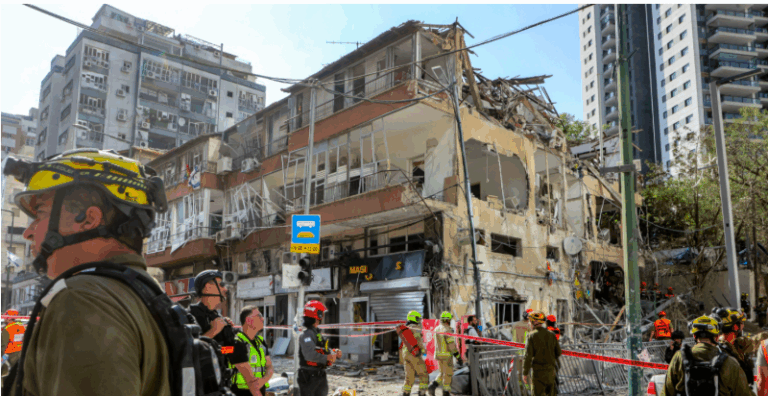
The conflict between Israel and Iran has entered a dangerous new phase, marked by mutual strikes, sharp rhetoric, and rising fears of broader regional involvement. After an Iranian missile strike damaged Soroka Hospital in southern Israel—leaving at least 76 injured—Israel’s Defense Minister declared that Supreme Leader Ayatollah Ali Khamenei “cannot continue to exist.” Tehran insisted its intended target was a nearby military installation, not the medical facility.
In response, Israel carried out targeted strikes on key Iranian nuclear sites, including the Arak heavy water reactor and Natanz enrichment facility, though independent verification remains pending. Reports indicate that these strikes also eliminated senior Iranian military and nuclear figures.
Amid the rising tensions, U.S. President Donald Trump is reportedly weighing direct military involvement, reviving speculation of an American entry into the war. Iran’s leadership warned that any such move would bring “irreparable damage” to both the U.S. and regional stability. The commander of the Islamic Revolutionary Guard Corps issued a chilling threat, stating that American intervention would “ignite the entire region.”
Diplomatic efforts for de-escalation are underway. Iran’s Foreign Minister Abbas Araghchi confirmed a high-stakes meeting in Geneva with the foreign ministers of the UK, France, and Germany, alongside EU foreign policy chief Kaja Kallas. The talks come as Europe scrambles to prevent a full-scale war following Israel’s unprecedented June 13 assault on Iranian military and nuclear infrastructure.
Meanwhile, the crisis has prompted a wave of evacuations. Bulgaria shut down its embassy in Tehran and relocated its diplomats to Azerbaijan, citing security risks. China evacuated over 1,600 nationals from Iran and hundreds more from Israel, urging all parties—especially Israel—to agree to an immediate ceasefire.
Amid mounting international pressure, Iran continues its uranium enrichment at levels far beyond the 2015 JCPOA limits, stoking concerns that Tehran is racing toward weaponization. While Europe pushes for diplomacy, internal political backlash grows: in Germany, Chancellor Friedrich Merz drew controversy for saying Israel is “doing the dirty work” for the West—a comment welcomed in Tel Aviv but criticized domestically.
With the military front heating up and diplomacy under strain, the specter of a wider regional war looms closer than ever.
Update: Iranian Foreign Minister to Attend OIC Summit in Istanbul Amid Escalating Israel-Iran Tensions
Iran’s Foreign Minister, Abbas Araghchi, will travel to Istanbul on the weekend of June 21–22 to participate in the Foreign Ministers’ Summit of the Organization of Islamic Cooperation (OIC). The high-level gathering, themed “The OIC in a Changing World,” will be chaired by Turkish Foreign Minister Hakan Fidan and will feature a keynote address by President Recep Tayyip Erdoğan.
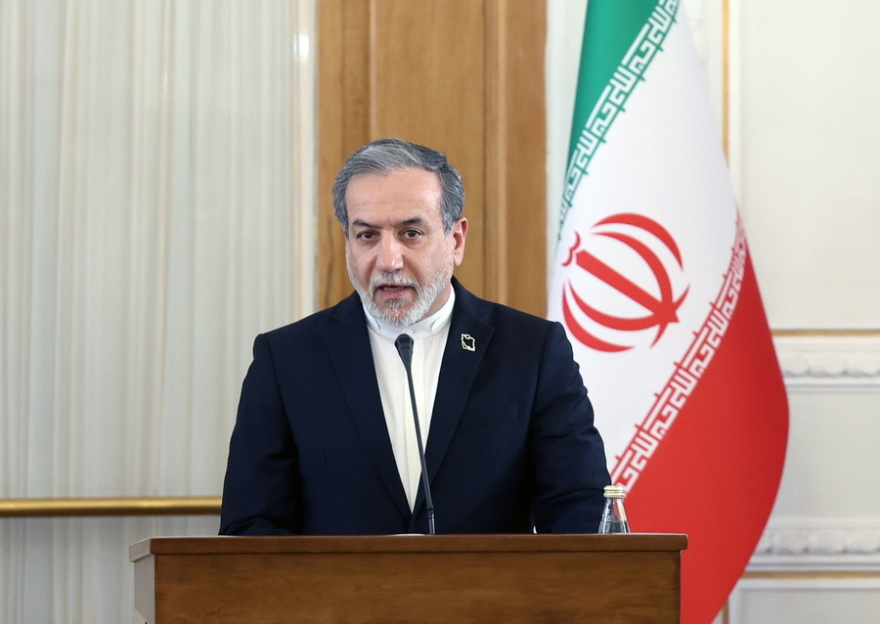
The summit will bring together around 1,000 delegates from the 57 member states, observer nations, and affiliated international bodies. According to Turkish diplomatic sources, a special session will be dedicated to the Israel–Iran conflict, which has entered a critical phase. The summit is expected to culminate in the adoption of the “Istanbul Declaration” and several key resolutions, with particular emphasis on the Gaza crisis and the broader Palestinian question.
Update: European Foreign Ministers to Meet Iranian Counterpart in Geneva Amid Escalating Tensions
The foreign ministers of Germany, France, and the United Kingdom are scheduled to meet tomorrow, Friday, in Geneva with their Iranian counterpart, according to European diplomatic sources. EU foreign policy chief Kaja Kallas is also expected to attend the meeting, as European nations intensify their diplomatic efforts to de-escalate the crisis following Israeli airstrikes aimed at dismantling Iran’s nuclear infrastructure.
Iran Responds: Military Base, Not Hospital, Was the Intended Target
Iran stated today that the primary objective of its missile strike on Israel—which damaged the Soroka Medical Center in southern Be’er Sheva—was a nearby Israeli military command and intelligence base, not the civilian hospital. According to Iran’s state news agency IRNA, the target was the Israeli Army’s command and intelligence headquarters, as well as a training facility for intelligence operatives, located within the Gav-Yam technological park near Soroka. The hospital, Tehran claims, was affected only by the blast wave.
The Iranian strike also hit areas near Tel Aviv, injuring at least 47 people, according to Israel’s emergency medical services.
Update: Six people have been hospitalized in critical condition following Iran’s early-morning missile strike on central Israel. Two of the injured are being treated at Sheba Medical Center in Ramat Gan, and four others at Wolfson Medical Center in Holon. Meanwhile, Hezbollah has issued a stark warning, stating that any attempt on the life of Iran’s Supreme Leader, Ali Khamenei, “will carry serious consequences”—condemning such threats as offensive to millions of Muslim faithful. Earlier, Israeli Defense Minister Yoav Gallant responded to the attack on Soroka Hospital by vowing intensified strikes on regime targets in Tehran, aiming to destabilize the Islamic Republic’s leadership.
Update: Israeli Prime Minister Benjamin Netanyahu vowed to make Tehran’s “tyrants” pay following Iran’s missile attack on Soroka Hospital in Beersheba, which caused severe damage and injured at least 32 civilians, including two critically. The Israeli Embassy in Greece condemned the strike, pledging continued defense of Israeli civilians. Israeli rescue teams remain active as multiple Iranian missile impacts were reported across central and southern Israel, including Tel Aviv. This escalation underscores the intensifying Iranian campaign against Israeli civilian targets, marking a dangerous widening of the ongoing conflict.
In a dramatic escalation of hostilities, Iran launched a fresh salvo of long-range ballistic missiles against multiple targets in Israel early Thursday morning. According to initial Israeli media reports, at least four impact sites have been identified across central and southern Israel, with preliminary accounts confirming casualties and extensive material damage. Emergency medical teams have been deployed across affected zones.
Key Developments So Far:
- Iranian Missile Barrage: The latest Iranian strike is reported to be significantly more powerful than previous ones, involving the deployment of long-range Sejil ballistic missiles, which boast a range of up to 2,000 kilometers. This marks a continuation of Tehran’s aggressive military posture following its direct confrontation with Israel.
- Confirmed Impacts: Israeli civil defense sirens were triggered across central and southern regions, prompting authorities to instruct citizens to shelter in place. Missile impacts have been confirmed in multiple urban and military zones, with injuries and widespread structural damage reported, according to the Times of Israel.
- Evacuation of Greek Nationals: Under extremely adverse conditions, the Greek Ministry of Foreign Affairs coordinated the successful evacuation of 16 Greek nationals and their family members from Iran to Azerbaijan, assisted by Greek diplomatic missions in Tehran and Baku.
- Trump Weighs In: Former U.S. President Donald Trump commented on the unfolding crisis, criticizing Iran for rejecting a prior diplomatic offer and leaving open the possibility of American intervention. “They should have accepted the deal I proposed. Now they wish they had said yes,” Trump stated. When pressed on whether the U.S. will become directly involved, he replied cryptically, “Maybe I will. Maybe I won’t. Nobody knows.”
- U.S. Military Posture: Citing anonymous U.S. officials, Bloomberg reports that Washington is preparing military options for strikes on Iranian territory within the coming days. A third American aircraft carrier is reportedly en route to the region, according to CNN.
- Khamenei’s Warning: Supreme Leader Ayatollah Ali Khamenei addressed the Iranian people in a nationally televised message, vowing that any American military action would bring “irreversible consequences,” emphasizing the nation’s resolve and invoking the memory of fallen “martyrs.”
- Potential Strike on Iranian Nuclear Sites: The Israeli military issued an unprecedented public warning—via Persian and Arabic Telegram channels—urging immediate evacuation of the villages of Arak and Khondab near Iran’s nuclear energy infrastructure. The announcement strongly hinted at imminent Israeli strikes on those installations.
- Regional Diplomacy: Russian President Vladimir Putin held emergency talks with the President of the United Arab Emirates, jointly calling for de-escalation between Israel and Iran. However, no concrete mediation efforts have yet materialized.
- Greek Defense Ministry Alert: In Athens, an emergency meeting convened at the Ministry of Defense to assess Greece’s ballistic missile defense readiness amid regional instability.
Strategic Implications
The renewed Iranian strikes and growing rhetoric from both sides underscore a highly volatile security environment, drawing in regional and global powers. With both military infrastructure and civilian areas now clearly within the conflict’s scope, the prospect of wider regional war looms larger by the hour.
While some analysts speculate Iran is attempting to recalibrate deterrence following Israeli operations inside its borders—including the alleged destruction of the Iranian Internal Security HQ by Israeli forces—others view the missile campaign as Tehran’s assertion of strategic depth amid perceived Western retreat.
Ask me anything
Explore related questions




