





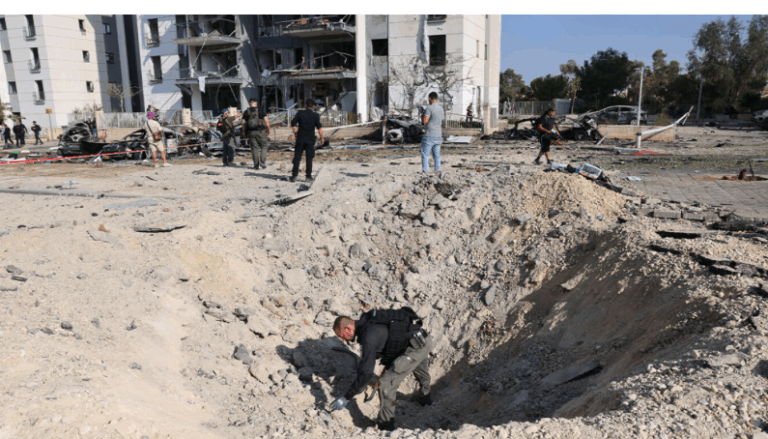
Updated: On June 20, 2025, Iranian state media reported that an Israeli missile strike hit a hospital in Tehran, marking a new escalation in the ongoing conflict. Shortly thereafter, unconfirmed reports indicated a second Israeli drone strike in the capital, allegedly targeting an Iranian nuclear scientist. While Tehran’s military radio claimed the scientist was the intended target, the Israeli Defense Forces (IDF) have not yet issued a statement. The incidents underscore a growing trend of precision strikes deep within Iranian territory.
Updated: As tensions between Israel and Iran escalate, European diplomacy intensifies. The foreign ministers of the UK, France, and Germany are holding high-stakes talks today in Geneva with their Iranian counterpart, seeking de-escalation. Meanwhile, Iran’s Supreme Leader Ayatollah Khamenei reaffirmed Tehran’s aggressive stance, posting early Friday that “the Zionist enemy is being punished,” referencing the latest missile barrage on Israel.
President Trump is expected to make a decision within 15 days on whether the U.S. will join Israeli military operations. The Israeli Defense Forces report dozens of strikes on Iranian targets in Tehran, including missile production facilities, while seven civilians were reportedly injured in Beersheba after an Iranian attack. Iran, however, has yet to release updated casualty figures since Sunday. Unconfirmed reports also suggest a targeted Israeli drone strike in Tehran, possibly aimed at a nuclear scientist—though the IDF has yet to comment.
Update: Escalation in Iran-Israel Conflict: Israel Warns Hezbollah, Russia and IAEA Sound Alarms
Israeli Defense Minister Israel Katz issued a stern warning to Hezbollah, urging the Iranian-backed Lebanese group to refrain from intervening in the escalating conflict between Israel and Iran. Katz declared that Israel’s patience with “terrorist threats” has run out, stating, “If there is terrorism, there will be no more Hezbollah.” The warning follows comments from Hezbollah’s deputy leader Naim Qassem, who said the group will act as it sees fit in response to what he described as a “violent Israeli-American assault” on Iran, making clear that Hezbollah is not neutral.
Meanwhile, Kremlin spokesperson Dmitry Peskov warned that any potential use of tactical nuclear weapons by the U.S. against Iran would be a catastrophic development. His remarks came amid Western media speculation about whether conventional bombs could destroy Iran’s underground nuclear facility at Fordow—speculation that cited the possible theoretical use of a B-2 bomber-delivered tactical nuclear strike. However, The Guardian reported that such an option is not currently under consideration by former President Trump, who stated that a decision on possible U.S. involvement will be made within two weeks.
Adding to the tension, the International Atomic Energy Agency (IAEA) confirmed that Israeli strikes damaged key structures at Iran’s heavy water research facility in Khondab, including its distillation unit. This update follows earlier assessments that the reactor had been hit, though no radioactive release was detected.
As the regional crisis intensifies, global powers are voicing increasing concern over the potential for wider escalation, with Russia warning against any direct U.S. military intervention in support of Israel.
The Israel-Iran military conflict is entering its eighth day, and although overnight the two countries appeared to reduce the frequency of their attacks, earlier missile strikes hitting key locations in Israel had raised fears of uncontrolled escalation, both in the region and around the world.
Israel yesterday announced an escalation of military strikes on strategic targets in Iran, following an Iranian missile strike that hit, among other places, the Soroka hospital in the city of Be’er Sheva. One of Iran’s ballistic missiles struck the heart of the business center of Ramat Gan, an area full of glass skyscrapers and offices, east of Tel Aviv. The Iranian attacks left widespread damage and more than 270 wounded in the past 24 hours in Israel.
Tel Aviv’s response was immediate. Fighter jets bombed nuclear facilities in Iraq, while Tehran resembles a deserted city, with its residents fleeing en masse. The attack on Iraq’s nuclear facilities was confirmed by the International Atomic Energy Agency, clarifying that the research reactor “was not operational and did not contain nuclear material, so there were no radiological effects.”
Threats of war
Israeli Prime Minister Benjamin Netanyahu pledged that Iran would “pay a heavy price” for Thursday’s attack on a hospital in Beersheva, while Tehran claims it was targeting a military intelligence centre. Netanyahu did not even rule out the possibility of Israel targeting Iran’s Supreme Leader, Ayatollah Ali Khamenei, as part of the operation against Iran. In an interview with public broadcaster Kan to comment on Defense Minister Israel Katz’s statement that Khamenei “can no longer continue to exist,” the Israeli prime minister said: “I gave an order that no one in Iran should have immunity.”
At the same time Donald Trump said he would decide on the possibility of the US getting involved in the Israel-Iran war within the next two weeks, the White House said. “Based on the fact that there is a significant possibility of negotiations that may or may not take place with Iran in the near future, I will make my decision whether or not to proceed within the next two weeks,” White House press secretary Caroline Levitt said, citing a message from the US president. His position, he said, is to decide at the last second as “in a war, things are constantly changing.”
The Revolutionary Guards are threatening that if the US assists Israel in an attack on Iran, the Americans will receive a harsh response. At the same time, they described Donald Trump as a “fool”.
Iran has also threatened to close the Strait of Hormuz and appointed a new head of the Revolutionary Guards’ intelligence agency. Major General Mohammad Pakpur, commander of Iran’s Islamic Revolutionary Guards Corps (IRGC), has appointed Brigadier General Majid Qadami as the new head of the intelligence department. He replaces Mohammad Kazemi, who was killed on Sunday along with two other Revolutionary Guards officers – Hassan Mohagegh and Mohsen Bagheri – in an Israeli raid.
Diplomatic initiatives
Seeking a diplomatic way out, Iranian Foreign Minister Abbas Araghchi will meet today in Geneva with French Foreign Minister Jean-Noel Barrot, German Foreign Minister Johann Vandevol, British Foreign Minister David Lammy, and EU High Representative Kaya Kalas in a last-ditch effort to revive diplomacy over Iran’s nuclear program.
British Foreign Secretary David Lammy said from Washington that “there is a two-week window for a diplomatic solution”, while the US, according to Secretary of State Marco Rubio, agrees that Iran “must never acquire nuclear weapons”.
The UN Security Council meets again today at Iran’s request, with support from Russia, China, and Pakistan.
Tensions were sparked a week ago when Israel launched surprise air strikes against Iran, citing intelligence that Tehran is “one step closer” to building a nuclear weapon. The situation spiraled out of control with repeated and deadly retaliation.
Ask me anything
Explore related questions




