Stelios Kazantzidis: “My Whole Life” — A journey through hardship, art, and the politics of song
A new biography of the legendary Greek folk singer titled “No One Can Erase Me” reveals unknown facets of his character and incidents from his artistic journey—up to his retirement and self-imposed isolation in Agios Konstantinos
Newsroom
Δείτε περισσότερα άρθρα μας στα αποτελέσματα αναζήτησης
His voice carried the sorrow of a nation. A sigh that began deep in the East and found refuge in tobacco shops, humble apartments, and the hearts of exiles. Stelios Kazantzidis was not just a folk singer. He was a symbol, a channel for a cultural and social sentiment that often dared not speak, but through his voice could be heard—as a cry or a prayer.
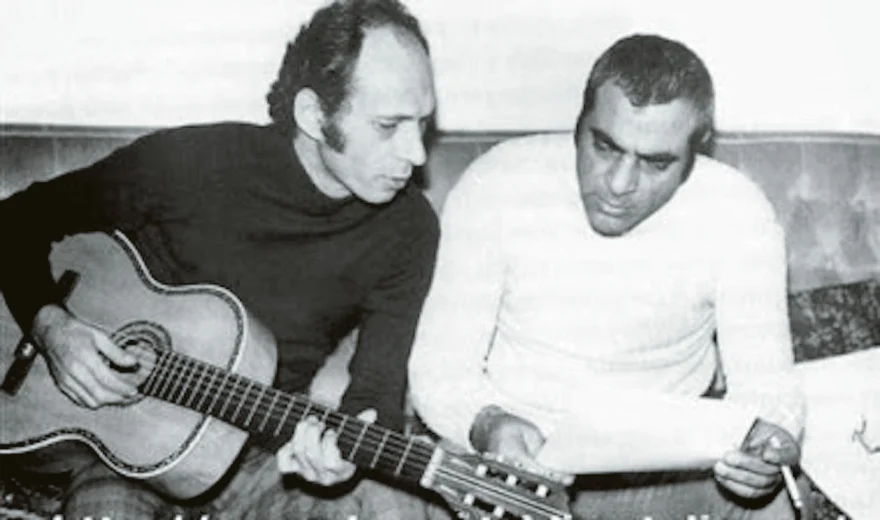
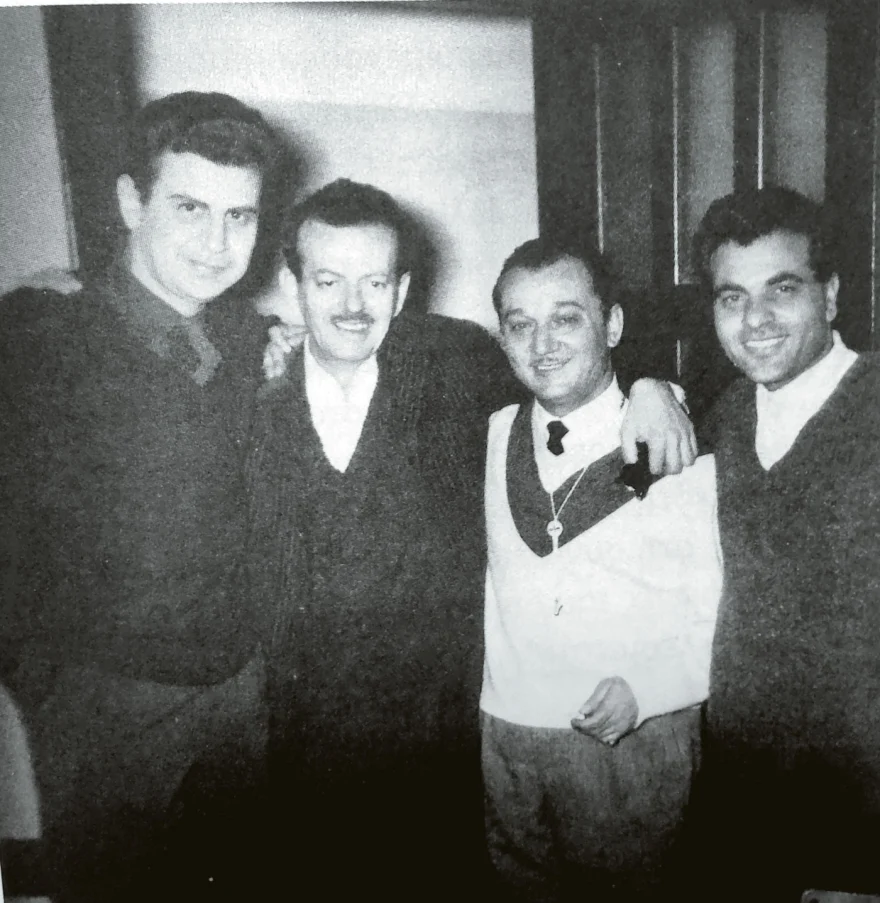
This legend of Greek folk music is the subject of a new book by writer and researcher Kostas Balachoutis, titled “Stelios Kazantzidis: ‘No One Can Erase Me’”, published by Infognomon. The foreword is written by Haris Alexiou.
Through 735 pages of this book—drawing from Kazantzidis’ own accounts to the author and testimonies of top composers, artists, singers, and journalists—readers gain insight not only into his contribution to music but also into his impact on Greek society. Beyond his well-known biography, Balachoutis’ years of research uncover little-known aspects of his personality and unknown events from his career until his retreat and isolation in Agios Konstantinos.
The Occupation (WWII)
The author includes what Kazantzidis told him about the Occupation period:
“Look, during the Occupation, my family had a hard time, like all people. Bread was scarce and extremely expensive. People sold off property for a bottle of oil. The black marketeers made fortunes—they bled the people dry. In spring 1942, we left Athens—things were desperate—and moved to Platanakia, near the Greek-Bulgarian border in Serres. Then to Rodona, a village 30–40 km past Kilkis, at the foot of Mount Belles, where my father had relatives.
My father had leftist ideals. Nothing more. He was a saint of a man—that’s how I remember him, and that’s what others say who knew him. He was made responsible for the National Supply for Guerrillas (ETA), gathering clothes, shoes, food, medicine to support the partisans. Some traitorous collaborators caught him and beat him to a pulp. If we had stayed, they would’ve killed him.
We barely made it to Thessaloniki. On the way, the snitches finished him off before our eyes—he bled from the mouth, nose, ears. They even hit my pregnant mother. From Thessaloniki, we boarded the ship Corinthia and returned to Nea Ionia. My father’s health collapsed. He coughed blood constantly. He also had a chronic stomach ulcer. This was around early ’45.
My mother advised me to stay with relatives in Melissia. I carried firewood in a little cart and sold it in Nea Ionia. The ‘Chites’ caught me again and beat me senseless. For three whole days, they beat me in the Kifisia police station because the son of my host uncle had been an ELAS partisan. They thought I was a courier. My mother, in tears and pregnant, begged them to let me go—and they did.”
The Beginning
In another chapter, he recalls his early struggle at the Esperos factory (processing old military clothes) and his first steps in music:
“We wore a cloth mask because in the room where old clothes were shredded, the air was suffocating. You needed strong lungs—the chemicals used choked you. Heavy, hazardous work.
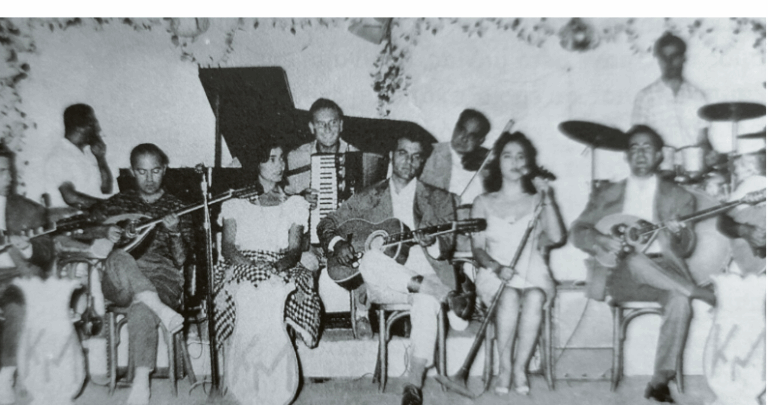
One afternoon, after coming home from the factory, I was strumming my guitar and singing while my mother was cooking. Someone passing by heard me—it was Manthos Venetis. He played guitar and bouzouki, semi-professionally, though he was an aircraft engineer by trade.
Venetis knocked on our door and asked my mother, ‘Madam, who’s singing? Where’s that voice coming from?’ She said, ‘My son. Come in.’ He waited until I finished singing so I wouldn’t be startled by a stranger.
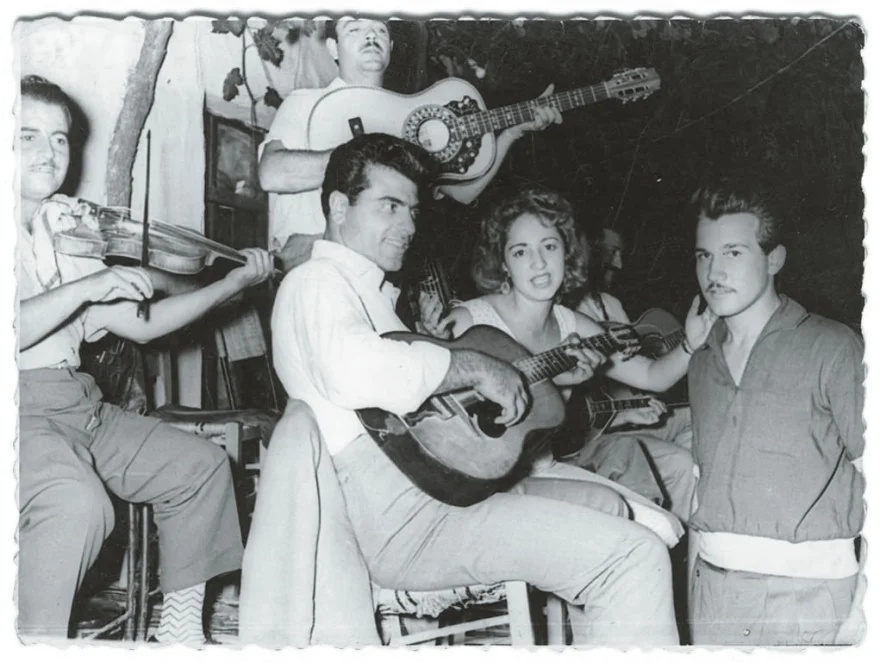
He told me, ‘I’m Venetis. I live nearby. I heard you singing and want you to join the group I’m forming.’ That’s how I started performing weekends at local tavernas. Our payment? A plate of kebab, some feta, fries, salad, and wine. Plus some small cash to make ends meet.
We were all working-class folks. I loved how instruments accompanied my voice—until then, I sang alone. After a few months, we built a name. We played weddings, baptisms, and local celebrations. Eventually, I began realizing something was special about my voice.
I remember singing at a taverna in Kifisia—put in the ‘second row.’ Back then, there weren’t elevated stages. The main performers sat up front—I was in the back. When the show ended, people told the owner, ‘Next week, put that boy in front so we can see him too—not just hear him.’ People can sense authenticity. They place you where you belong. When they hear my songs, they hear my soul.”
The 1950s, Rebetiko Stigma, and His Musical Identity
Kazantzidis tells of the stigma faced by early bouzouki players and singers:
“In the ’50s, bouzouki players avoided carrying their instruments in public. It was seen as shameful—same as being a hashish smoker. That was the fate of the bouzouki then.
But slowly, with our behavior, kindness, and struggle, we changed things. I started off as a European-style singer, doing songs by Gounaris and Polimeris. I still love and sing them. They were masterpieces.
At first, folk composers didn’t understand my voice. They wanted me to do heavy rebetiko with a ‘mangas’ flair—but that wasn’t my style. I didn’t like songs about hashish and such. Over time, they understood my range and wrote social songs—ones that suited me, my personality, my life experience.”
First Date with Marinella
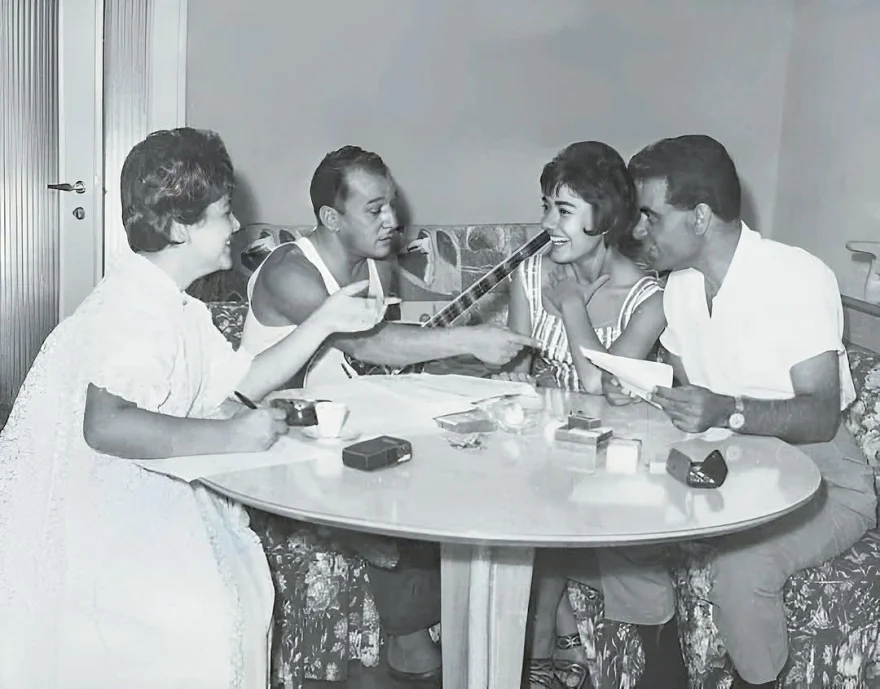
“Our first date with Marinella was in a boat. Yes, it’s true. The same night we met, the next morning—without sleeping—we went fishing.
First of all, I liked her as a singer. She had something different—a theatrical quality. She even toured with theater groups singing Vembo songs. I saw her in a show at a military theater.
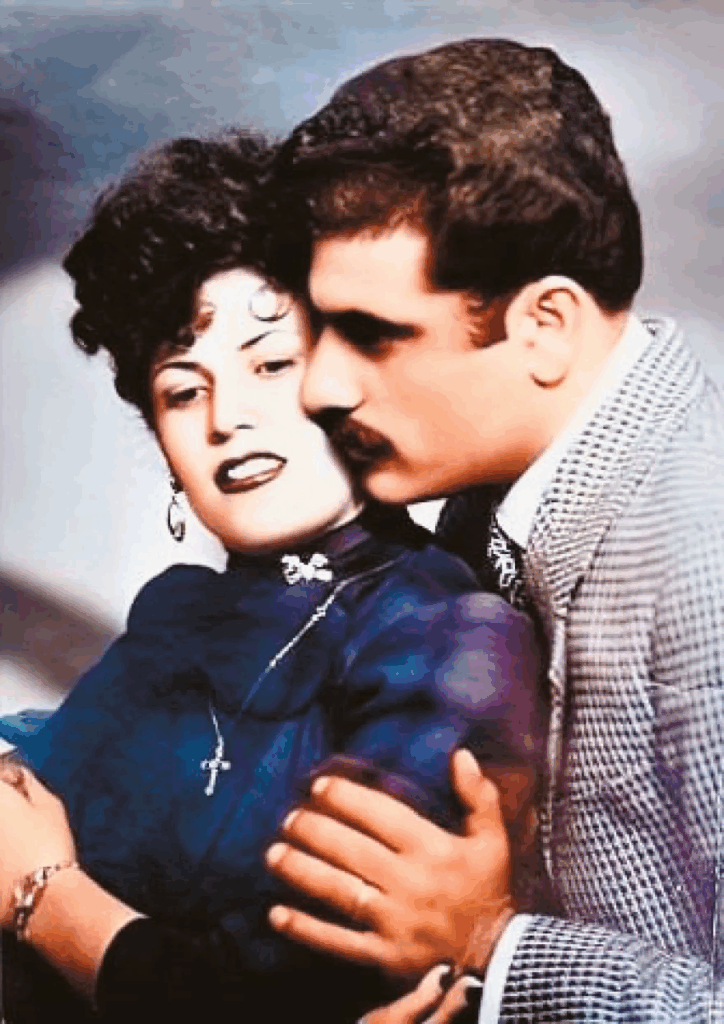
She gradually adapted to the folk style with me. Her voice fit mine like no other. Initially, I was cautious—after my breakup with Kaiti Grey. Marinella and I parted as friends—and we remain friends, with respect and pure feelings.”
“I wanted to leave nightlife with my body and soul intact. Because of public adoration, without meaning to, I was hurting nearby venues—I drew all the crowds.
Some venue owners began extorting me through shady means. Thugs and armed goons started threatening me. Some even physically assaulted me. At one point, things got very dangerous.