





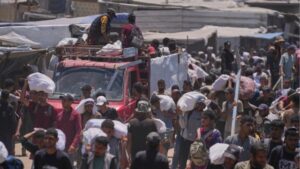
Nearly 170 non-governmental organizations today called for the termination of the newly created aid mechanism backed by Israel and the US in Gaza Strip, as hundreds of people have been killed in recent weeks in their desperate attempt to reach humanitarian aid distribution centers in the starving Palestinian enclave, besieged and flattened after more than 20 months of war.
The NGOs are referring to the aid mechanism operated since late May by the Gaza Humanitarian Foundation (GHF), a non-profit organization with opaque funding backed by Israel and the US. Food distributions by this organization have been marked by many chaotic and often very heated incidents.
Since Israel lifted an 11-week blockade on aid to Gaza on May 19, allowing the resumption of limited UN aid deliveries, more than 550 people have been killed in mass shooting attacks near aid distribution centers or transport routes guarded by Israeli forces since the GHF began operating, according to the Hamas health ministry.
According to NGOs, in less than four weeks, 500 Palestinians have been killed and nearly 4,000 injured in their attempt to get humanitarian aid, in less than four weeks. The UN puts the death toll at more than 400.
By early afternoon today in Geneva, 171 charities had signed a joint statement – calling on countries to pressure Israel to end the GHF program and restore the aid system coordinated through the United Nations.
“NGOs call for immediate action to end Israel’s aid distribution program in Gaza, which has led to numerous deaths,” the statement stressed.
The UN, along with most NGOs operating in the Gaza Strip, is inclined to cooperate with the GHF, challenging its practices and neutrality.
Among the signatories of the statement are NGOs from Europe, the US, and Israel working in the fields of medical and food aid, development, and human rights protection. Among the organizations signing the statement were Oxfam, Médecins Sans Frontières, Save the Children, the Norwegian Refugee Council, and Amnesty International.
The organisations called for the “lifting of the blockade imposed by the Israeli government on aid and commercial goods.”
In late May, Israel partially eased the complete blockade it had imposed on the Palestinian enclave in early March, leading to huge shortages of food, medicine, and other basic goods.
“Under the Israeli government’s new plan, starving and weakened civilians are forced to walk for hours in dangerous terrain and war zones. They eventually find themselves in a violent and chaotic race before reaching fenced and militarized distribution sites,” the NGOs said.
The Israeli military last week denied an investigation published by the Israeli newspaper Haaretz, citing Israeli soldiers who said they had received orders to shoot civilians near aid centers. The army claimed that it was “operating to allow and facilitate the distribution of humanitarian aid” by the GHF and “to secure the roads leading to the distribution centers so that aid reaches civilians and not Hamas.”
However, yesterday, Monday, the Israeli military admitted that Palestinian civilians were killed and wounded by Israeli armed forces’ fire near aid distribution centers.
“Palestinians in Gaza face an impossible choice: starve to death or risk being shot while desperately trying to reach food to feed their families,” the statement said.
In response to Reuters, the GHF said it had delivered more than 52 million meals in five weeks and pointed out that aid from other humanitarian organizations was looted almost in its entirety.
“Instead of bickering and hurling insults from the sidelines, we would welcome other humanitarian organizations to join us and feed people in Gaza,” GHF told Reuters.
NGOs have accused the GHF of forcing hungry and weak people to walk for hours, sometimes through active conflict zones, to receive food aid.
Israel has repeatedly stated that its forces operate near aid distribution centers to prevent aid from falling into the hands of Hamas militants.
Ask me anything
Explore related questions




