





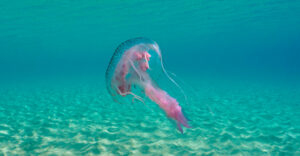
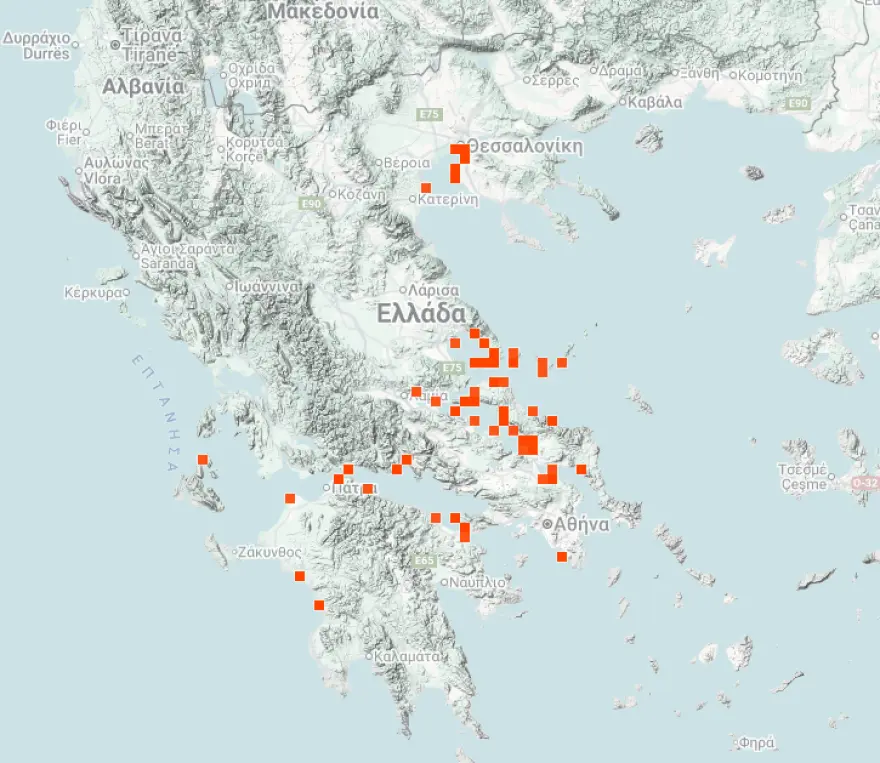
Purple jellyfish (pelagia noctiluca) species is currently in outbreak, particularly in areas like Chalkida and Northern Evia, with reports extending to the Sporades islands (e.g., Skiathos and Skopelos).
Why They’re a Concern
- The purple jellyfish is bioluminescent (glows in the dark), small, and vividly colored.
- Its tentacles and bell are covered in stinging cells (nematocysts).
- Stings are painful and can cause symptoms lasting several days. In rare cases, severe reactions occur.
- Stings may cause:
- Burning pain
- Swelling and redness
- Nausea, vomiting, diarrhea
- Difficulty breathing, allergic reactions, or even anaphylactic shock in sensitive individuals
What Experts Say
- While they’re not considered a major threat, swimmers are advised to avoid waters where jellyfish are heavily present.
- Environmental groups emphasize that overfishing of natural jellyfish predators (like tuna and sea turtles) contributes to their overpopulation.
- Calm sea conditions, warm waters, and ocean currents help jellyfish drift towards beaches.
What to Do If Stung
- Do NOT touch the tentacles with bare hands.
- Rinse with seawater (NOT fresh water) to prevent activation of remaining stingers.
- Use sand to gently scrub off remaining tentacle parts if needed.
- Apply ice or cold compresses to reduce swelling and pain.
- Use a corticosteroid cream to reduce inflammation and itching.
- Take antihistamines if symptoms are widespread.
- Seek medical help immediately if symptoms are severe or systemic (e.g., breathing problems, dizziness, swelling).
According to Greece’s National Public Health Organization (EODY), most stings are not dangerous but can be very uncomfortable. Early and correct treatment is essential to avoid complications.
Ask me anything
Explore related questions




