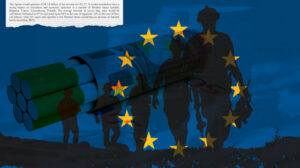
Southern countries brace for impact as Brussels prepares sweeping levy on cigarettes to finance “ReArm Europe”
From the pockets of Greek and European smokers, a staggering €14 billion may soon be redirected to finance the EU’s ambitious new defence plans. As first reported by THEMA in June, the European Commission is moving forward with plans to dramatically raise excise duties on tobacco products, while also proposing that these revenues flow directly into the European Defence Fund and the broader “ReArm Europe” initiative.
The proposal, backed by 15 member states including France and the Netherlands, aims to harmonise tobacco prices across the bloc. In effect, cigarettes in southern and eastern Europe could soon be sold at prices comparable to those in the wealthier north, turning the heat up on already struggling consumers.
A Two-Pronged Blow: Higher Prices, Redirected Revenues
This is no mere health initiative. As Brussels insiders confirm, the goal is not only to raise tobacco prices but to redirect the resulting tax revenues—currently collected by individual member states—straight into EU coffers to fund defence projects.
The critical decision is expected next Wednesday, 16 July, when the College of Commissioners convenes to debate the future of the EU’s Multiannual Financial Framework. At the top of the agenda: securing long-term funding. According to Commission sources, a proposal is on the table to earmark excise duties from tobacco and polluting products as permanent EU revenue streams.
An internal document obtained by newmoney.gr outlines just how steep the increases could be:
- Average tax hike across products: +41%
- Cigarettes: up to +94%
- Rolling tobacco: +24%
- Cigars and cigarillos: increases of over +300% in some countries
The total revenue projected from these hikes? €14 billion—drawn directly from consumer pockets across the EU.
Southern States Sound the Alarm
The backlash has already begun. Countries like Greece, Italy, and Romania are pushing back, warning that the financial and social fallout could be severe.
For nations where tobacco production, processing, and consumption still represent significant parts of the economy, the implications are far-reaching:
- Inflationary pressures: Already elevated, inflation could climb even higher.
- Surge in smuggling: High taxes often drive illicit trade.
- Loss of revenue: National governments will forfeit billions in excise duties.
- Economic impact: Tobacco-related jobs and local investments could be at risk.
And even if the EU does manage to capture the full €14 billion, critics argue that the funds will largely benefit industrial giants in northern Europe. The irony? Countries like Greece might end up paying for defence systems—frigates, aircraft, and weapons—manufactured in Germany or France, only to buy them back with their own redirected tax money.
Tensions Mount in Brussels
With the political temperature rising, attention now turns to how national commissioners will respond. All eyes are on Greece’s Apostolos Tzitzikostas and his counterparts from Italy and Romania—will they resist or fall in line?
The timing couldn’t be more delicate. Europe is navigating a perfect storm of inflation, geopolitical instability, and urgent calls for greater defence spending. Yet as EU leaders rally to boost Europe’s strategic autonomy, the cost—politically, economically, and socially—may fall squarely on the shoulders of ordinary citizens.
Ask me anything
Explore related questions