





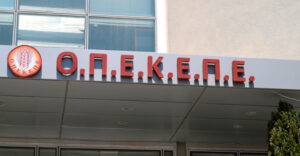
The OPEKEPE is expected to move in the Parliament shortly, with estimates suggesting that by the first week of August, final decisions will have been taken on the establishment of an inquiry and the rejection of proposals to hold a preliminary investigation.
As government spokesman Pavlos Marinakis said, the majority concluded that from the evidence of the case file forwarded to the Parliament, there are no indications of wrongdoing by the former ministers of Rural Development and Food, Makis Voridis and Lefteris Avgenakis. However, the government is reportedly determined to investigate every political dimension of the issue and the agency’s long-standing pathologies. For this reason, the Parliamentary Group of the New Democracy is expected in the coming days to submit a proposal to the Plenary for the establishment of an investigative committee. The proposal will call for an in-depth investigation from the period of the establishment of the OPEKEPE in 1998 to the present day “so that all the pathologies can be sought and investigated, the problems identified and there can be complete catharsis and transparency, for the benefit of our producers, the agricultural and livestock sector and the country as a whole.
It should be noted that the parliamentary inquiry, which will likely begin in early September, will “run” in parallel with the task force checks to identify illegal subsidies and recover the amounts.
At the same time, a preliminary investigation proposal is expected to be filed by PASOK against former ministers of Rural Development and Food, Makis Voridis and Lefteris Avgenakis. A similar proposal will be presented by Syriaza’s. According to reports, the text from PASOK’s central offices will be officially presented to the plenary by next Wednesday and will be debated and voted on in the plenary by the first week of August. At that time, but in a different session, the proposal for an inquiry announced by the government majority is also expected to be discussed.
Investigation vs pre-investigation
According to the Constitution and the Regulation of the Parliament, conducting an inquiry and a pre-inquiry are the two most powerful weapons of parliamentary control, but they have important differences between them. Inquiry
Commissions of inquiry are set up to determine whether policies pursued in particular areas and over a particular period have had the desired effect.
At least sixty MPs’ signatures are required to table the motion, and a simple majority of those present is required to approve it.
According to Article 145 of the Parliament’s Rules of Procedure, “the investigative commissions shall have all the powers of the investigative authorities, as well as those of the prosecutor for misdemeanours, and shall carry out any investigation necessary, at their discretion, to achieve the purpose for which they were established…”. However, the work of the inquiry is of a purely political and not investigative nature, which is why its meetings are not governed by secrecy; on the contrary, they are public.
At the same time, the commission of inquiry has the right to request oral or written information from public authorities, to summon – even by forcible summons – and examine witnesses, to conduct an autopsy or to order a fact-finding mission under the conditions and formalities laid down in the provisions of the Code of Criminal Justice. At the end of the work, it submits a conclusion, while if the investigations reveal indications – evidence of criminal offences committed by members of the government, there is the possibility of submitting a preliminary investigation proposal.
On the other hand, the filing of a preliminary inquiry motion requires signatures of at least 30 MPs, while its approval requires the affirmative vote of at least 151.
The preliminary inquiries are set up to investigate the possible commission of specific criminal offences by specific members of the government and within a specific period. The work of the commission is secret, and the conclusion calls for or rejects the referral of the persons under investigation to the Judicial Council.
Ask me anything
Explore related questions




