Iraq reopens Mosul’s airport 11 years after the conflict and destruction of ISIS
The airport, which has not operated since the group seized Mosul in 2014, will have a main terminal and VIP lounge.
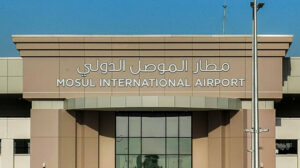
Iraqi Prime Minister Mohammad Shia al-Sudan inaugurated the newly renovated airport in the northern city of Mosul as it had not been operational for more than a decade since it was destroyed by the ISIS terrorist group.
“The airport will serve as an additional link between Mosul and other Iraqi cities and regional destinations. It includes a main terminal, a VIP lounge and an advanced radar surveillance system, al-Sudani’s office said, adding that it is expected to handle 630,000 passengers annually,” the prime minister’s press office said in a statement on Wednesday, aljazeera reported.
Flights will be fully operational for domestic and international flights in two months. Wednesday’s ceremony was held nearly three years after then-Prime Minister Mustafa al-Qadimi laid the foundation stone for the airport’s reconstruction.
The airport’s director, Amar al-Bayati, told the AFP news agency that ” It is now ready for domestic and international flights.” He added that the airport previously offered international flights, mainly to Turkey and Jordan.
In June 2014, ISIS seized Mosul, declaring its “caliphate” from Iraq’s second largest city after occupying large parts of the country and neighboring Syria, imposing hardline rule on millions of people and displacing hundreds of thousands and massacring thousands of others.
Nouri al-Maliki, who was then Iraq’s prime minister, declared a state of emergency and said the government would arm citizens who volunteered “to defend the homeland and defeat terrorism.”
At its height, ISIS ruled an area as large as half the size of the UK and was notorious for its brutality. It beheaded civilians, slaughtered 1,700 captured Iraqi soldiers in a short period of time, and enslaved and raped thousands of women from the Yazidi community, one of Iraq’s oldest religious minorities.
A coalition of more than 80 countries led by the United States was formed to fight the group in September 2014. The coalition continues to conduct raids against the group’s hideouts in Syria and Iraq.
The war against the group officially ended in March 2019 when the US-backed, Kurdish-led Syrian Democratic Forces (SDF) fighters captured the eastern Syrian city of Baghdoz, which was the last piece of land controlled by ISIS.
The organization was also defeated in Iraq in July 2017, when Iraqi forces recaptured Mosul. ISIS, at the end of that year, declared defeat across the country. Three months later, the group suffered a major blow when the SDF recaptured the northern Syrian city of Raqqa, its de facto capital.
Ask me anything
Explore related questions