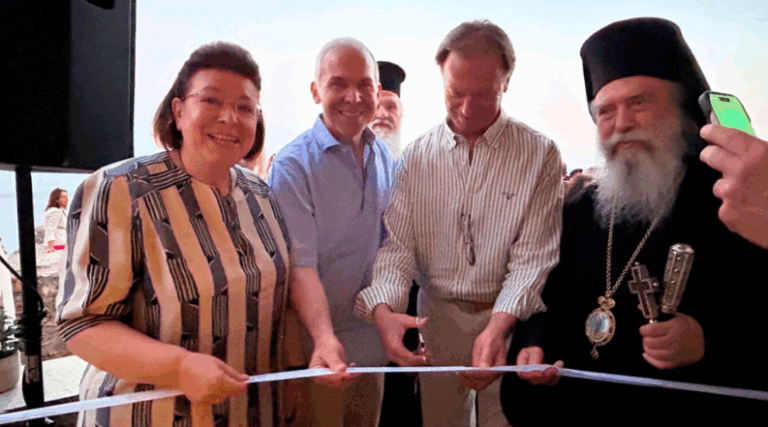
A poetic homecoming took place in the castle town of Monemvasia this week, as the birthplace of one of Greece’s most venerated poets, Yannis Ritsos, was officially inaugurated as a museum. In a moving ceremony attended by dignitaries, clergy, locals and cultural officials, the historic Ritsos family residence opened its doors anew — not as a home, but as a beacon of culture, education, and remembrance.
“This is a very special day,” declared Greek Minister of Culture Lina Mendoni during the opening, “first and foremost for the people of Monemvasia, and for all of us who grew up with Ritsos — for the generation shaped by the post-dictatorship era, when his poetry found its way into our schoolbooks and our lives.”
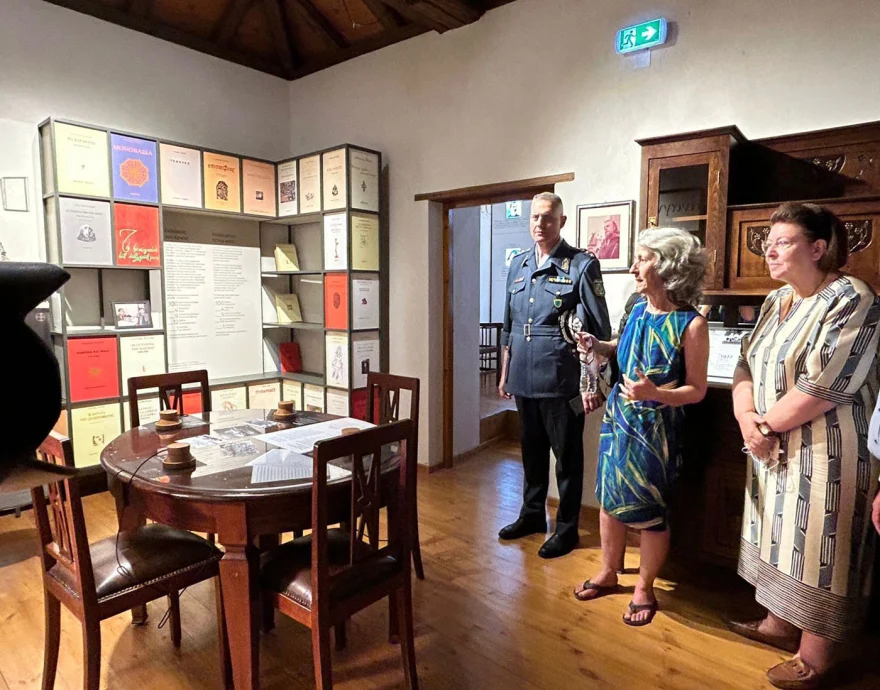
The newly unveiled Yannis Ritsos Municipal Museum is the result of a cooperative cultural development agreement between the Ministry of Culture, the Municipality of Monemvasia, the Peloponnese Region, and the Local Government Development Agency “Parnonas S.A.” The municipality acquired the property from the poet’s family for €276,000, transforming the house into a modern museum space that blends architectural conservation with interactive storytelling.
Extensive work went into the project: from historical research and museological documentation to exhibition design and the development of supporting infrastructure. The museum now offers a compelling portrait of Ritsos’ multifaceted work and personality, his political convictions, and his unbreakable bond with the rocky islet of Monemvasia — all presented through digital installations and contemporary exhibition techniques.
“Small Museums for Great Personalities”
Minister Mendoni used the occasion to underscore the state’s broader cultural policy. “We aim to create small, dedicated museums — spaces that serve as shells for the memory and influence of figures who have shaped our cultural identity,” she said. “Following the opening of the Elytis House, we are now preparing to begin work on the museums of Karolos Koun and Kostis Palamas.”
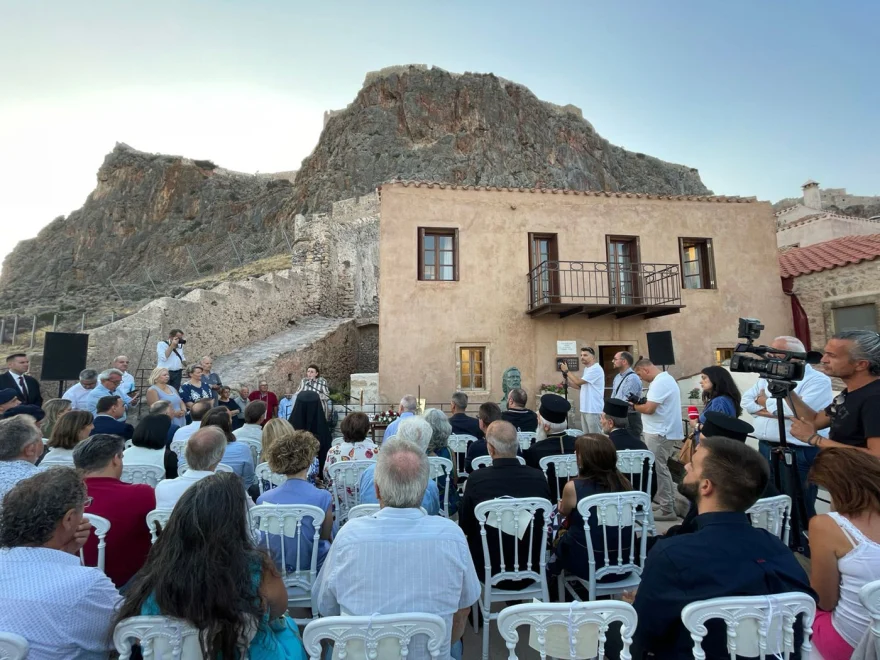
Monemvasia, with its medieval fortifications and sea-drenched serenity, seemed a fitting place for such an institution. Ritsos, born there in 1909, spent his early years in the house now turned museum, nestled just beside the gate to the walled Lower Town. His poetry often evoked the sea and the “motionless rock” of Monemvasia — twin poles of stillness and movement, permanence and change.
Mendoni highlighted this duality in her remarks: “The sea and this rock — they’re central to Ritsos’ poetry. Today, this rock is made accessible to all, regardless of age or physical ability. Everyone should have the right — and it is a right — to climb this historic place, to visit the church of Hagia Sophia restored by the Ministry, and to connect with their heritage.”
Living History
Architecturally, the Ritsos home is itself a palimpsest of Greek history. With origins in the post-Byzantine era and modifications from the 19th and 20th centuries, the building bears the marks of Monemvasia’s evolving urban and social landscape. Its prominent location — directly beside the town’s gate, abutting the western wall — makes it the first home one encounters on entering the Lower Town.
The poet’s memory is now visibly enshrined: the central cobbled street bears his name, and a bust of Ritsos stands sentinel outside the family home, watching over visitors as they enter this new cultural space.
The opening ceremony drew a considerable crowd, including Deputy Defence Minister Thanasis Davakis, MPs Neoklis Kritikos and Nagia Grigorakou, the Deputy Regional Governor of Laconia, local mayors, cultural officials, and, notably, Ritsos’ daughter Eri Ritsou, who donated personal belongings to the museum’s collection.
In a country with no shortage of heritage, the Ritsos Museum signals a growing effort to personalise Greek cultural memory — not only through grand archaeological sites, but through homes turned sanctuaries. These museums serve as quiet, vital places for reflection, education, and connection. They remind us that poetry, like place, roots itself deeply in the land — and that sometimes, returning home is the most revolutionary act of all.
Ask me anything
Explore related questions