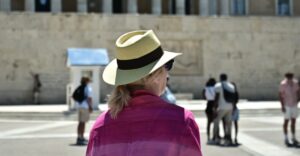
Today, thermal stress on the population is significantly elevated due to high temperatures—locally exceeding 38°C (100.4°F)—even during nighttime hours, according to the National Observatory of Athens.
Heat-Alarm Alerts Across Regions
According to the biometeorological warning system HEAT-ALARM, and as shown in the relevant map, high heat stress and relative risk are expected across much of Macedonia, Thrace, Central Greece, the Peloponnese, Crete, and the Northern Aegean. Very high thermal stress and associated health risks are forecast for most of Thessaly and parts of Eastern Central Greece.
The combination of prolonged heat and lack of cooling during the night greatly increases health risks. For this reason, protective measures are strongly recommended—such as regular cool showers—for all population groups, particularly those most at risk:
-
Elderly people
-
Outdoor workers
-
Children
-
Pregnant women
-
Individuals with chronic illnesses
What the Yellow and Orange Alerts Mean
According to data from the HEAT-ALARM system released by the National Observatory of Athens:
-
High risk (deep yellow) – like in Attica today – implies a danger of serious health issues (e.g., exhaustion) for all population groups.
Lack of access to an air-conditioned space during the day greatly increases the risk to health.
Recommended precautions by meteo.gr:
-
Limit sun exposure between 10:00 and 16:00
-
Stay hydrated and remain in cool indoor (e.g., air-conditioned rooms) or shaded outdoor spaces (e.g., parks)
-
Schedule outdoor activities during cooler hours, typically 04:00–07:00
-
Ventilate your living space at night by keeping windows open or using fans
Very High Risk (Deep Orange Alert)
This signifies very strong thermal stress. According to the Observatory’s guidelines:
-
Serious health issues like heatstroke may affect all population groups
-
Sun exposure and physical activity (exercise or work) during the day increases health risks
-
Lack of hydration, electrolytes, and body cooling greatly worsens the danger
-
Poor air quality (e.g., increased particulate matter) may exacerbate conditions such as asthma
-
Power outages are possible due to increased electricity demand
Additional safety measures recommended by meteo.gr:
-
Avoid outdoor activity between 10:00 and 16:00
-
Stay hydrated and in cool environments
-
Wear a hat and choose light-colored, loose-fitting, long-sleeved clothing to reduce radiation absorption
-
Avoid alcohol and heavy meals
-
Take frequent cool showers
-
Block direct sunlight from entering your home (e.g., keep curtains closed during the day)
-
Seek medical advice if you have a chronic illness (e.g., diabetes) or take medications (e.g., heart or blood pressure medications)
Ask me anything
Explore related questions