





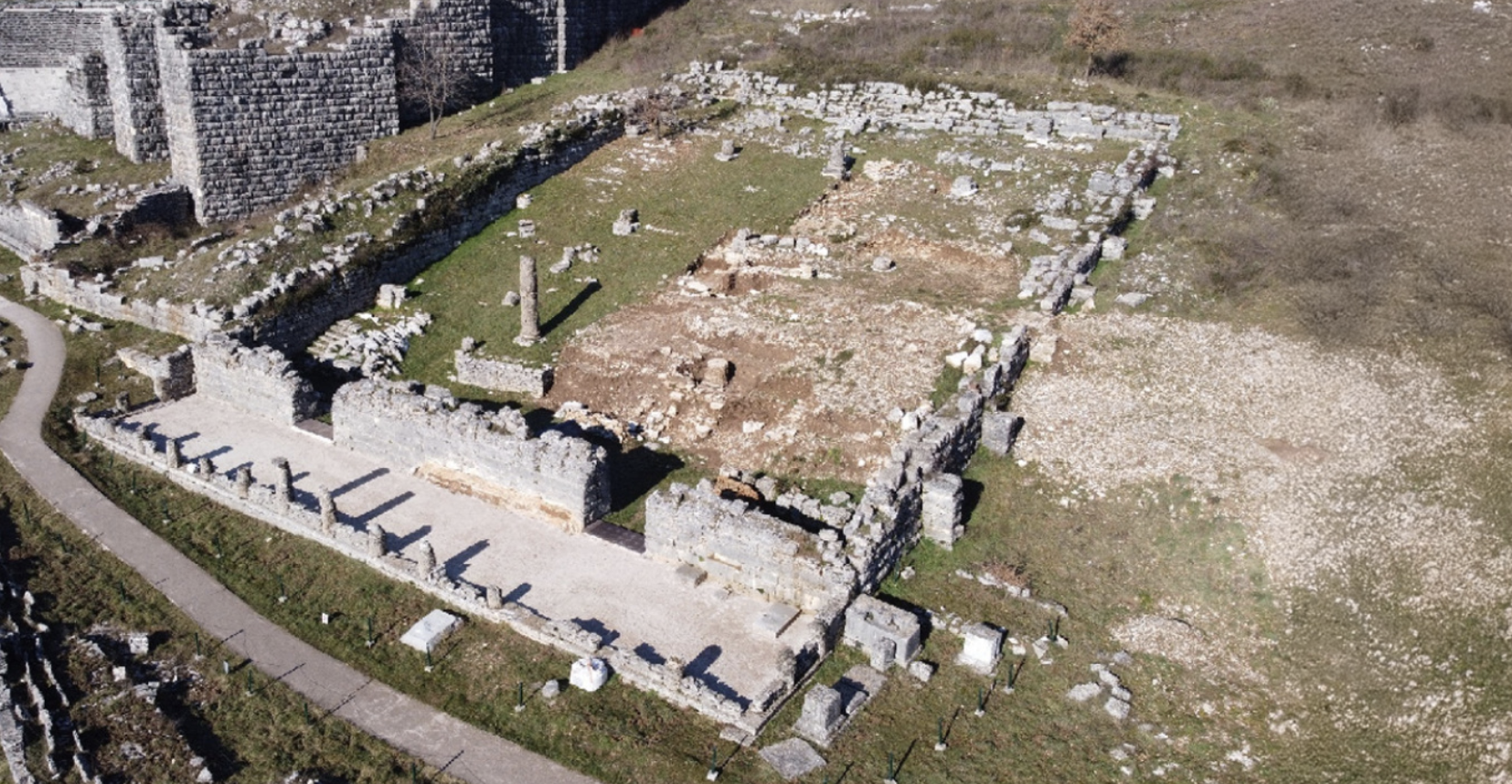
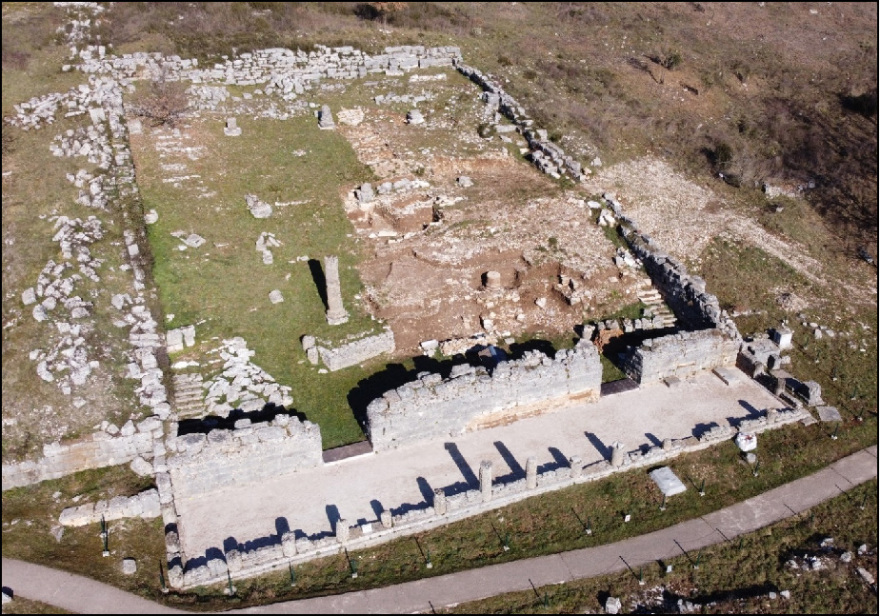
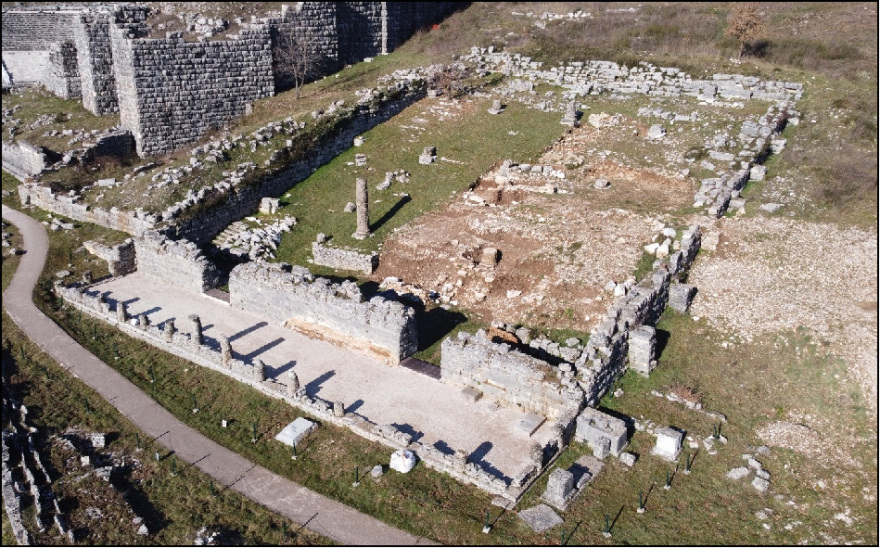
The Ministry of Culture has included restoration and enhancement works of the Bouleuterion, located within the Sanctuary of Dodoni, in its extensive program for the protection and promotion of the archaeological site. The project is being carried out by the Ephorate of Antiquities of Ioannina with funding from the Hellenic Parliament, in addition to the ongoing excavation at the monument, which has been subsidized since 2022.
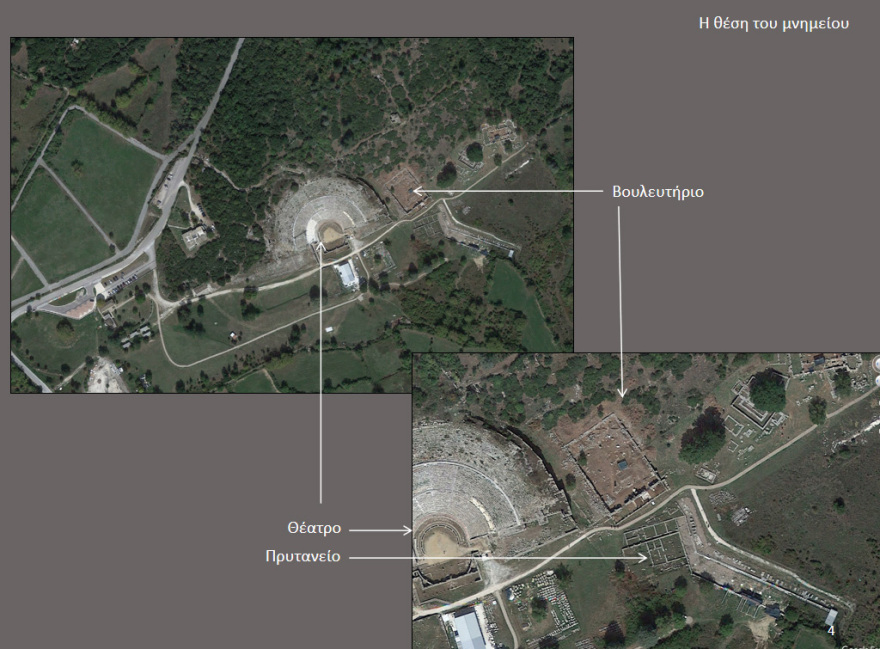
Dodoni was a place of worship dedicated to Zeus and Dione since prehistoric times. The sanctuary was initially open-air, centered around the sacred oak tree, and was later developed with an impressive complex of buildings serving the needs of the cult. The Bouleuterion of Dodoni, a building of political character, was constructed within the sacred enclosure and close to the imposing theater, where other public buildings for political activities were also situated.
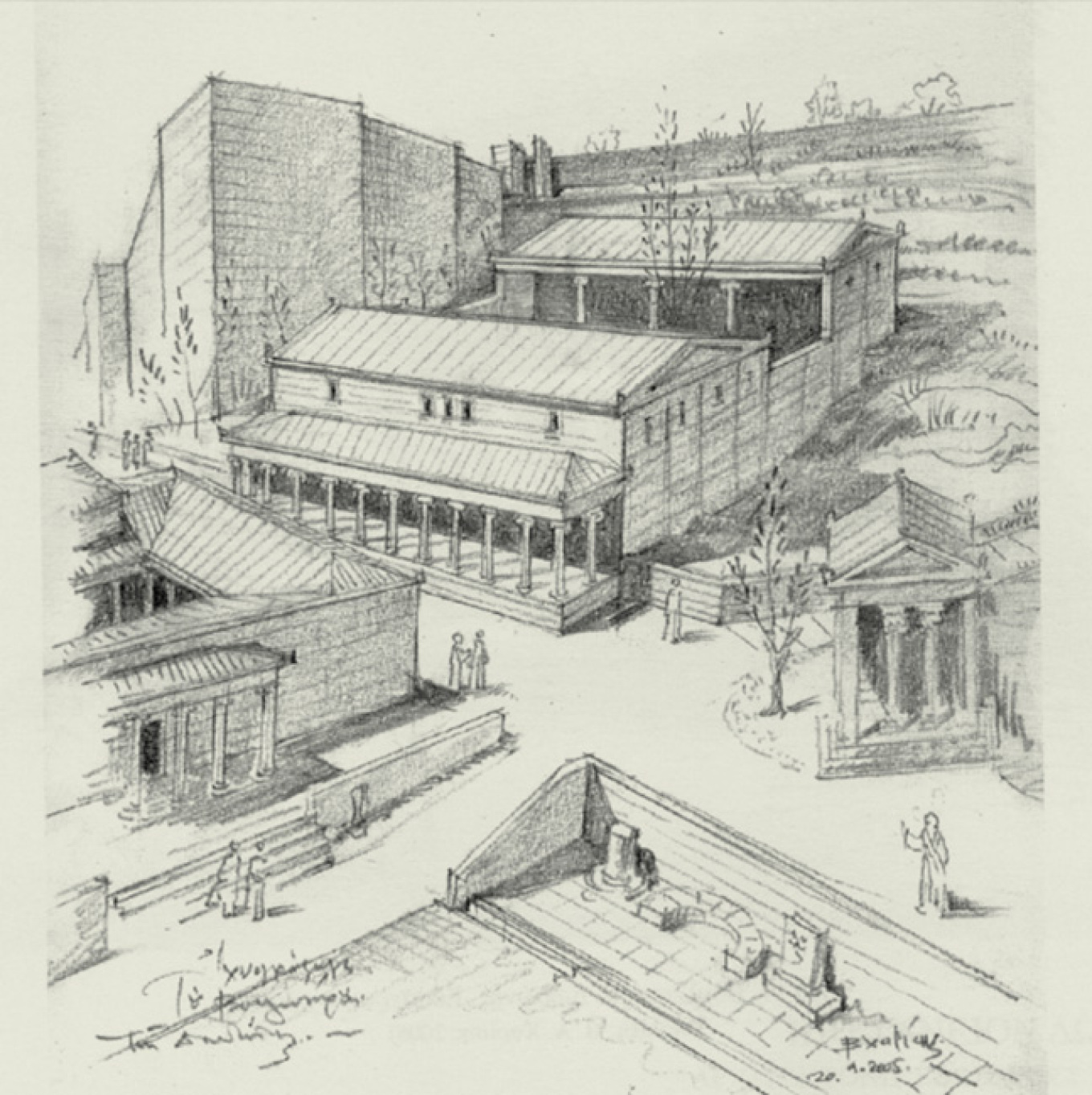
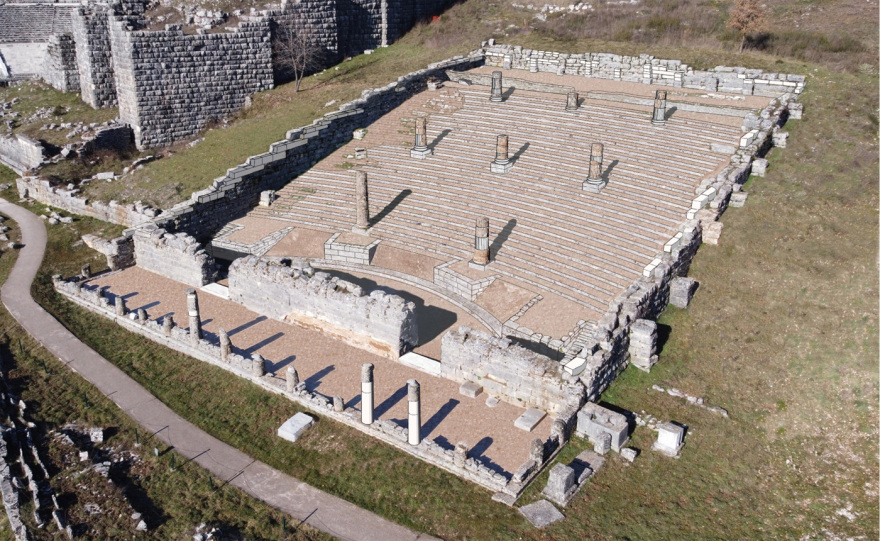
Representation of the Bouleuterion and the surrounding monuments
What Lina Mendoni stated
Minister of Culture Lina Mendoni stated:
“The Bouleuterion of Dodoni, an imposing structure from the early 3rd century BC, served as the seat of the political institutions of the Koinon of the Epirotes. It is located within the sanctuary’s enclosure, in immediate proximity to the ancient theater. The restoration proposal aims to protect the surviving architectural remains and restore the building’s original form in a way that makes its historical evolution legible to visitors.
The restoration of the Bouleuterion is part of the broader program for the protection and enhancement of the archaeological site of Dodoni. The overall project is ongoing and includes, among other things, the stabilization and restoration of the middle cavea of the ancient theater, while the restoration of the lower cavea, conservation of the western stoa of the sanctuary’s outer enclosure, and works to ensure accessibility for persons with disabilities and upgrade visitor service infrastructure and networks have already been completed. The total budget for these interventions exceeds €9,000,000, underscoring the Ministry of Culture’s commitment to protecting and promoting one of Greece’s most important archaeological sites.”
Dodoni: Restoration and Enhancement Works of the Bouleuterion by the Ministry of Culture
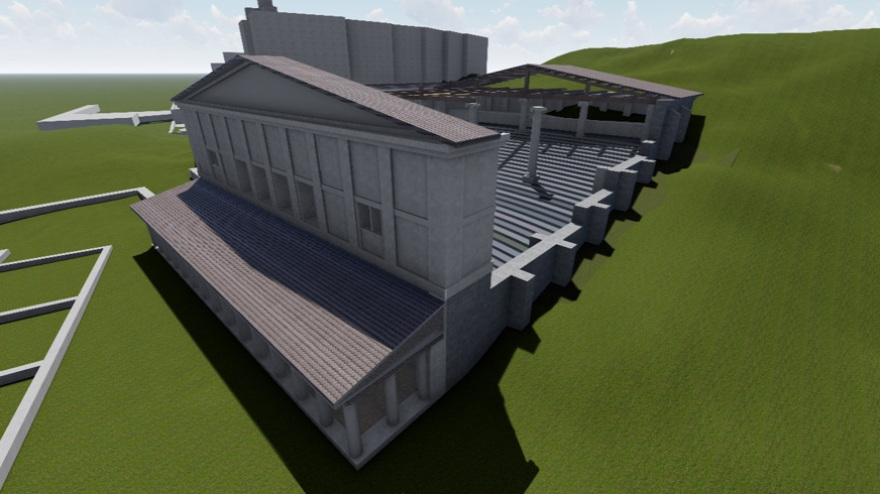
Photorealistic reconstruction of the Bouleuterion in Ancient Dodoni
Planned works include:
Protection and reconstruction of the outer walls, restoration of seating rows and columns, conservation of the tombs, and the creation of drainage systems for rainwater.
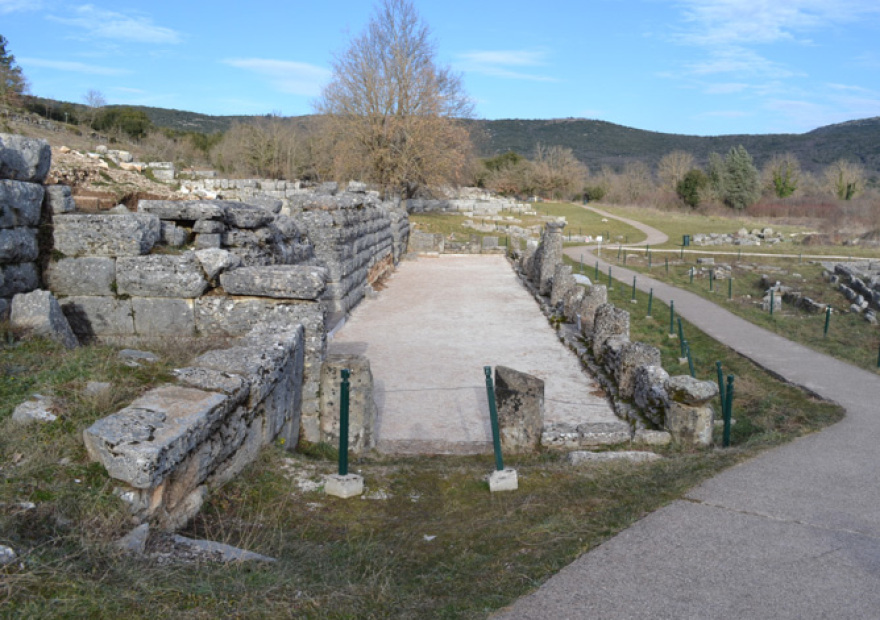
The use of the Bouleuterion is associated with the Alliance and later the Koinon of the Epirotes. Today it is centrally located in the organized archaeological site open to visitors. The building was of large dimensions with a single roof, three rows of columns, a Doric stoa with 15 columns on the south side, an interior cavea with seating rows, and an entrance through two large openings with limestone thresholds. The Bouleuterion had three main construction phases:
- The first dates to the early 3rd century BC during the reign of Pyrrhus, as part of a major building program that included the Bouleuterion, the Prytaneion, the Theater, and the Stadium.
- The second phase followed the Aetolian destruction (219 BC), and
- The third came after the Roman intervention (167 BC), when the Bouleuterion was repaired and continued functioning.
In late Roman times, the area remained in use, though with a different function. The four tombs discovered belong to this phase. The building’s final destruction is dated to the major earthquake of 522–528 AD.
Remains of the Bouleuterion were partially visible in the early 19th century when foreign travelers began visiting the area. The first excavations were conducted by K. Karapanos in 1875. Systematic research took place from 1929 and especially between 1965–1973.
Dodoni: Restoration and Enhancement Works of the Bouleuterion by the Ministry of Culture
Ask me anything
Explore related questions




