





Astonishing scenes are unfolding in Greece as the country battles one of the most intense heatwaves in recent memory. A drone operated by Up Stories captured a scorching 153°C on the rooftop of a parked car on Lenorman Street in central Athens — a stark reminder of the extreme heat conditions affecting urban areas.
The searing temperatures have turned parked cars into literal death traps. The interiors of vehicles, when left in direct sunlight, can reach fatal levels in just a matter of minutes. Authorities are urging citizens not to leave infants, small children, or pets inside cars, even for the shortest amount of time. The risk is immediate and deadly.
On the ground, conditions are no better. In Athens’ central Omonia Square, the pavement surface temperature reached an alarming 70°C at midday on the very first day of the heatwave. With the sun beating down relentlessly, urban heat islands are intensifying the already punishing weather.
The Hellenic National Meteorological Service (EMY) has upgraded its emergency bulletin, initially issued on Sunday, to a Severe Weather Warning. According to the revised forecast, the extreme heat is expected to persist across the country well into the weekend. Relief will begin to appear only in northwestern Greece, and only by Sunday afternoon. The rest of the country will likely begin to cool down slightly on Monday, but high temperatures will remain a concern in many areas.

Meteorologists are forecasting exceptionally high daytime and nighttime temperatures. Minimum overnight lows are expected to hover between 28 and 29°C, especially in densely populated urban areas, where concrete and asphalt retain heat through the night. These conditions make nighttime cooling almost nonexistent, further increasing health risks.

The forecast for Thursday, July 24, saw daytime highs reaching 42–43°C in several mainland regions including Thessaly, eastern Central Greece, and the eastern Peloponnese. Athens recorded highs of 41–42°C, while Thessaloniki saw 39–40°C. Similar extremes were measured across the Aegean and Ionian islands, with inland Crete also topping 39°C.
On Friday, July 25, temperatures were expected to climb even higher in western parts of the country, reaching up to 44°C in some areas. Similar conditions were forecast for Saturday, with central and western Greece continuing to endure extreme heat. Even coastal and island regions, usually more temperate, were not spared, with highs of 39–41°C expected in the Dodecanese, the eastern Aegean islands, and southern Crete.
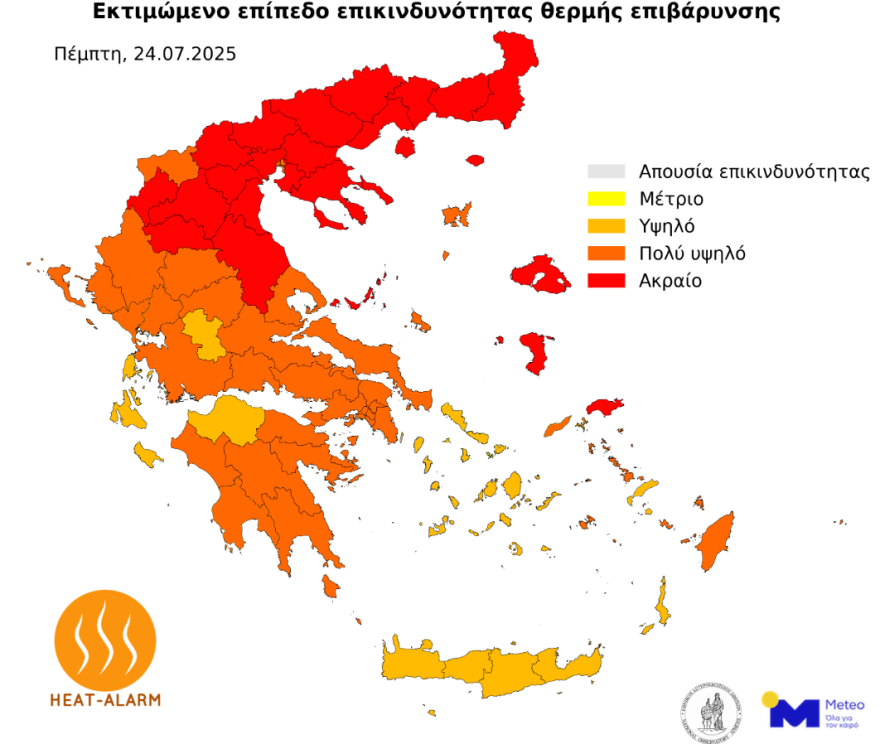
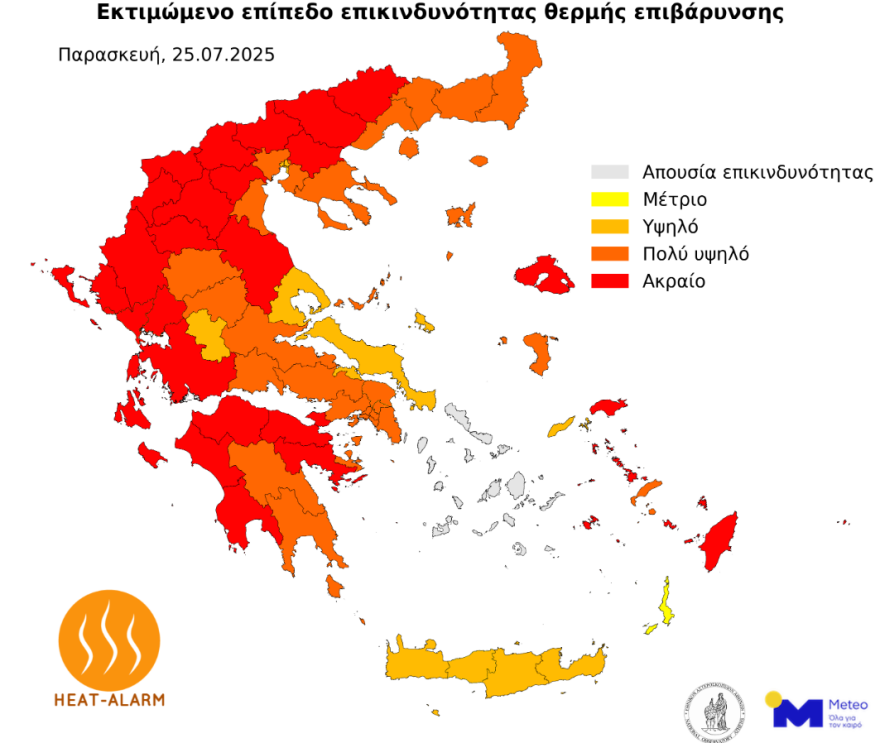
According to Meteo, the National Observatory of Athens, the prolonged duration of this heatwave is contributing to severe thermal stress for the population. The combination of daytime extremes and minimal nighttime cooling poses significant health risks, particularly to the elderly, vulnerable, and outdoor workers.
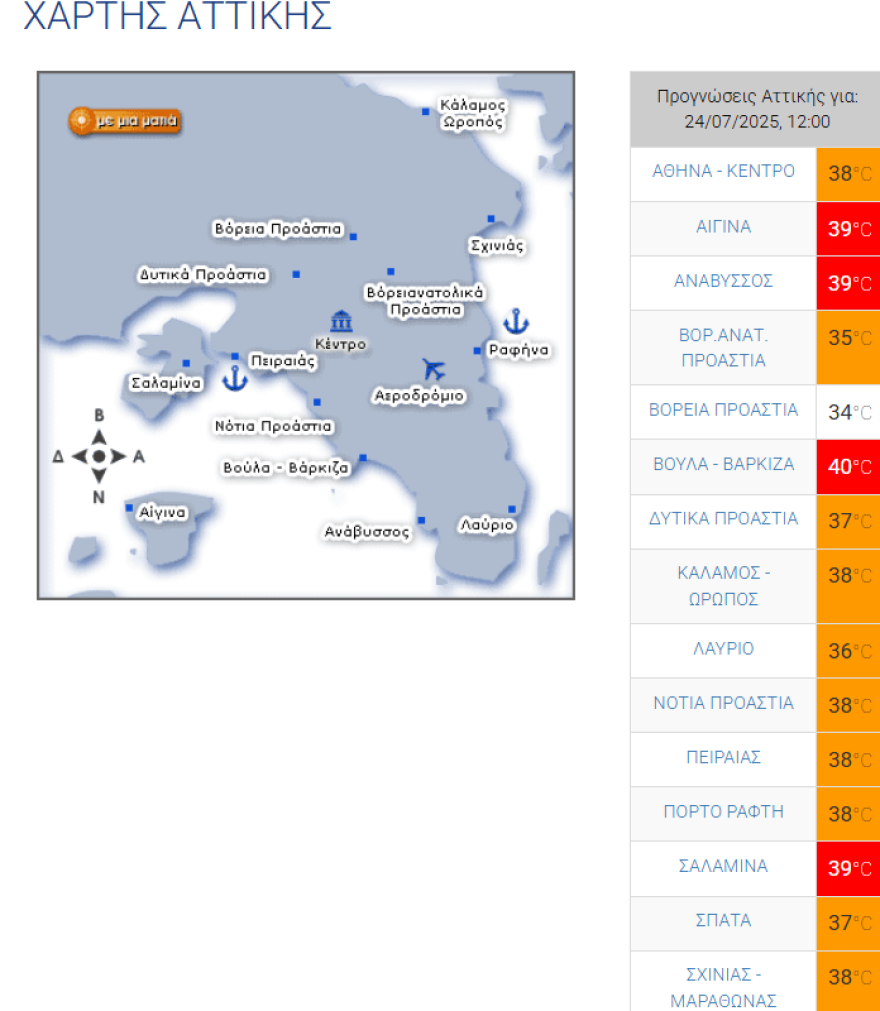
In addition to the extreme temperatures, strong northerly winds are expected to pick up starting Friday in the Aegean, reaching 6 to 7 Beaufort in some areas. These winds, while offering some temporary relief in coastal zones, also increase the risk of wildfires — a serious threat in the current climate.
As the country faces down one of the most intense and sustained heatwaves in recent history, officials are calling for heightened vigilance. The public is advised to stay indoors during peak hours, remain hydrated, avoid strenuous activities, and look after those most at risk.
This is not just another hot summer — this is a national heat emergency. Stay alert. Stay safe.
Ask me anything
Explore related questions




