





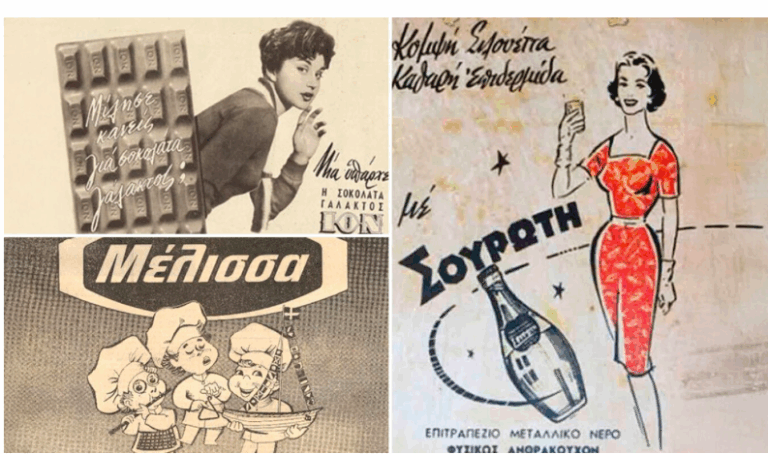
Major Greek businesses, closely tied to the idea of success, often use their names and logos as their most recognizable public face. But what secrets lie behind those names that have become part of daily life for generations? Some of these companies are still thriving, while others have ceased operations—but their names live on.
The Naming of a New Bank: CrediaBank
One recent example is the name of Greece’s newest bank, CrediaBank, born from the merger of Attica Bank and Pancretan Bank, forming the fifth pillar of the domestic banking sector.
The name was officially revealed last week by Eleni Vrettou, CEO of the new bank, during Attica Bank’s General Assembly. But where did the name Credia come from?
As Vrettou explained, Credia is derived from the Latin root credi, meaning “trust” or “belief.” It’s inspired by the word “credibility,” symbolizing reliability.
“The new logo reflects the union between our clients’ needs and the opportunities we offer them,” she said.
“It symbolizes a bond of trust. Credia captures the spirit, strength, and dependability of our new institution.”
Her comments highlight a universal truth in business, not just in Greece but worldwide: the power of a company name.
Why a Name Matters
From the distant past to the fiercely competitive present, the right name has always served as a passport to business success—especially in today’s globalized world of commerce, finance, media, and marketing.
Just like CrediaBank, many Greek companies—some dating back decades—have stories or puzzles hidden in their names. These are businesses that have served generations of Greeks. In many cases, the names have remained unchanged, gaining deep recognition over time.
Some brands became so familiar that their names have become synonymous with the products themselves. In most cases, company names are directly linked to their founder’s name or to the nature, origin, or character of the product.
However, there are also exceptions—cases where names were chosen in more unusual or imaginative ways. Uncovering the history behind these names often reveals curious puzzles or unexpected twists.
Most of these companies are in the food and beverage industry, but not exclusively. The pattern extends across a wide range of sectors, even to businesses that no longer exist. Their names, however, continue to carry weight and preserve their legacy.
A Name Can Become a Legend
Last week’s case of CrediaBank sparked renewed public interest in the meaning behind company names. It served as a reminder: sometimes, even a single word can hold a surprising story—and become part of a cultural legacy.

When shipping magnate Nikos Tsakos, alongside Panagiotis and Giorgos Angelopoulos, announced the three-year sponsorship of Olympiacos BC by the company “Nera Grammou” (Grammos Waters), everyone learned the name of the natural mineral water ARRENA®. From now on, its logo will appear on the Olympiacos players’ jerseys, at the SEF stadium, and in all club-related media.

At some point during the presentation, Tsakos even remarked that “Red Arrena® fits Olympiacos perfectly.”
However, only a few—mainly those familiar with the area surrounding Greece’s fourth-highest mountain, Mount Grammos—know the name’s true origin. ARRENA® is named after the Arrenes Lakes, two alpine lakes located within the lush beech forests of the Grammos ecosystem.
Food Companies
FAGE
Who in Greece doesn’t know FAGE, famous for its dairy products like milk (in earlier decades), its signature strained yogurt, and its cheeses?
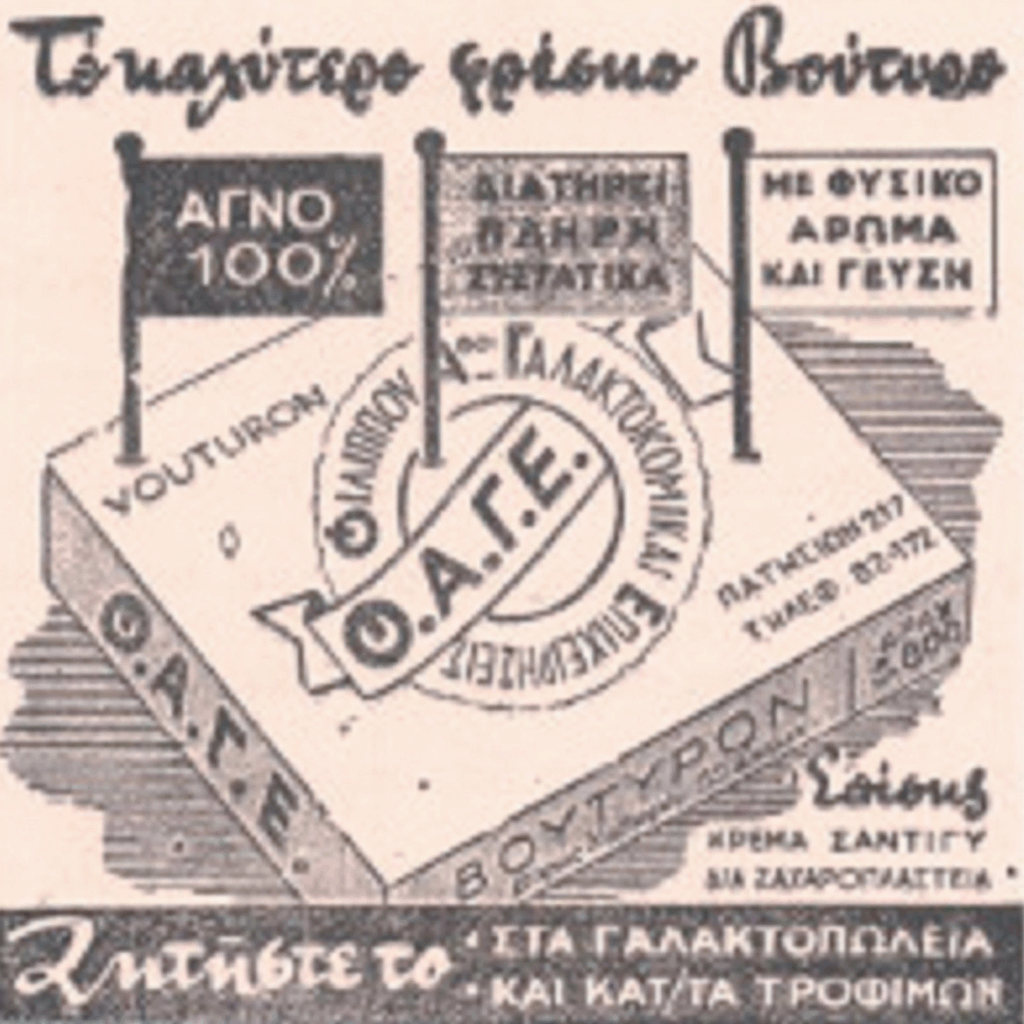
The story began 99 years ago in 1926, when the Filippou family opened a small dairy shop in the Patissia neighborhood of Athens. Over time, the company specialized in yogurt production.
In 1950, FAGE introduced its creamy strained yogurt and became the first wholesale yogurt distributor in Greece. The logo first appeared on packaging in 1970, when the third generation of the Filippou family—brothers Kyriakos and Yiannis—took over.
Since then, FAGE has steadily expanded, opening factories in Greece in 1974 and abroad, and now has a strong international presence. Many think the name simply comes from the Greek verb “to eat” (“fage”), but it’s actually an acronym for:
Filippou Bros. Dairy Enterprises (Filippou Adelfoi Galaktokomikes Epicheiriseis).
ION
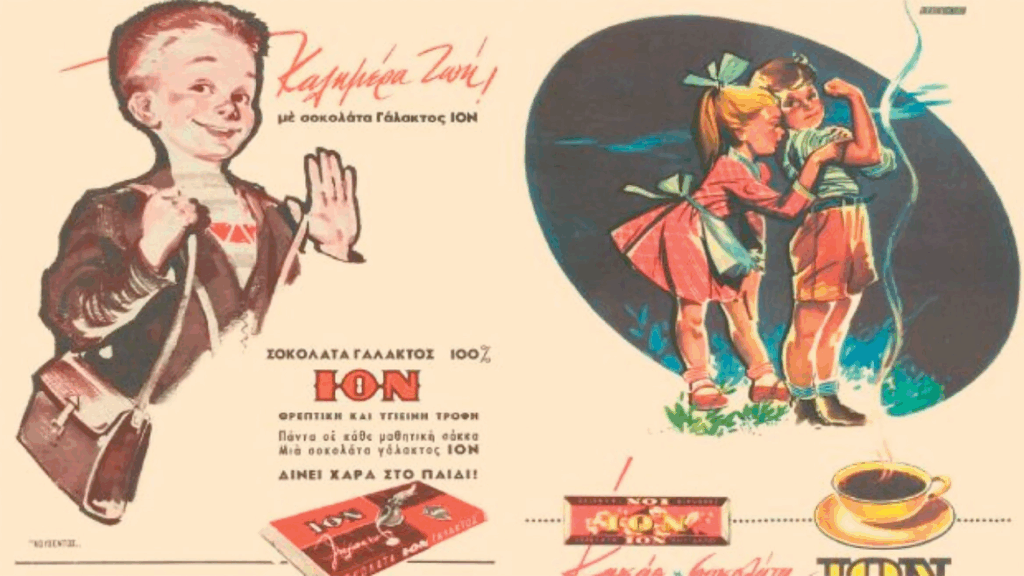
ION, slightly younger than FAGE, was founded in 1930 by a group of friends with a dream of making chocolate. They built a factory in Neo Faliro and named the company ION, inspired by the Greek word for violet (“ion to evosmon”, meaning “the fragrant violet”). The violet was also the company’s first logo.
In 1935, ION merged with NAS.KO. S.A., a confectionery business run by entrepreneurs Nassiopoulos and Kotsiopoulos. The name NAS.KO. comes from the first syllables of their surnames. Together, they launched signature candies like ION caramels and filled NAS.KO. sweets.
ION has since launched many brands and expanded its product line, becoming one of Greece’s leading chocolate companies. Today, it is fully Greek-owned by Spyros Theodoropoulos and exports to dozens of countries.
ELAIS
ELAIS, a company specializing in olive oil and related products, was founded in 1920. Today, it is part of the multinational Unilever Group, operating as ELAIS-Unilever Hellas. It markets food, ice cream, and personal care products.
The name comes from Elaïs, a figure from Greek mythology believed to be the goddess of olive oil. She was one of three nymphs of Delos and the granddaughter of Dionysus. According to myth, she had the power to turn water into wine or oil at will.
ALTIS & MINERVA
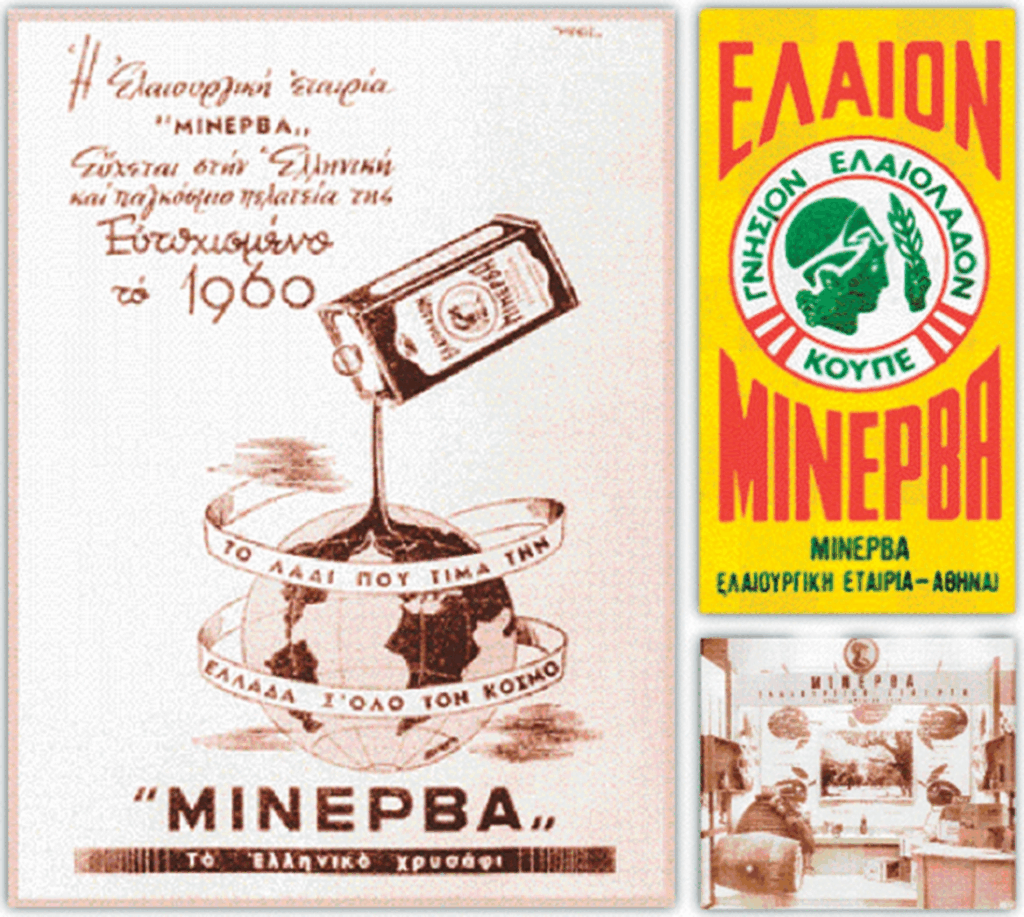
The olive oil brand ALTIS, once under ELAIS-Unilever Hellas, was later acquired by Flora Food Group and now belongs to MINERVA Olive Oil Company.
The name Altis refers to the sacred olive grove of ancient Olympia, from where the olive branches used to crown Olympic champions were harvested.
MINERVA was the Roman equivalent of the Greek goddess Athena. The company name originally came from early branded products like Minerva and Regina (“queen” in Latin), by the founding Karakostas-Yannakos family.
KRI-KRI
Founded in 1934 in Serres, northern Greece, Kri-Kri is one of the country’s most recognized dairy brands. Its founder, Giorgos Tsinavos, later opened a pastry shop and chose the name Kri-Kri after a news story that caught his attention.
In 1954, a Cretan man gifted a wild goat (known as a Kri-Kri) to U.S. President Dwight Eisenhower to thank him for American aid to Greece. The animal was flown to Washington with full honors, and the story made front-page headlines.
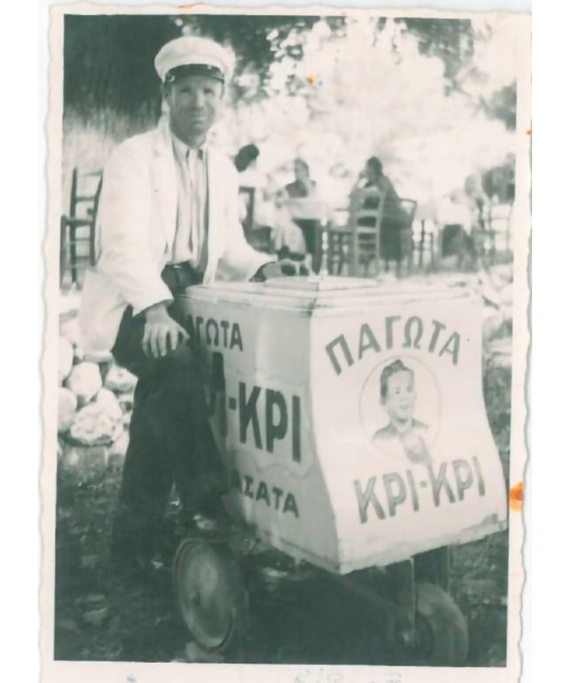
Tsinavos admired the goat’s free-spirited nature and thought the name was catchy, memorable, and easy to pronounce—ideal for a brand.
EVGA
The once-dominant EVGA has gone through many rebrands: in 2019 it became EMFI, and in 2024 it was renamed Menne S.A., now owned by the Filippou family.
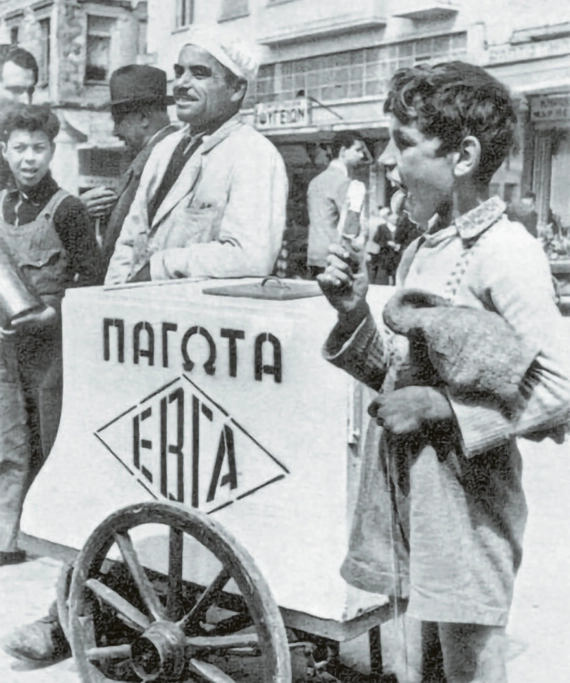
Originally founded in 1934 as a dairy in Athens by the Sourapas brothers, the name EVGA evolved through various phases:
- 1934–1936: National Milk Industry
- 1936–1999: Hellenic Milk Industry
- 1999–2002: Hellenic Milk & Flour Industry
- 2003–2019: European Milk & Flour Industry
- Since 2019: EVGA – Hellenic Milk & Flour Industry
The company changed hands multiple times, including ownership under Karlos Politis, Kyriakos Filippou, Unilever, and then back to the Filippou family.
MELISSA
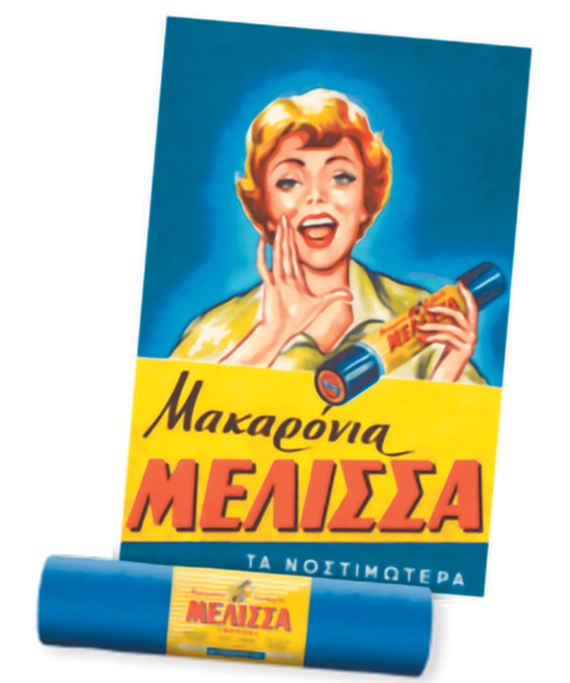
In 1947, Alexandros and Grigoris Kikizas founded VEZAK (Select Pasta Industry of Kikizas Brothers). Later, the company was renamed after its pasta brand Melissa, the Greek word for bee—a symbol of hard work and productivity.
This name reflected the company’s core philosophy: “Work, work, and more work.”
KALAS
Emmanouil Kalamarakis started a small salt processing workshop in 1922 in Athens. In 1948, Konstantinos Kalamarakis began packaging KALAS salt in bottles—an innovation that helped it dominate store shelves.
The name KALAS is a shortened version of the founder’s surname and has no relation to the famous opera singer Maria Callas, as some urban myths suggest.
The company also launched HERA salt in the 1970s, packaged in clear bags. Named after the Greek goddess Hera, the brand aimed to become the “goddess of cooking.”

AVRAMAR
Founded in 2020 from the merger of four major aquaculture firms—Andromeda, Nireus, Selonda, and Perseus—Avramar was created to form a unified seafood giant, backed by the Amerra and Mubadala investment funds.
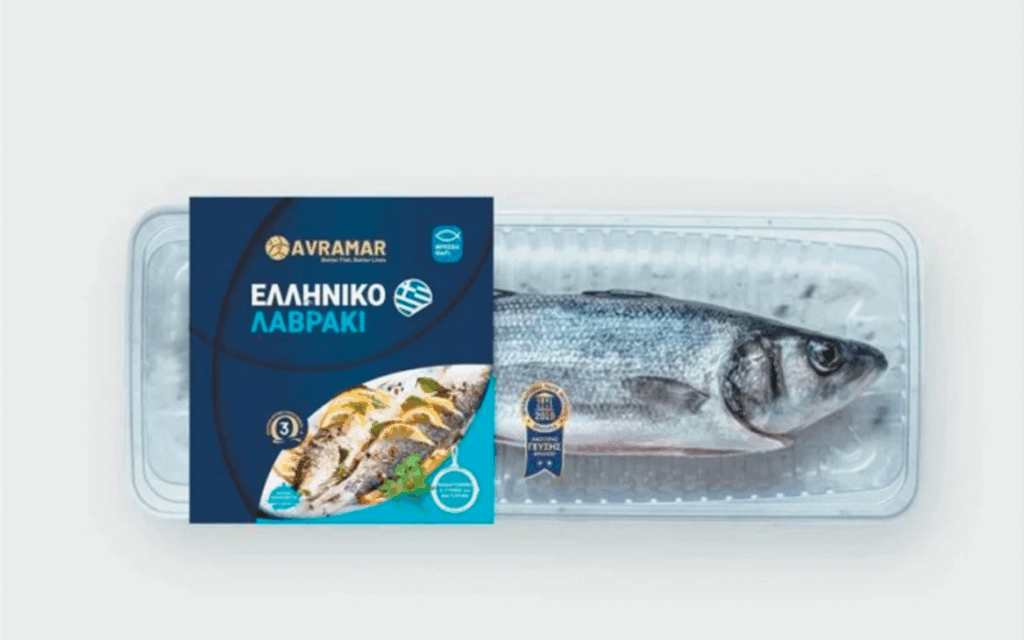
The company faced operational and financial challenges, worsened by the pandemic, but is now nearing a recovery deal with investors, including Aqua Bridge.
The name Avramar combines the Greek word “Avra” (aura or breeze) and the Spanish word “Mar” (sea), representing the company’s Greek-Spanish roots.
KYKNOS
KYKNOS, the Greek Canning Company, began operations in 1915 in Nafplio. It originally produced canned tomatoes, okra, and green beans, with a focus on tomato paste.
In 1928, it installed state-of-the-art tomato concentrators, and by 1963, opened a second factory in Savalion, Ilia, eventually relocating all production there.
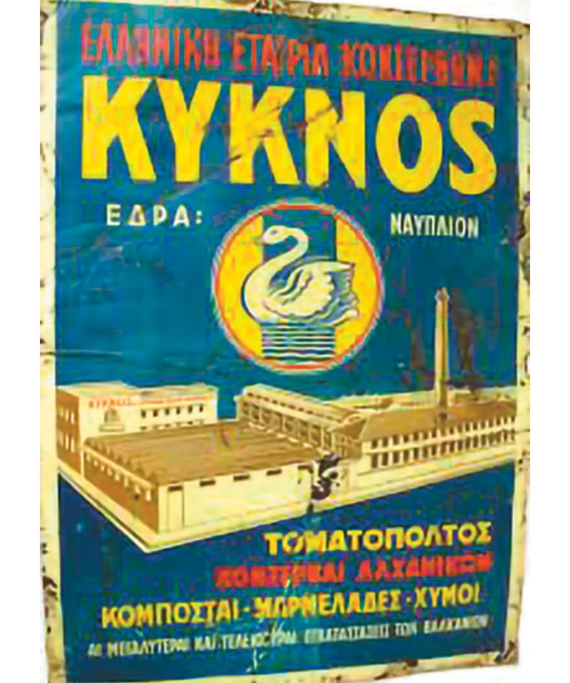
The brand’s name and logo, the swan, symbolize purity, love, and dedication, and have remained unchanged for over a century.
Bottled Water & Beverages
Many bottled water companies use the name of their water source. Some even adopt it as the name of the business itself.
SOUROTI
The well-known Souroti mineral water brand and its namesake company were founded in 1930. The name comes from the village of Souroti, 19 km southeast of Thessaloniki.
The spring there is legendary, supposedly favored by nobles and even visited by Alexander the Great. The area was originally named Surukli under Ottoman rule (from the Turkish “suru,” meaning herd). After population exchanges in 1922, it was renamed Souroti.
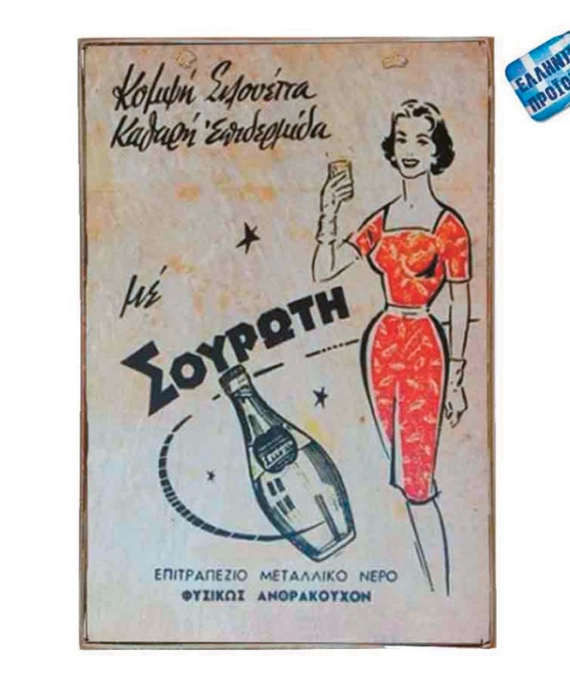
In 1935, the spring was officially recognized as medicinal. The business changed hands over the years and was acquired in 2016 by Dimera Group, owned by Ivan Savvidis.
THEONI
Similar to Souroti, Theoni is both a product and company name. It refers to a mythical nymph named Theoni, tied to folklore about a mountainous Greek region. Both the brand and business aim to connect nature, purity, and Greek heritage through their identity.

Ask me anything
Explore related questions




