





In the shadow of the OPEKEPE scandal—which concerns farm subsidies to over 650,000 TAX IDs of individuals and businesses—brews the case of fake organic certifications for growers, whose numbers have surged in recent years and, according to sources at the Ministry of Rural Development, have now reached 120,000, whereas in 2023 they stood at 80,000–85,000.
The cause of the explosion in organics lies in the Common Agricultural Policy (CAP), which now heavily subsidizes green agriculture and livestock—thus granting much greater support for those kinds of farms. The mass exit of producers from organic programs recorded after the OPEKEPE scandal broke is a sign that what’s happening with organic certifications smells like scandal. Against that backdrop, the Minister of Rural Development and Food, Kostas Tsiaras, ordered investigations into the certification company Terra Cert A.E., which, just after its own accreditation under the National Accreditation System, is alleged to have issued 3,000 organic certificates in a single quarter, according to the complaint.

Lambros Photos, PASOK official and director at the monitored organic certification company
PASOK official
This company, led by PASOK figure Lambros Photos, issued 3,020 certificates from June 15, 2023 to September 9, 2023, while showing minimal expenses for on‑site inspections. It achieved €427,798 in turnover in 2023, declaring just €23,909 in expenses.
The complaint states: “It seems completely impossible to us that there is any documentation of sufficient, specialized, experienced personnel, appropriately trained in organic production and aware of the risks that compromise the organic status of products.”
Inspectors reportedly did not even know which area they were supposedly visiting in person, since the inspections were only on paper, the complaint emphasizes. It adds: “Of course, anyone who looks deeper into the financials can easily see that the cost of inspections is almost nil—and that’s normal because they didn’t happen!”
It is further noted: “Anyone truly familiar with certification knows that this could not have happened, but the competent authorities let it proceed, fostering conditions of legal inequality in the market (even today).” And it continues: “No inspections were ever carried out, and inspectors who declared on paper merely to make their numbers—like S.X. and M. Euf.—never performed a single on-site visit.”
“The inspection records were generated electronically at the company’s headquarters or at the offices of the Submission Centers (KYD).” Another passage notes: “The KS Submission Centers, fully exploiting their access to OSDE subsidy declarations, told farmers in 2023—and continue to promise even today—that they would receive higher subsidies if enrolled in organics, and so they should pick their office, especially since they also have their own certification body.” It emphasizes they “having simultaneous access to subsidy applications and certificate issuance secured enormous profits.”

Involved parties…
According to the complaint, the directly involved Submission Centers are “the Agricultural Cooperative of Dairy and Sheep Farmers of Western Thessaly and Ath. F. […] It didn’t take much digging to see that over 50% of the certificates submitted in 2023 came from these two KYD centers, and primarily from the Western Thessaly Cooperative, which accounted for over 30%. Those percentages suggest a major portion of the certification body’s activities or revenues [i.e. Terra Cert] are connected to entities with conflicting interests. That continued into 2024.”
…and their “crutches”
Under the subheading “Crutches” the complaint states: “In this process, having ensured easy certification again, they found backers in the Elassona Agricultural Cooperative, which—for a fee—registered its members in organic agriculture and livestock, promising them guaranteed certification and increased baseline subsidies via ecological schemes.”
Regarding the cooperatives and their roles the complaint says: “To understand how the Cooperative and its subsidiary operate, one must see the personal connections. The president is Georgios Vaiopoulos [a SYRIZA candidate MP, removed from the 2023 ballot when associates of his distributed €20 notes to Roma voters]. His right-hand in all procedures is Al. Man. He is the connecting link for everything above, with the Cooperative’s board as a crutch, since he participates in various schemes that represent good customer pools—and he’s also the best man with the CEO and major shareholder of Terracert [i.e. Lambros Photos].”
The conclusion of the complaint notes that the company used inspectors and staff who worked at the KYD centers, which leveraged certification to collect fees as a percentage of subsidies, while the company conducted none of the required checks. Moreover, the company leadership functioned simultaneously as consultants to organic producers. Indeed, their headquarters hosts a consultancy run by the same individuals—constituting a conflict of interest.
The Vourliotis investigation
The criminal investigation by the Authority on Money Laundering and European prosecutors has already begun in-depth checks spanning the last ten years into the OPEKEPE scandal. The subsidy lists already available to AADE have been combed through to map the asset status of all involved parties and any discrepancies.
The investigation will initially conduct targeted checks on political figures—former and current ministers, MPs, etc.—since the offense under scrutiny is money laundering. It will also extend to party figures and individuals who held key positions at OPEKEPE as decisive, intermediary actors in the misappropriation of EU subsidies.
Additionally, public officials obligated to audit the organization but who inexplicably failed to do so for years will be investigated. The probe will emphasize high-value subsidy transactions approved and the individuals in OPEKEPE’s leadership who endorsed them.
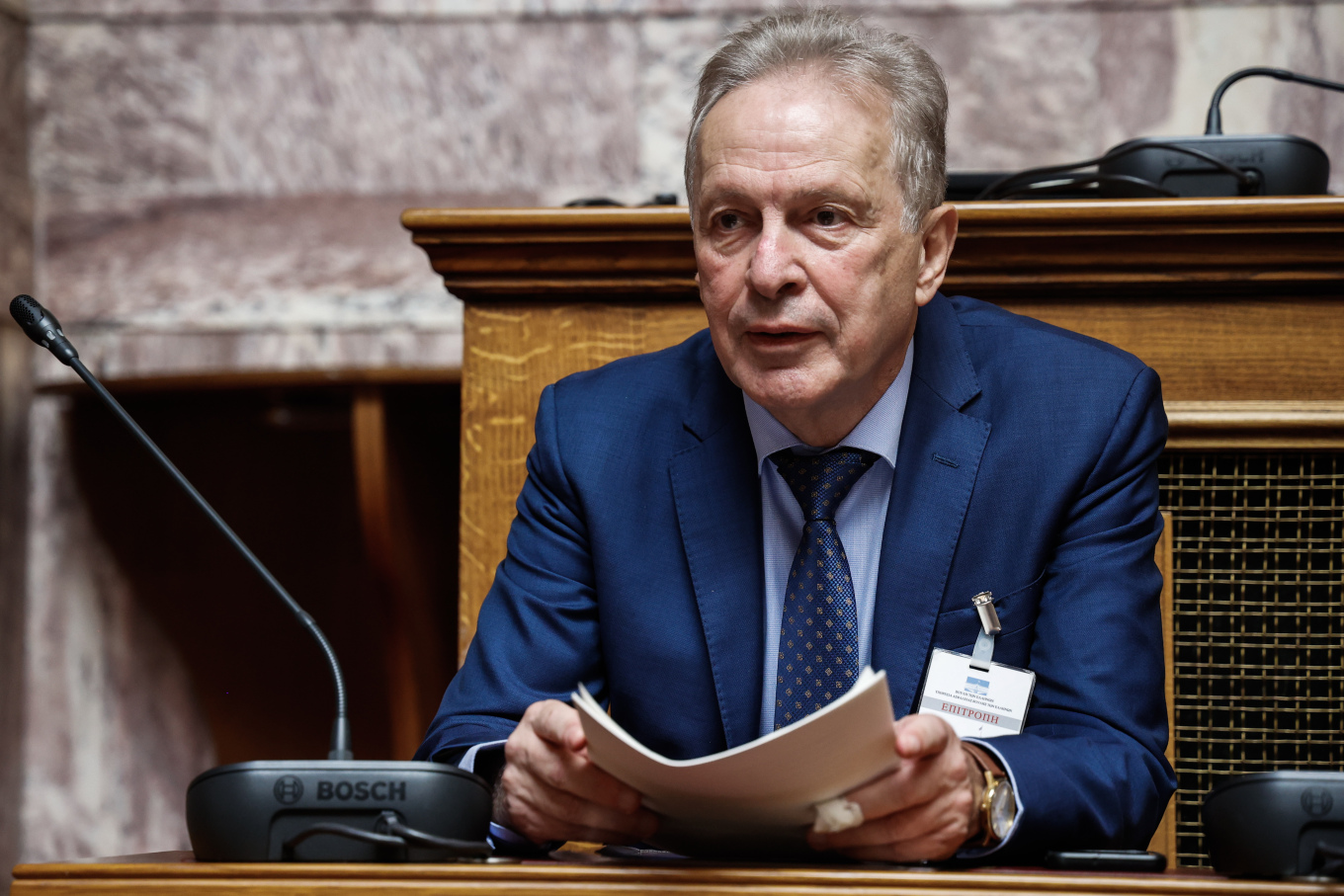
Charalampos Vourliotis
The next step by the Authority’s head, former Supreme Court deputy prosecutor Charalampos Vourliotis, is to impose asset freezes (bank deposits, safe deposit boxes, shares, real estate, etc.) if the investigation reveals signs of illicit enrichment or money laundering.
The cooperation between European prosecutors and the Anti–Money Laundering Authority is excellent—especially since a cooperation memorandum was signed with the head of the European Public Prosecutor’s Office (EPPO), Laura Codruța Kövesi, in Luxembourg. Sources told us: “This collaboration peaked after early July when Mr. Vourliotis assumed the presidency of European anti‑money‑laundering authorities.”
“No one is rushing us”
Our anonymous interlocutors clarified that the investigation will not proceed hastily or under the looming sword of time, despite political expectations, for two main reasons:
First: crimes against the financial interests of the EU—including fraud and breach of trust like in the OPEKEPE case—are felonies and carry a 20‑year statute of limitations per the 2020 legislative amendments, when Kostas Tsiaras was Justice Minister. Specifically, felonies now carry a prison sentence of 10 to 20 years (article 52 of the Criminal Code as amended by Law 5090/2024), and are prosecutable for 20 years from commission.
Also, both fraud and breach of trust—whether as misdemeanors or felonies—with damage over €120,000 are prosecuted ex officio.
Second: they must avoid the legal risk of duplicative proceedings. Duplicative proceedings occur when the same case, between identical parties, is pending in multiple courts. If such duplication arises, no new trial can proceed in any court until the first is concluded. Even if during that period another claim is filed for the same dispute, the new case is suspended until the original trial ends. That suspension ends once the first judgment is final and no appeal is filed. If an appeal occurs, suspension resumes until the appellate decision.
Assessments
If the Authority determines that any investigated individuals received illegal subsidies and illicitly enriched themselves, beyond asset freezes it will recover amounts unlawfully received. The General Directorate of Fiscal Audits at the Ministry of Finance and the National Transparency Authority are responsible for such recoveries. If the affected party appeals, the Audit Court has jurisdiction. It is remarkable that throughout the OPEKEPE scandal, no audit had ever reached the Supreme Fiscal Court.
Terracert’s response:
We wish to underline the following:
What appears in Proto Thema and other media regarding our company is based not on substantiated facts but on an anonymous and unfounded—naturally—complaint, which the competent authorities are rightly investigating, as must happen in such cases.
However, it would also have been proper for reputable media to first request the “accused” party’s input, thereby upholding principles of equal reporting and ethics, before (albeit unintentionally, we hope) becoming part of internal corporate disputes, which courts will eventually settle.
Specifically, minority shareholders in our company, in “seamless” collaboration with competitors, are attempting to undermine and tarnish TERRACERT’s reputation and commercial credibility. In this context, they are spreading baseless and conflicting claims, weaponizing not only the media but also regulatory entities conducting audits.
We are at the disposal of every administrative and judicial authority. Trusting the competent bodies, we are confident a thorough investigation will extend to all companies in the sector to identify who abides by existing law and earns farmers’ trust—and who seeks to monopolize the market, “ousting” every newly established business, finding willing allies in defamation and sensationalism.
We reiterate: we remain available to all lawful authorities and await the outcome. Afterwards, we will be in a position to disclose more both about the unfounded complaint and about who disseminated it, while the authorized authorities conduct their investigation and for what reasons…
Finally, we note that our newly founded company has absolutely no relation—nor could it, timing‑wise—to the OPEKEPE scandal.
That is all for now. We reserve any legal rights.
Ask me anything
Explore related questions




