Two precious gems of the Saronic Gulf. Radiating natural beauty, cultural value, historical identity, and refined elegance. Hydra and Spetses. Traditional and cosmopolitan, youthful and classic, vibrant and serene—they create a scene that refuses to surrender to the fetish of motor vehicles.
They resist the exceptions, the leniency and circumventions of the car-free landscape that tend to distort the enchanting aura of unique tranquility. After all, any place without noise, honking, and revving offers more than luxury. In the noisy modern world of intense daily rhythms, silence is a blessing.
Source of inspiration
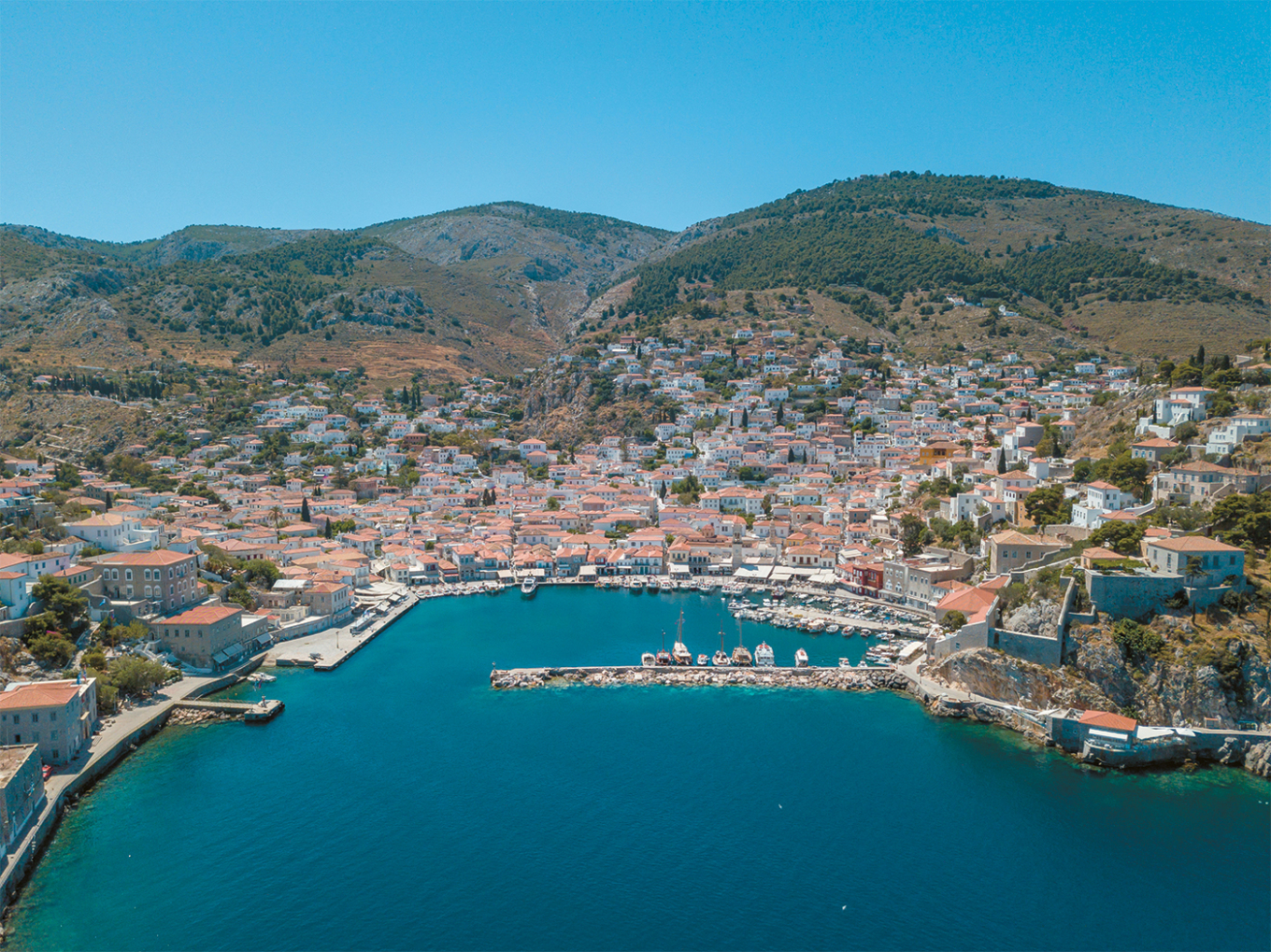
Built amphitheatrically on two rocky hills, Hydra’s cobbled streets, stairways, and narrow maze-like alleys never accommodated the arrogance of the automobile. For decades, the clear gaze of its people met face to face with neighbors without being refracted by gleaming mirrors, bumpers, sheet metal, rims.
Without being clouded by exhaust fumes. Nor distracted by traffic lights and LED headlights. For its environmentally conscious residents—the soul of the island—the car does not just bring noise. It also carries individuality, haste, anonymity. They never envied it, never demanded it, never tolerated it in the historic city of shipowners and revolutionaries of 1821.
Nor are they willing to endure it with its annoying noise. For years, the sounds that shattered their serenity came from a broken tile on a roof, the hoofbeats of pack animals on the cobblestones, or the creak of an old door in a stone-built mansion groaning like elderly joints.
This daily quality of minimal, functional aesthetics in harmony with untouched nature once enchanted Leonard Cohen and Marc Chagall. It opened horizons to the community of foreign bohemian artists who settled there, even inspired the Beatles during their stay at Alexis Mardas’s home. It brought to the landscape—painted by Hadjikyriakos-Ghikas, Tetsis, Byzantios—Sophia Loren and Alan Ladd for the film Boy on a Dolphin, Melina and Anthony Perkins for Phaedra by Jules Dassin.
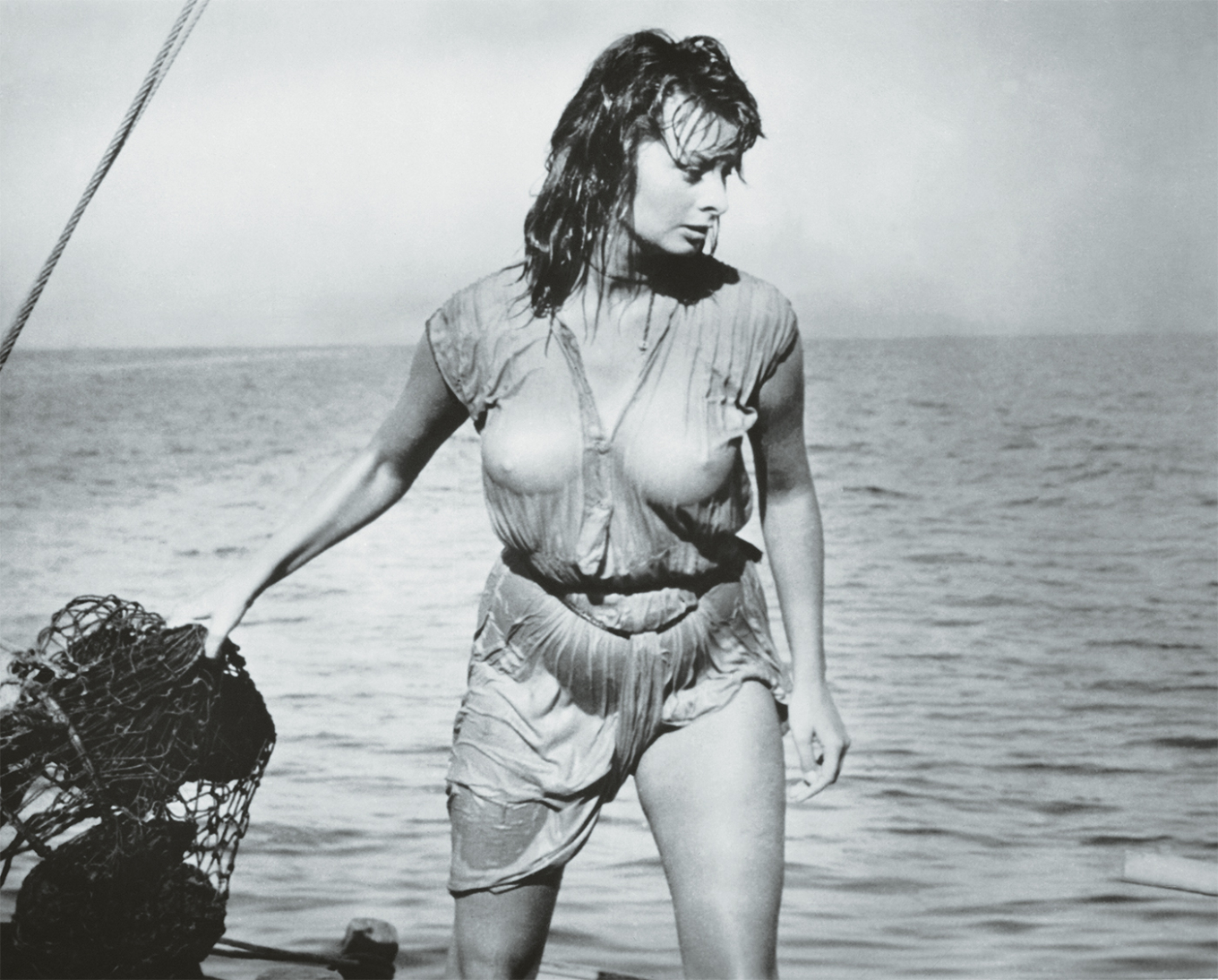
Sophia Loren in a scene from Boy on a Dolphin, filmed in Hydra in 1957
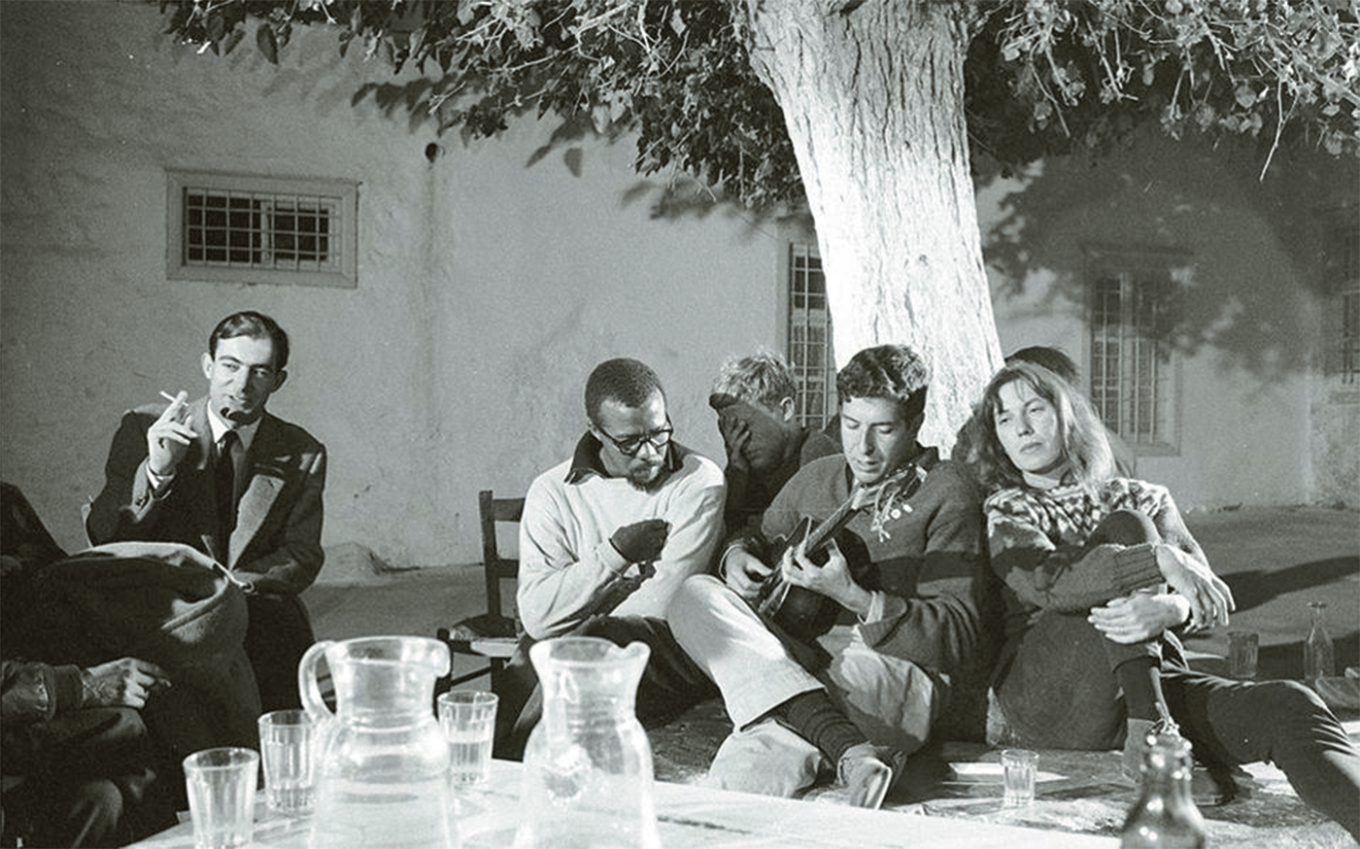
The legendary troubadour Leonard Cohen during one of Hydra’s magical 1960s nights
With its rare personality, the island was placed on the global map as a mythical oasis of “dolphins, banners, and cannon blasts,” as Nobel laureate poet George Seferis—who summered there—praised in his verse. Over time, its welcoming backdrop evolved into a globally attractive tourist landmark.
Why change now? Why transform it from a refined retreat—thanks to the lack of cars—into a partial parking lot for internal combustion engines? The overwhelming majority of the local community and citizens object before the law banning vehicles is torn to shreds. After all, Hydra’s light cuts away the excess.
What remains is truth. The truth that bathes everything from the old shipyards to the bougainvillea-covered walls, the gardens with their petite lemon trees and lush wild figs. Yet, the radiance of truth isn’t enough in what was once called the “Capri of Greece” to deter the reckless who arrive by ferry with cars, bikes, and motorcycles. Where exactly they’ll move within the limited road network due to the island’s morphology is another, practically messy, issue.
Hydra, after all, isn’t like Venice, Dubrovnik, Zermatt, Bruges, etc., where most of the urban space is reserved for pedestrians. It’s an island. Which gives it an advantage. But also makes the management of its protective framework more complex.
Transport
In reality, it’s the only place in Greece where cars or other wheeled vehicles are not allowed, under a law passed in 1950 to protect its timeless character. It is governed by opinion No. 648/2002 of the Legal Council of the State, which ruled that only the Minister of Culture has authority over vehicle circulation on the island.
However, the Ministry of Culture is neither a Port Authority nor a Police Force. It has no enforcement mechanism to supervise or prevent such violations. The municipal government, Fire Department, and island hospital are the only bodies with vehicles, used only when needed.
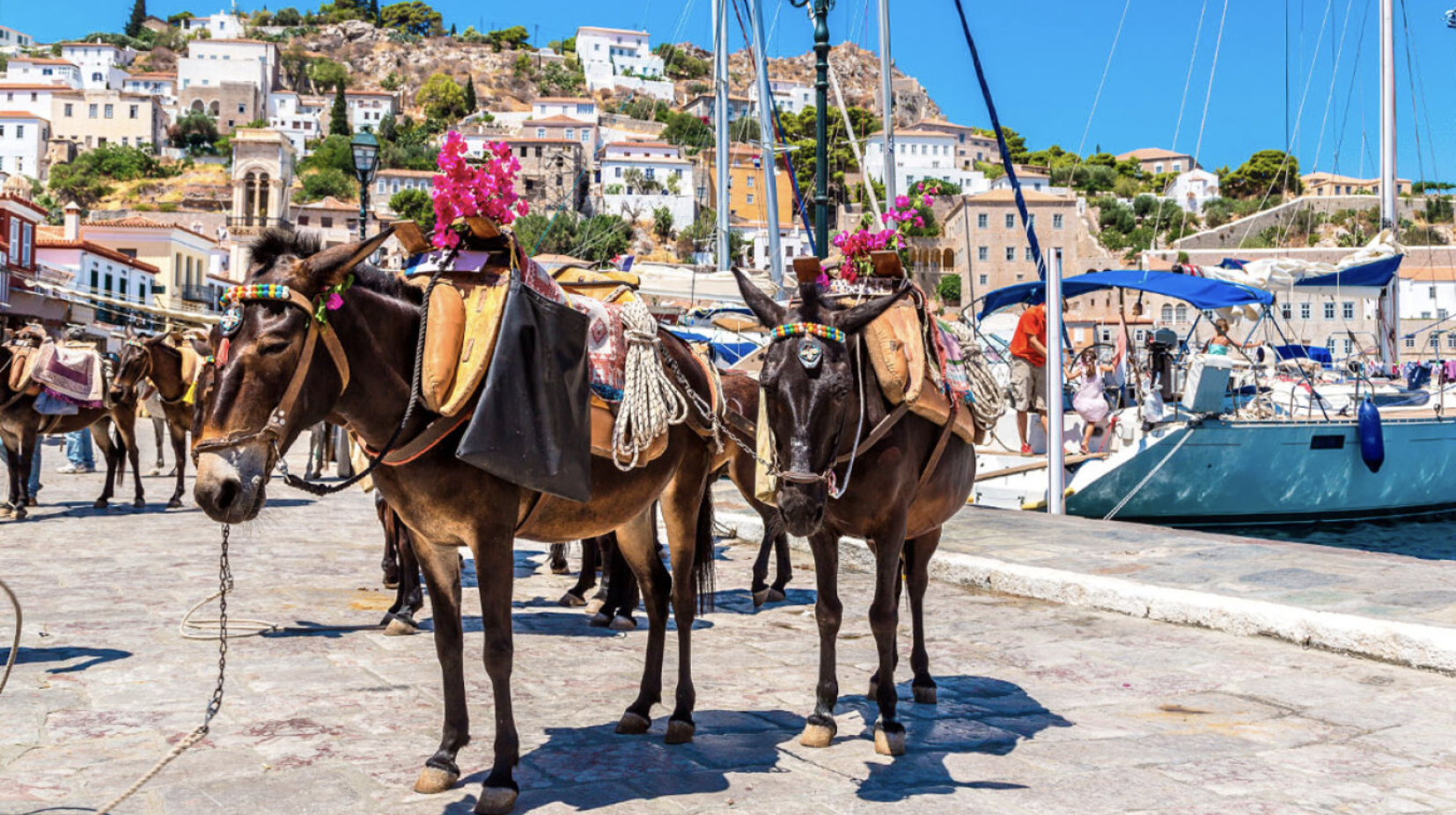
For example, the municipal garbage trucks collect waste from specific, pre-designated spots. Construction and agricultural machinery (bulldozers, mixers, cranes, tractors, etc.) must leave the island immediately after completing their work. All other movement occurs on foot or by animals. Over 300 donkeys, mules, and horses carry goods and visitors with their luggage.
They function like four-legged taxis, transporting tourists to their destinations, pilgrims to monasteries, and explorers to prehistoric and Mycenaean ruins. Beyond the folklore, these pack animals serve essential daily needs. They are owned and cared for by about 30 families who have passed down this trade through generations.
From every angle and by law, everything seems pure, unspoiled, ideal when it comes to transportation on the island. Yet life’s demands are increasing. Since the days when Tony Maroudas and Sophia Loren sang “What is this thing they call love,” chorused by tourists arriving at the island’s only harbor, nearly 70 years have passed.
Changing times
The wild years of jet setters at the legendary “Lagoudera” of Babis More, the endless cocktails at “Piratis,” and the fiery dance parties at “Kavos” are long gone. Times have changed, obligations are more pressing, but wheels never rolled.
Nonetheless, less than ten years ago, the local Police Department requested permission from the Ministry of Culture’s Ephorate to use two enduro-type motorcycles—but only for emergencies involving life threats or crimes against archaeological sites and the environment.
The local community and authorities strongly opposed. The request was denied. The mayor even opposed the local police’s plan—ultimately executed with ELAS’s consent—to use bicycles. The issue became moral as well as practical. It couldn’t be that the very law enforcers violate the explicit vehicle ban.
Logically, one thing leads to another. How could a motorcycle cop later fine a tourist on a bicycle in Hydra? Such tolerance could evolve from bikes to e-scooters, then to electric mopeds, and eventually to golf carts.
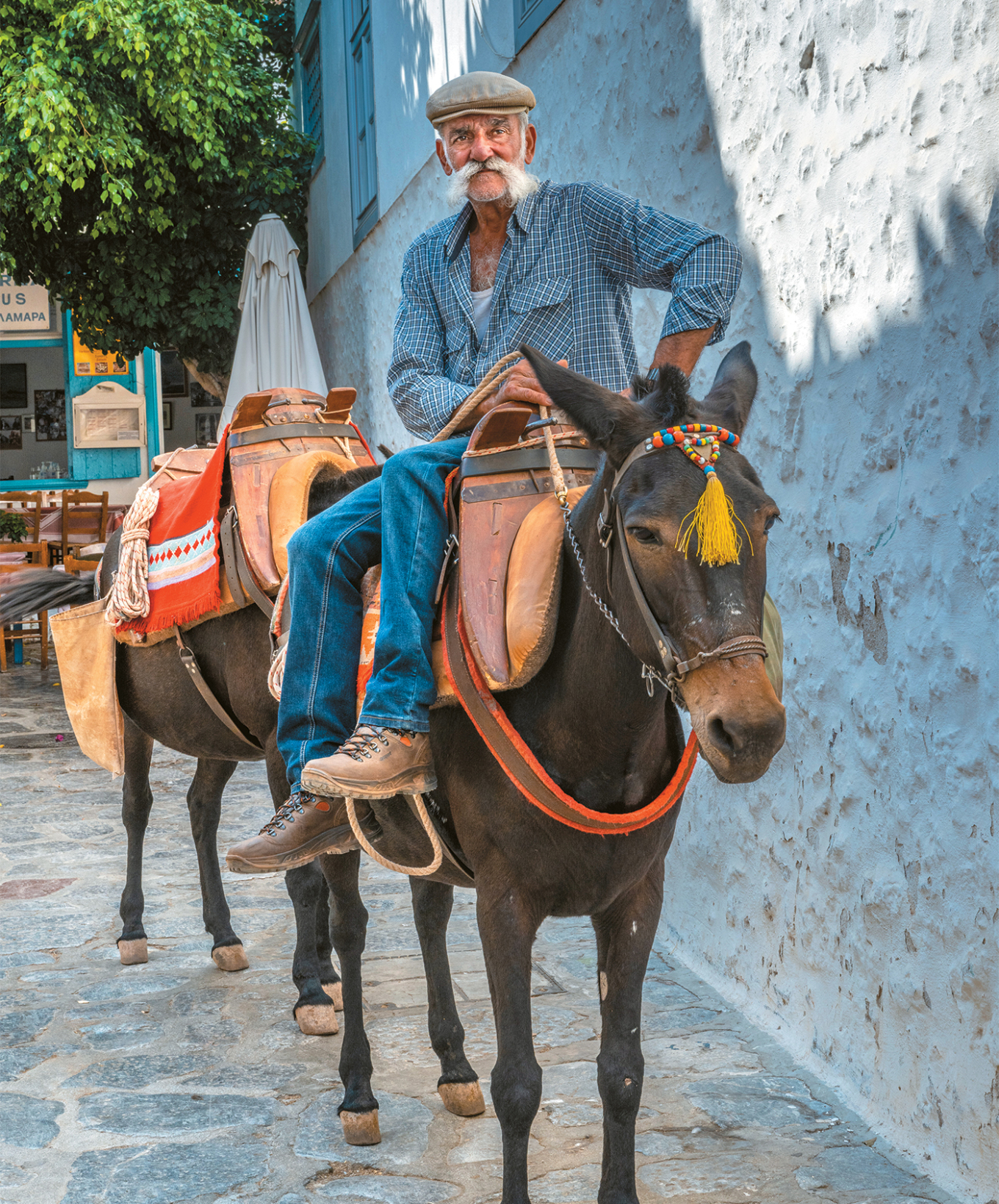
Until one day, maybe even a full electric car ends up parked under the statue of Andreas Miaoulis. Sure, these are all silent—but noise invades from other sources too.
As the island, after some fluctuations, is back in vogue and topping visitor arrivals, the risk of distorting its old-world charm looms. While some craftsmen—guardians of the island’s culinary heritage—still run age-old tavernas with beloved delicacies, the expansion of new dining and entertainment venues increases.
With them, numerous dining tables sprawl disorderly into public space. At the height of summer, the chatter becomes unbearable for locals. Often they must zigzag through blocked alleys to reach their homes or jobs. At best, the situation evokes the packed lanes of Mykonos’s Matoyiannia.
At worst, it resembles a chaotic Middle Eastern bazaar. True Hydriots and hundreds of foreign homeowners who’ve come to love the island differently protest this sprawl and occupation of their shared spaces. But even more, they justifiably resist the disfigurement of their heritage architecture.
Already, the Kρητικός supermarket chain—via an intermediary—has rented three adjacent shops on Hydra’s quay intending to merge them into a retail outlet. It’s a central spot, immortalized in countless photos, right across from where the donkeys line up.
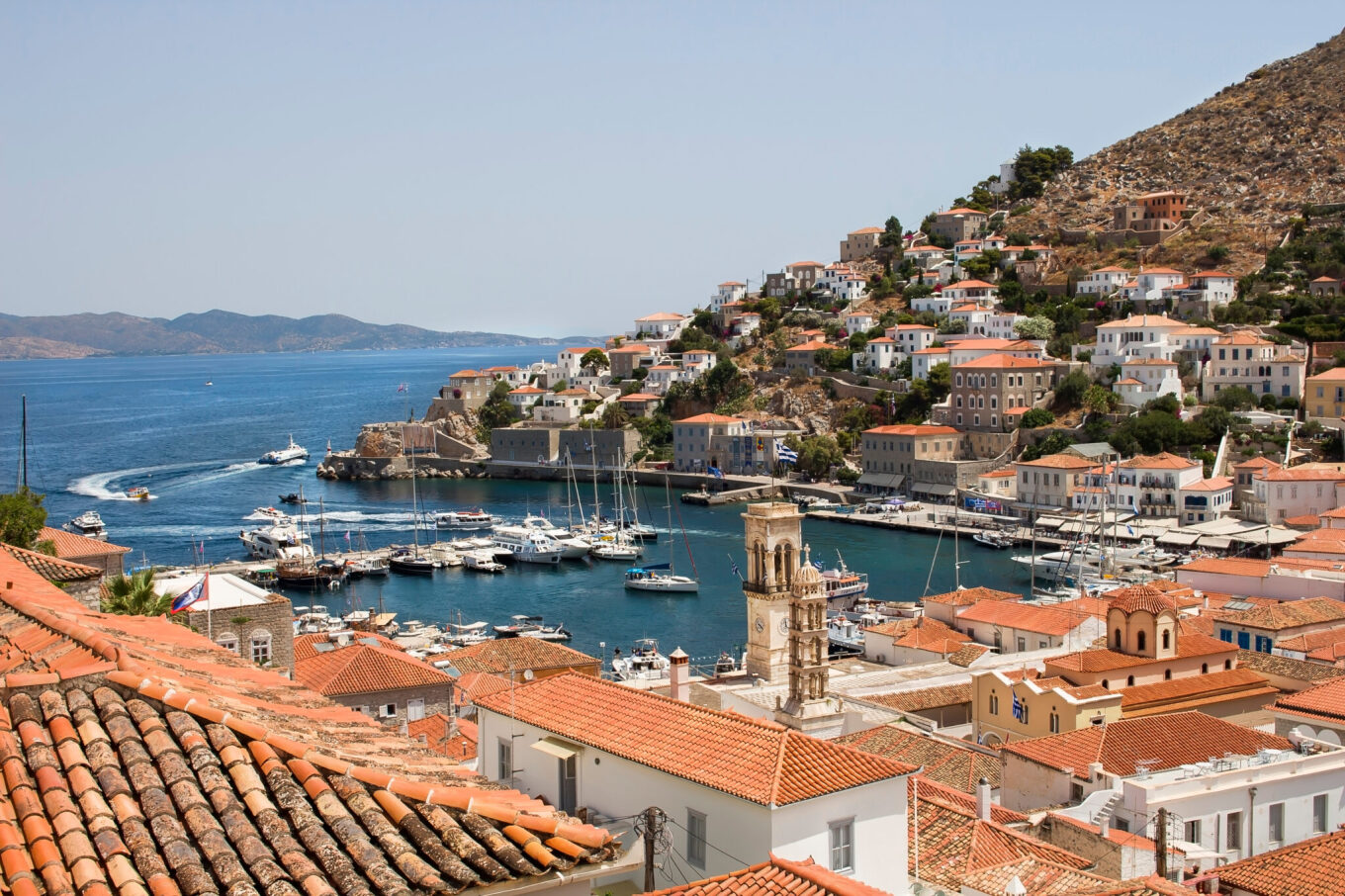
Residents shudder at the mere thought of the cobblestone surface of the port’s land zone being worn down by delivery trucks for the supermarket—how could the pack animals bear the load? They’re horrified by the idea of a bright store sign facing disembarking tourists, with awnings, crates, plastic, fridges, boxes, stacks of bottled water.
Not to mention the waste. Already, a similar mess is piled outside their existing store on Miaoulis Street. The municipality has filed a legal complaint against the pressure it faces over licensing and operation of this large retail outlet.
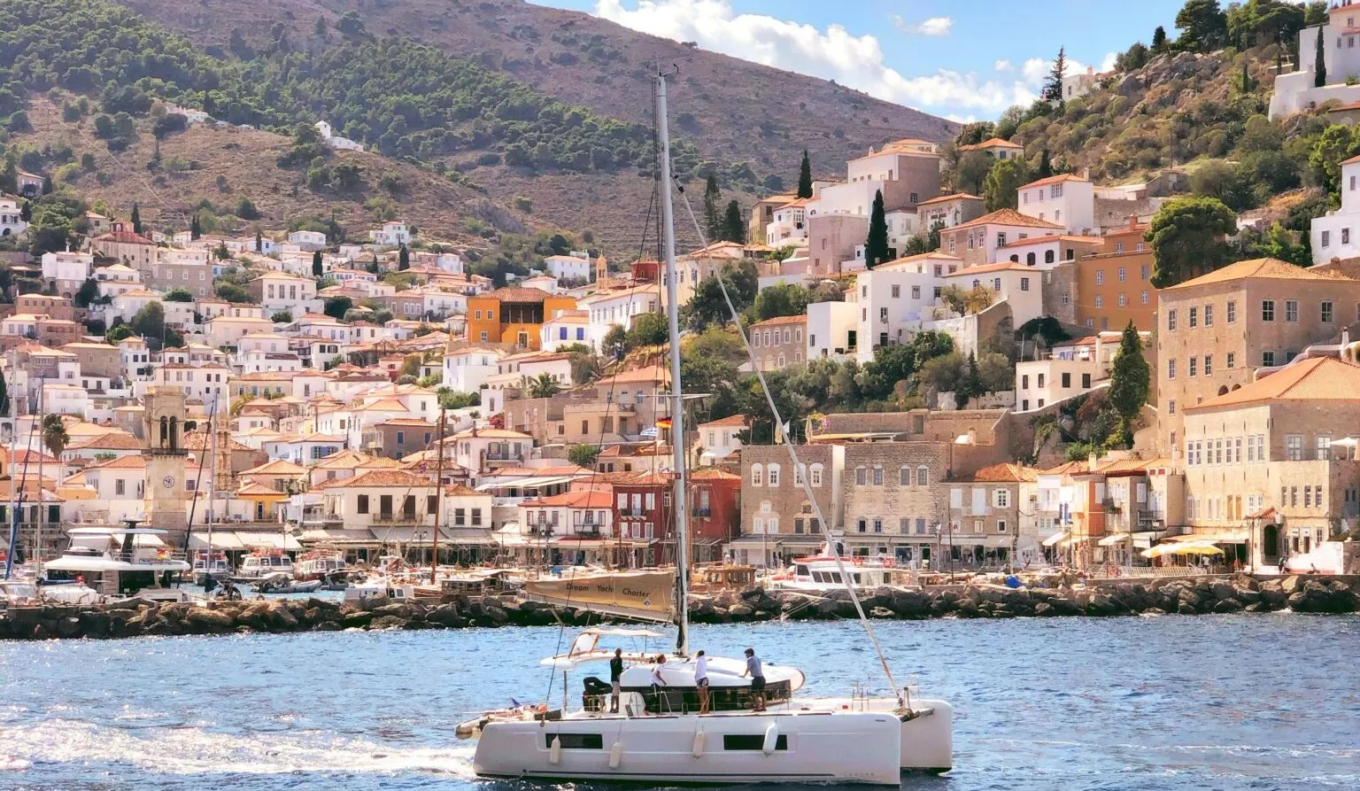
At the same time, the state has shown interest in protecting the environment from illegal interventions. Engineers from the relevant Saronic Property Directorate of the Ministry of Finance recently conducted on-site inspections.
They recorded lease violations and construction of a fixed canteen within the shoreline at Agios Nikolaos Beach and another violation at Bisti Beach. Their reports will be submitted to the prosecutor. Citizens, visitors, and the island’s ecosystem deserve as much.
Spetses
While Hydra’s residents fight to keep vehicles at bay, neighboring but larger Spetses suffer from mounting exceptions to the vehicle ban, harming its enchanting character. Their intrusion gradually distorts a dreamlike canvas painted with centuries of history.
With mansions of unique architecture, pebble-laid alleyways, marble squares, traditional shipyards, and horse-drawn carriages, vehicles nearly insult the bronze statue of Bouboulina gazing over Baltiza, the old harbor, and the grand Poseidonion hotel, opened in 1914 and reminiscent of Belle Époque Riviera palaces.
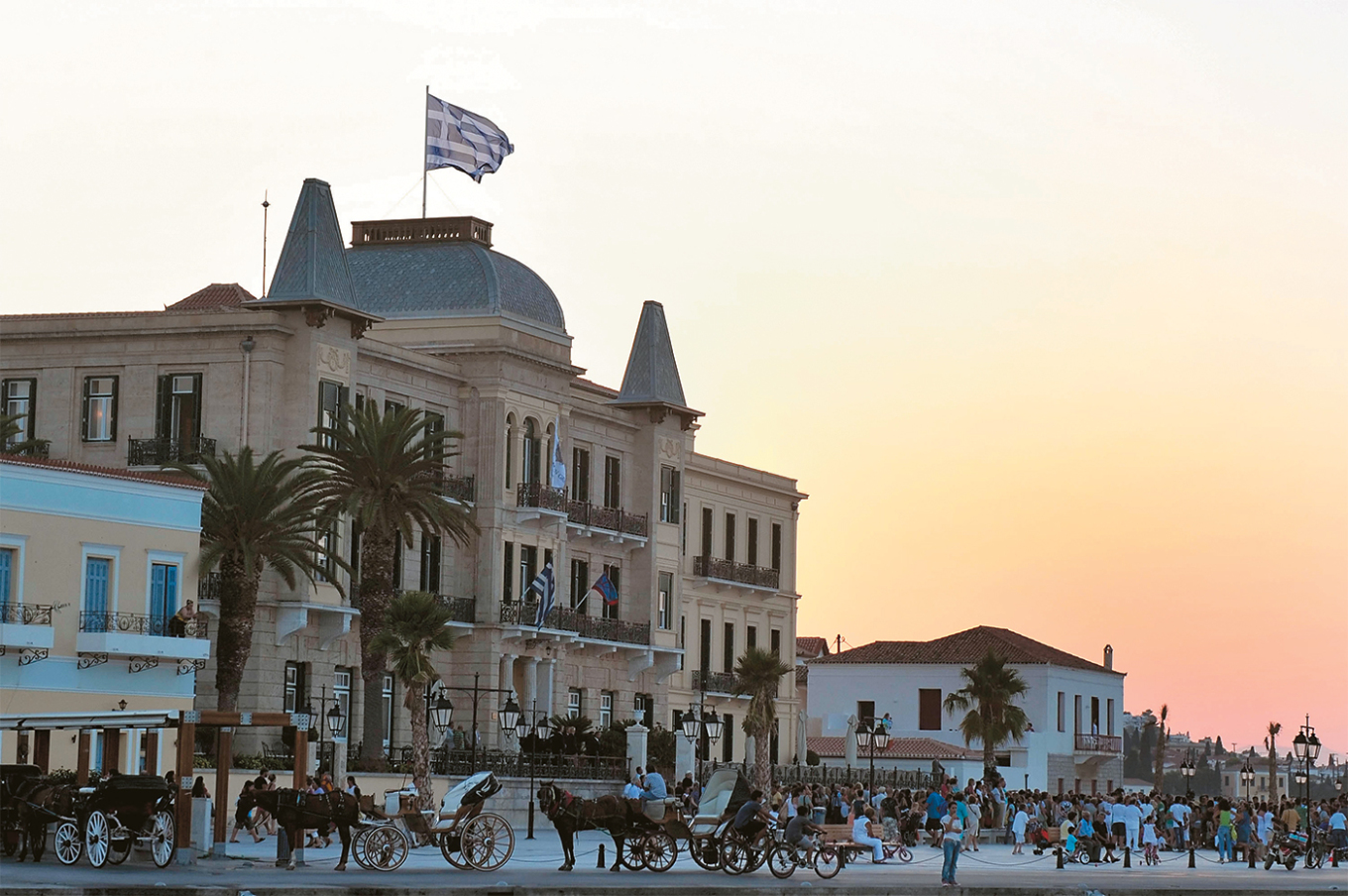
Hotel Poseidonion has stood for over a century in Spetses, inaugurated in 1916
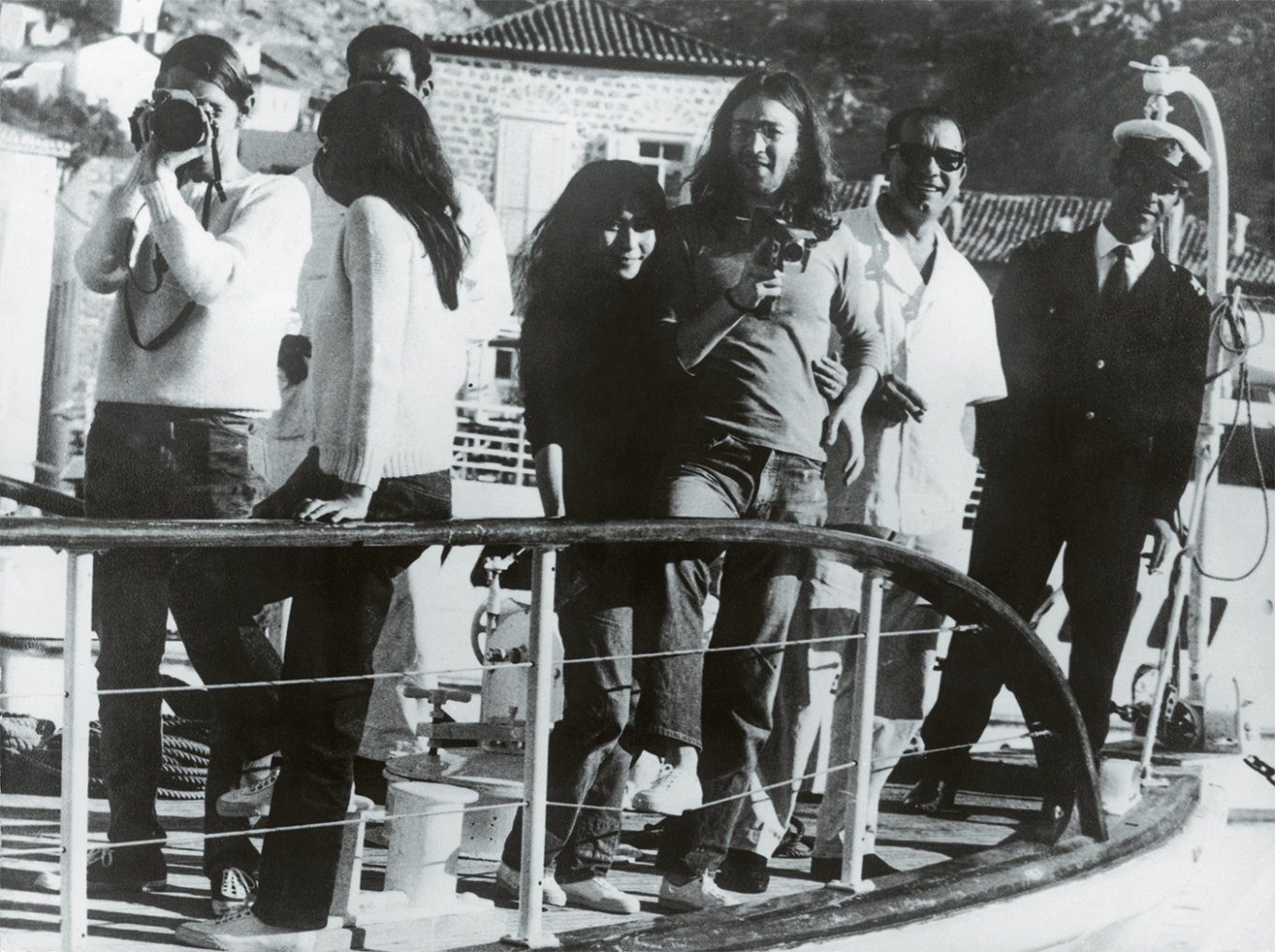
John Lennon and Yoko Ono on a yacht in Spetses harbor

The island’s elegance became the backdrop for films like the Greek Jenny Jenny and Netflix’s The Lost Daughter with Olivia Colman and Dakota Johnson, and Knives Out 2 with Daniel Craig.
Writers like John Fowles, Bruce Chatwin, Henry Miller, Michel Déon, Jacques Lacarrière felt a spiritual connection. Nobel Prize winner Alexander Fleming vacationed there with his Greek wife, politician and doctor Amalia Koutsouri. Another Nobel laureate, Odysseas Elytis, spent summers from childhood swimming in Ligoneri’s cliffside waters.
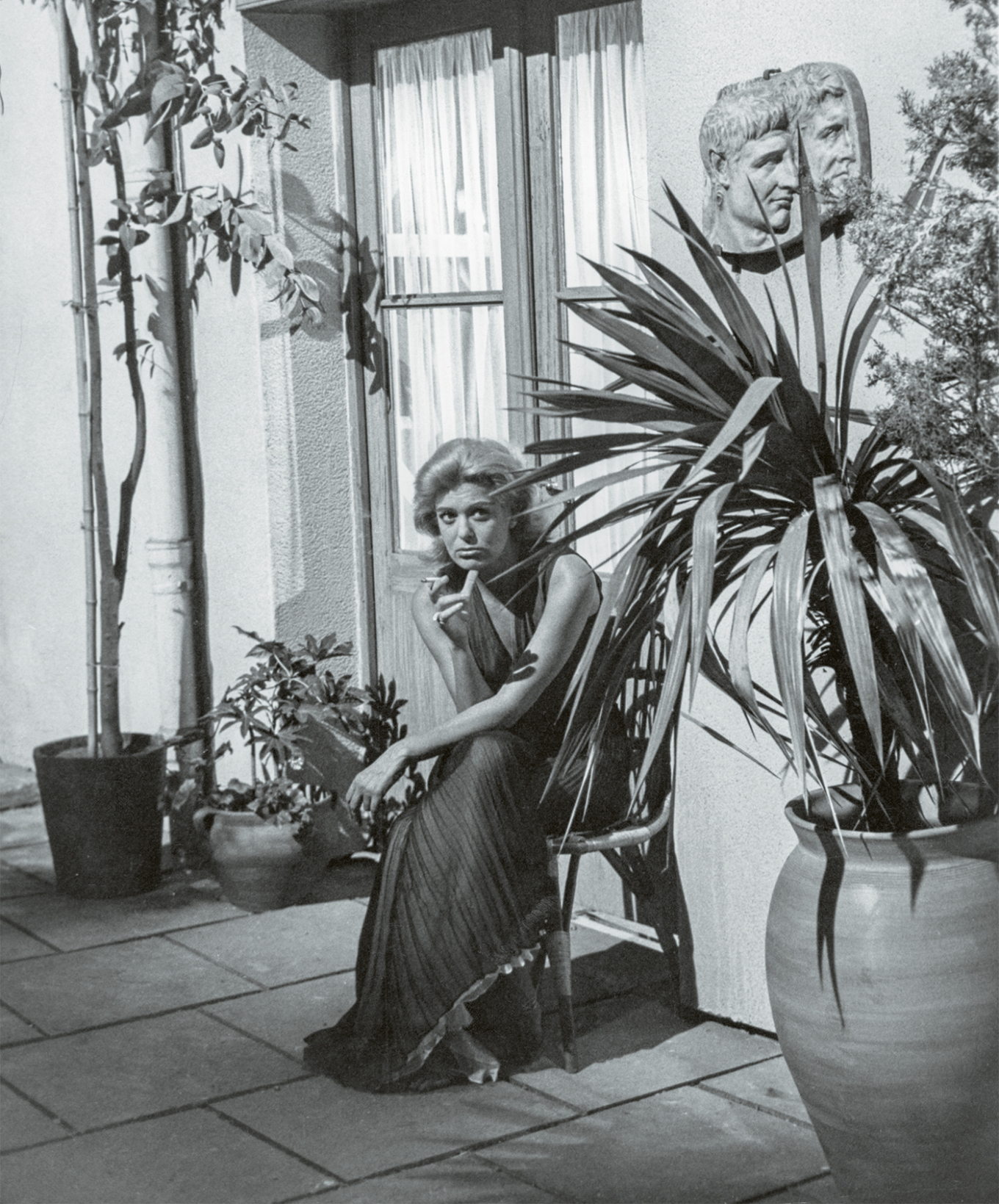
Melina Mercouri
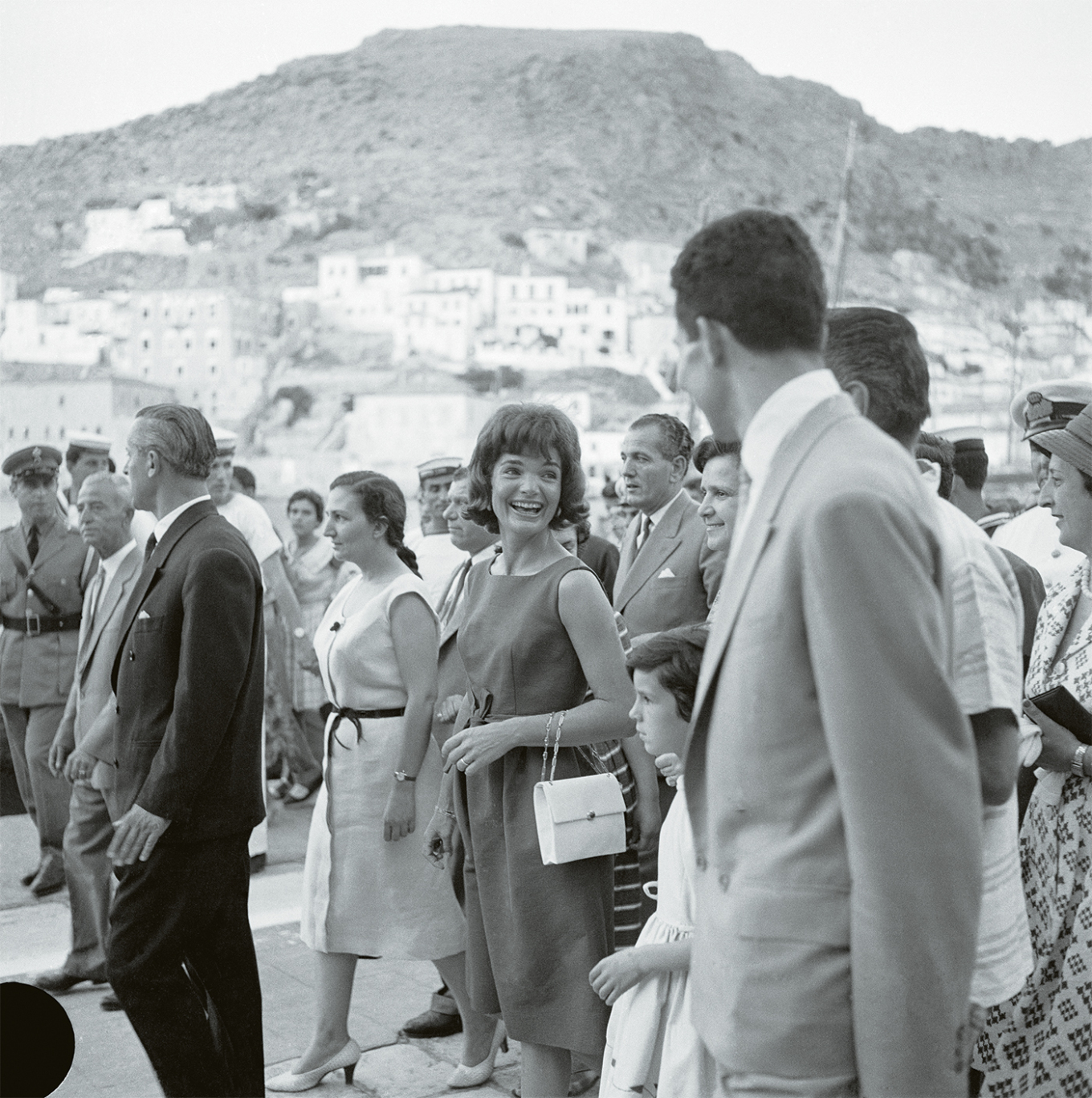
Jackie Kennedy visiting Spetses
The poet celebrated the long summer stays in Spetses, recalling: “From the pebbles’ sparkle came back my gunpowder, and Ligoneri and a certain shore.” The island’s timeless, tasteful elegance and unpretentious beauty, its clear blue sea and sky, the scent of pine and thyme made romantic Spetses a magnet for the international elite.
Not just for lavish parties or mega-yachts. The pressing question now is why an island—one of many—struggling with water supply and sewage infrastructure burdens itself with the traffic problem that dilutes its high aesthetic value.
Ask me anything
Explore related questions