A series of reformative breakthroughs in military service, the reserve system, and the organizational structure of the Armed Forces is being promoted by the Ministry of National Defense, as part of the second phase of the New Structure, aiming at rapid adaptation to the new geopolitical and operational realities.
Incorporating lessons from the war in Ukraine, the extensive use of high technology in warfare, and the shift to targeted operations using drones and other modern systems, a wave of rapid changes has begun at the Pentagon, as “the scale of the threat is multiple compared to us,” emphasized the Minister of National Defense, Nikos Dendias.
The New Measures in the Armed Forces
In this context, both the draft law on the new military service and the one on the reserves are expected to be submitted to Parliament for ratification after the summer recess.
According to information, although no change in the duration of military service is foreseen, the framework is being radically modernized, modeled after the “Finnish model.”
Specifically, conscript training is expected to be more “intensive and substantial,” and will mandatorily include the use of new technologies and applications, such as drone training.
In the new framework, recruits will remain longer in training centers, where full simulation of today’s operational conditions will be attempted (shooting, combat, survival, march training, etc.), and one of the planned features is for conscripts to carry out many shooting exercises and at high frequency.
After completing basic training, which will practically absorb modern operational data, conscripts will continue with skills training to achieve a combination of operational readiness and the acquisition of skills with real value in the labor market.
In particular, those performing their military service, upon completing basic training, will be able, if they wish, to receive training in acquiring skills equivalent to those offered today by Vocational Training Centers (KEK), and after completing the training program, will receive the corresponding certificate of training.
The Ministry of National Defense aims for each conscript to acquire substantial operational and professional skills by the time of discharge, so that military service time becomes “beneficial,” and therefore attractive, by gaining specific professional skills—for example, in the specialties of electrician assistant, technician, cook, etc.
Reduction in Deferrals
In this light, the tightening of criteria for deferments and exemptions is also being seriously considered to reduce abuse of the current system.
Already, the Ministry of National Defense has, for the first time, announced Special Military Service Programs, allowing young men and women to combine their studies in Higher Educational Institutions (AEI) or Higher Military Educational Institutions (ASEI) with specialized, high-level military training and corresponding compensation.
Military training will be provided throughout the academic studies, during time periods that do not interfere with academic obligations, especially during summer when there are no classes.
Participants will receive salary compensation, insurance coverage, health care, main and supplementary pension insurance, recognition of military status as pensionable service, and the possibility of extension after completing mandatory military service.
For this reason, the Special Service Programs target male and female students in AEI, ASEI, as well as graduate and doctoral candidates. Upon obtaining their degree, the academic part of the Special Program ends and mandatory military service begins, for a specific number of years, in research programs and Units/Services of the Armed Forces, in specialties related to their field of study.
Roupel Model
In parallel with optimizing human resource management, Mr. Dendias referred for the first time in years to the construction of a series of defense fortification projects, mainly in Evros and the Eastern Aegean islands, citing 207 projects in mainland Greece and 315 in the islands.
“The plan is for 100% to be completed within three years,” he stressed, estimating the cost of completing the underground fortifications at €65 million.
This is not a random choice for the Greek Armed Forces at this particular time, even though fortifications have existed in Greece from the Acropolis to the Roupel Forts. In the first quarter of the 21st century, however, the need for qualitative upgrading of fortifications becomes urgent.
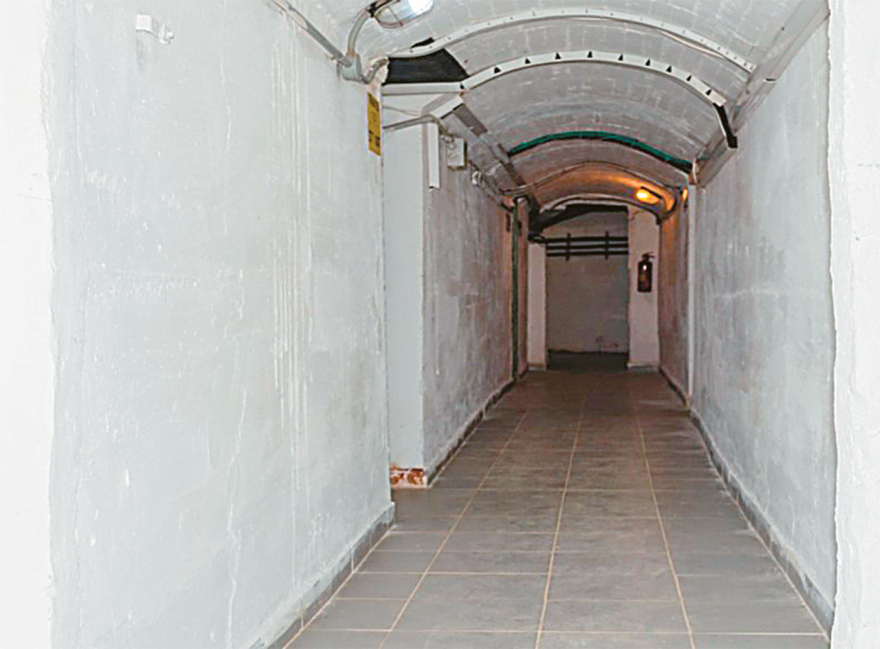
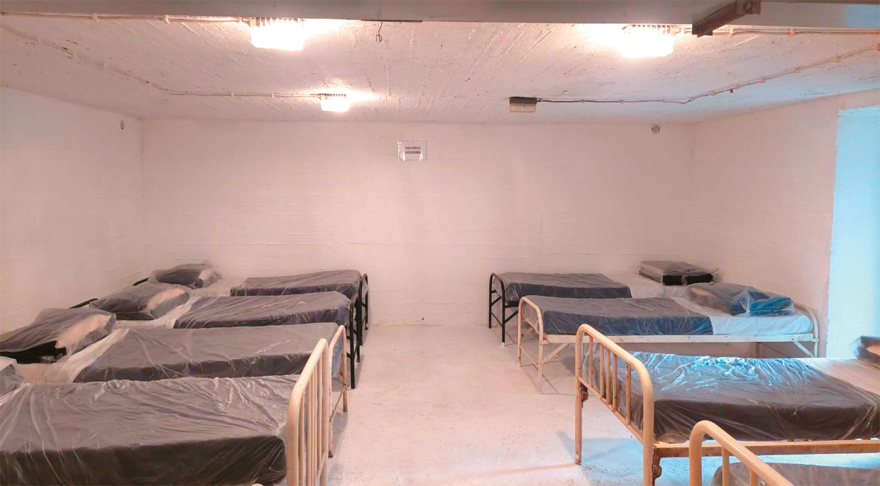
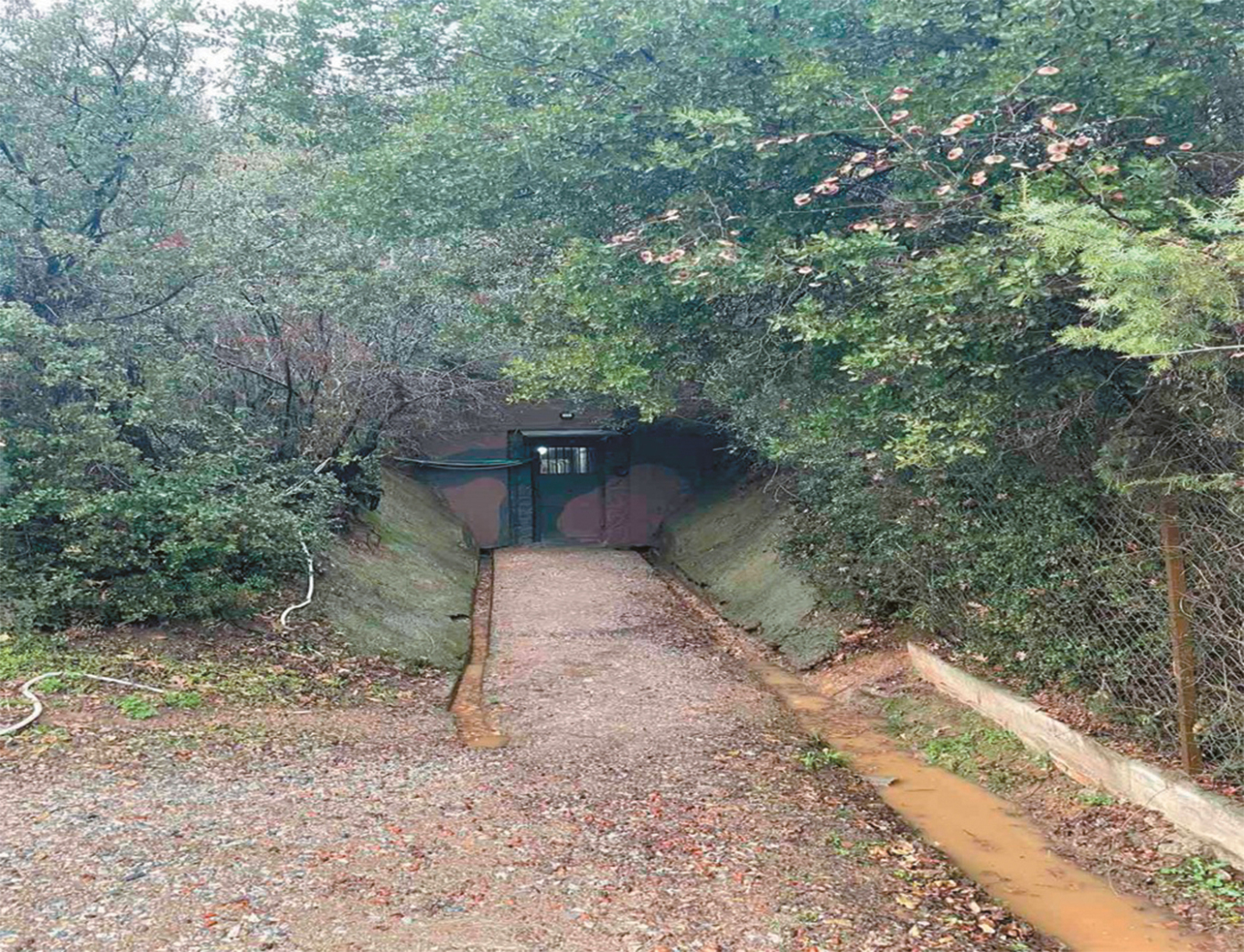
Military camps will now be fully equipped but well hidden from aerial threats, as the Ministry of National Defense immediately proceeds to the undergrounding of facilities using modern experience.
The threats, which are diverse and complex, necessitate adaptability and flexibility in the Armed Forces, especially when UAVs can record surface movements in almost complete detail.
From this perspective, the Pentagon deemed it necessary to re-examine fortification and defense organization holistically, taking into account recent examples such as the failed Ukrainian counteroffensive in Zaporizhzhia due to Russian field fortifications, as well as the case of Nagorno-Karabakh (Artsakh).
Under the new conditions of the 21st century, lessons from battlefields highlight the vital importance of upgrading fortifications to maintain territory and undergrounding infrastructure to reduce targeting and UAV attacks.
Even though the need for fortification works in military installations had been identified for decades, the economic crisis was a setback, halting works in several facilities due to austerity. Now, the Minister of National Defense is accelerating the pace, announcing that the necessary works will proceed quickly and be fully completed in critical areas within three years.
As such, the underground fortification works to be constructed will include Permanent Fortifications, Campaign Works, and Shelters.
At the same time, special care has been taken by the Pentagon regarding the construction and maintenance of fortifications in Thrace and the Eastern Aegean, where the bar has been set high for the next three years.
Specifically for Thrace, the strategic goal is full coverage of fortification needs at 100% with 207 total projects, and a similar rate of fortification coverage is planned in the North Aegean with 176 total projects.
Beyond the “invisible” camps, the Ministry of National Defense also plans to upgrade the synergy of units with the “Achilles’ Shield,” that is, the “comprehensive approach to the country’s deterrence capabilities—including missile defense, anti-aircraft, anti-drone, anti-ship, and anti-submarine defense covering the entire Greek territory,” as described by Nikos Dendias, utilizing electronic warfare capabilities from the new 12-year armament program as well as the ELKAK and KETAK programs.
Salaries
Presenting the second phase of the “Agenda 2030” reform in the Armed Forces, Mr. Dendias extensively referred to the rational utilization of the Armed Forces’ real estate assets, aiming to finance the wide housing program for professional personnel, and announced the immediate restructuring of major formations, creating four Higher Military Commands.
Most importantly, the Minister of National Defense announced incentives for conscripts, with an increase in the monthly compensation of soldiers to €100 from the current €8.80 for those serving in border areas and the Aegean islands, and €50 for those serving in the mainland.
This amount increases for certain cases:
- €150 for an unmarried conscript orphaned by one parent
- €200 for conscripts with one child
From 2026 onward, conscripts will no longer be enlisted in the Navy or Air Force, as “all will be enlisted in the Army and will follow the new training program, which, along with the draft law on military service, will be announced in September,” as the Minister announced, having prepared a series of draft laws linking military service with the reserve system. The strategic goal of the new system is to create 150,000 active Army reservists within five years.
Ask me anything
Explore related questions