





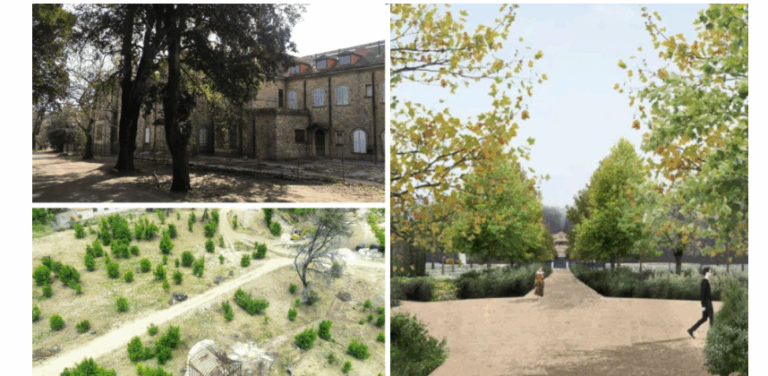
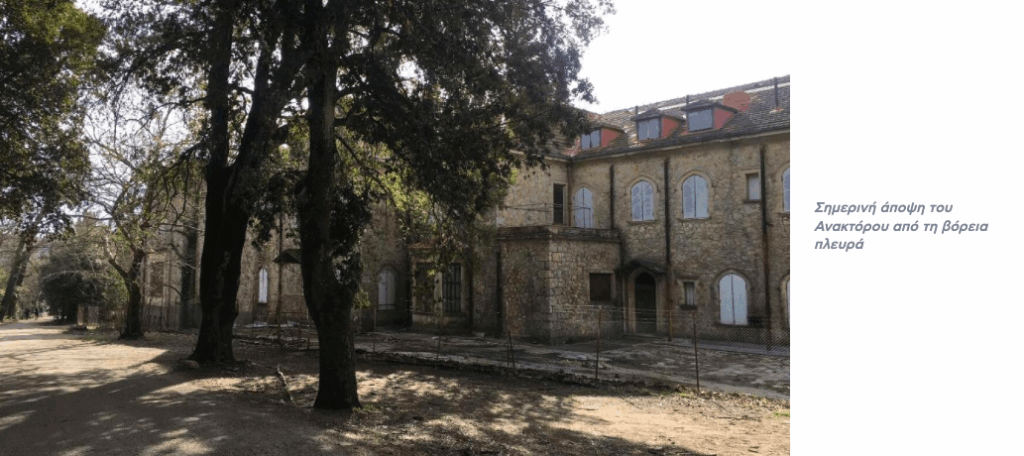
The fire that tore through Tatoi Estate in 2021 caused severe damage to the natural environment—particularly the lush gardens around the central palace, which were completely destroyed by the flames. Now, the Greek Ministry of Culture has announced a detailed restoration plan for the estate’s green spaces, as part of a broader €70 million revival project for the former royal property.
A Vision of Ecological Revival
The restoration and reorganization of Tatoi’s outdoor environment are vital parts of the project. The goal is twofold: to harmonize the natural surroundings with the historic buildings and to bring the estate’s green spaces back to life using sustainable development principles. The project also pays tribute to the estate’s original landscaping by Danish forester and philhellene Ludwig Mündter (who managed Tatoi from 1873 to 1892) and his successor Otto Weismann (1893–1914).
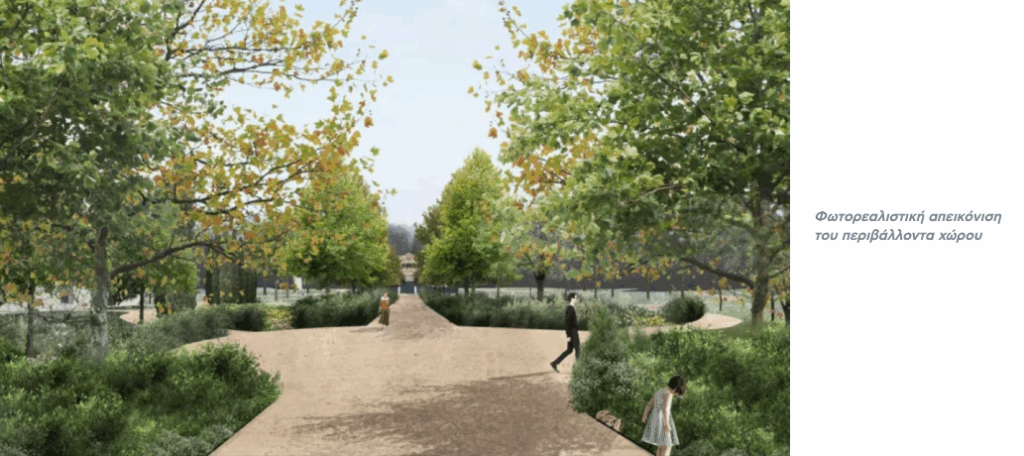
The Ministry’s aim is to make the estate accessible to the public by 2026, offering visitors a unique experience that blends history and nature. Tree-lined avenues, oaks, plane trees, rose gardens, wildflowers, and rare plant species will be replanted in clusters, flowerbeds, and along pathways to help revive the original character of the estate.
A Unified Experience for Visitors
Culture Minister Lina Mendoni emphasized that restoring the landscape is as crucial as restoring the historic buildings themselves. “We want to recreate a unified, seamless experience for visitors that connects the interior and exterior spaces,” she said. “The paths, materials, and plant selections will all contribute to forming a sustainable, historically rich cultural landscape.”
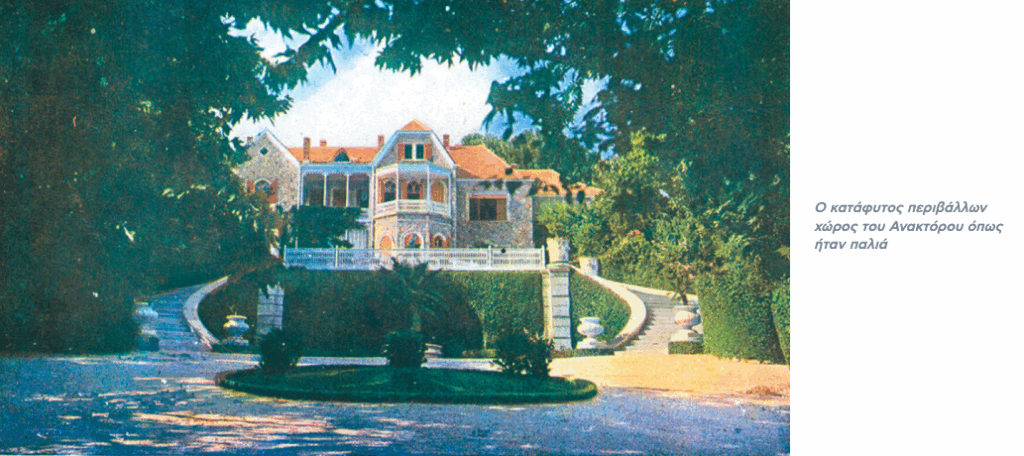
The work includes the restoration of the palace gardens—covering 34,000 square meters—and the full revival of the historic greenhouse and tennis court, key elements of the original estate layout.
Key Restoration Zones
1. Palace and Agricultural Zones
- Palace Grounds (5,127 sq.m): Restoration includes the area around the main palace and kitchens, forming the introductory segment of the visitor tour.
- North of the palace: the tree-lined avenue with evergreens will be reestablished.
- West: new clusters of trees and shrubs will guide visitors to the kitchens.
- South: historical geometric flowerbeds with roses and heritage plant varieties will be rebuilt.
- East: a path will link the palace’s south courtyard to a historic trail through the northern woods.
- Productive Zone (19,764 sq.m): The focus here is on preserving and enhancing existing vegetation.
- A new plane tree-lined avenue running north-south will be created, leading to the cemeteries.
- Natural benches and wildflowers will be added.
- North of the Old Dairy: a new square surrounded by oak trees.
- South of the Old Dairy and north of the New Dairy: a shaded outdoor area with lime trees.
A total of 95 new trees will be planted, all chosen to match the local ecosystem and cultural landscape.
Thoughtfully Designed Pathways
New pathways will link the palace and kitchens using permeable materials like crushed stone, sand, and soil layered over geogrids. This approach improves drainage, prevents flooding, enhances biodiversity, and supports groundwater recharge.
The Woodland Area
North of the palace lies a woodland with broadleaf trees, designed in the European bosco style often found around palaces of the same era. The woodland will be integrated into the broader landscape design with informal paths connecting it to historic trails and palace surroundings.
A notable element here is a semi-circular terrace, documented in 1897 maps, where flowerbeds once encircled a statue of “The Fisherman” by Dimitrios Philippotis. This feature will be fully restored, complete with tall shrubs framing the site.
Greenhouse Restoration
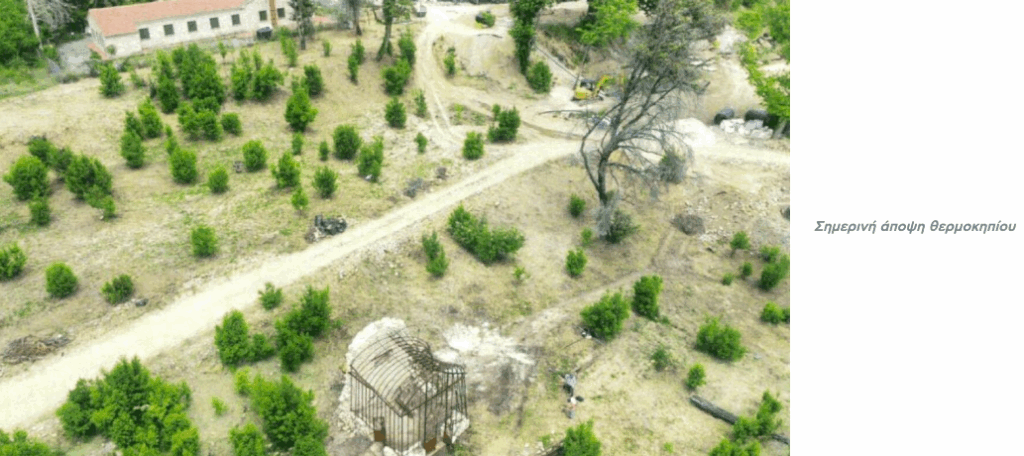
The historic greenhouse, built between 1890 and 1895 and expanded in the 1930s, will be structurally stabilized and restored to its original function and appearance. It was likely used to grow ornamental flowers, and it is one of only two greenhouses of historical significance still standing in Greece (the other being in the National Garden, but not in use).
Tennis Court Revival
The tennis court, dating from the 1890s, has suffered severe damage: the surface is ruined, the fencing is gone, and surrounding vegetation has overgrown the area. The plan includes restoring the court to its original condition and making it usable once again, ensuring it connects naturally with the palace gardens.
A Living Monument
Through this ambitious and thoughtful restoration plan, Tatoi is being transformed into a living monument—a place where Greece’s royal history, cultural heritage, and natural beauty will coexist for generations to come.
Ask me anything
Explore related questions




