German sun-seeking tourists face backlash from Swiss residents over the traffic congestion they cause during their holiday in the Alps.
Switzerland’s tolerance for foreign drivers clogging up its motorways has reached its limits, with some politicians now wanting to impose an extra charge for the privilege.
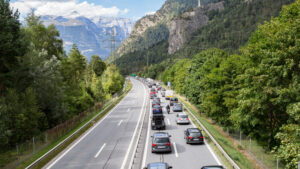
The ever-increasing influx of mainly German and Dutch motorists heading for the Mediterranean sunshine each summer has turned the quiet Alpine valleys into a traffic-clogged landscape, 24 hours a day, prompting the anger of locals who are demanding action.
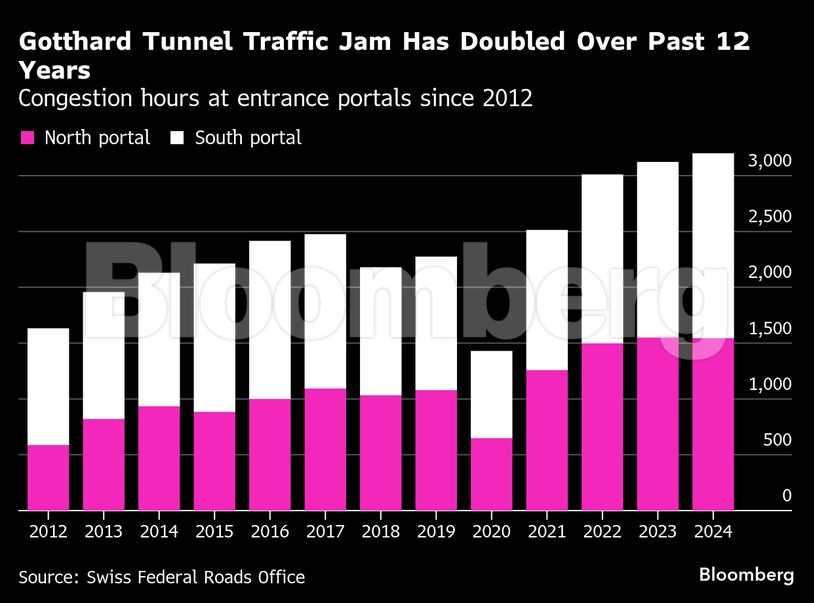
The steady influx of German and Dutch motorists heading south each summer in search of Mediterranean sunshine has turned once-quiet Alpine valleys into round-the-clock traffic jams, sparking local anger and demands for action.
“Until just a few years ago, the holiday traffic surge was limited to a few weekends a year,” said Simon Stadler, a centrist MP from the canton of Uri. “Now it’s a whole month when traffic clogs all of our main roads.”
Stadler is among politicians from both the left and right in Bern calling for extra fees to smooth traffic flow at one of Switzerland’s worst choke points: the Gotthard Road Tunnel in central Switzerland, which he represents.
While not at the top of Switzerland’s political agenda—especially as the country grapples with U.S. President Donald Trump’s 39% tariffs—the issue is politically sensitive. What might appear to be a local traffic problem is, in fact, part of the wider debate over mass tourism and its costs and benefits.
For the Swiss—whose national hero, William Tell, symbolizes resistance to foreign domination in Uri—the question of how to handle impatient drivers who see the majestic mountains and idyllic pastures merely as obstacles could test relations with the European Union.
More than five million cars and 900,000 trucks pass through the 16.9-kilometer (10.5-mile) tunnel each year. When it opened in 1980, it was the longest road tunnel of its kind in the world. But with just one lane in each direction, it has become one of Europe’s biggest traffic bottlenecks.
Similar Alpine crossings, from France to Austria, have long been compared to the military feats of Hannibal and Napoleon. Yet such engineering marvels inevitably create congestion hotspots.
On July 26, a 17-kilometer queue formed at the tunnel’s northern entrance—just one of many this summer. These jams strain emergency services as traffic diverts onto local roads, bringing noise and exhaust fumes to villages like Gurtnellen, only 7 kilometers from the entrance. Home to fewer than 500 people, the village has lost a third of its population over the last 30 years.
“Quality of life is deteriorating rapidly,” said Gurtnellen mayor Verena Tresch-Arnold. “You can’t go outside anymore, and it’s harder to breathe because the smell of burning tires hangs in the air.”
Dorothea Baumann, a 61-year-old life coach who lives along one of the blocked routes, now wears earplugs in her garden or when trying to sleep at night.
Austria knows the problem well. The Alpine motorway through the Brenner Pass carries triple the traffic of the Gotthard. Protests are common, and one local mayor has even threatened to close it unless traffic is managed differently.
Unlike Switzerland, which charges a flat annual motorway fee of 40 Swiss francs ($50) for all drivers, Austria takes a more targeted approach, allowing foreigners to pay for a single-day pass. Each trip over the Brenner adds another €12 ($14) to holiday costs. The jams persist, suggesting pricing alone isn’t the answer.
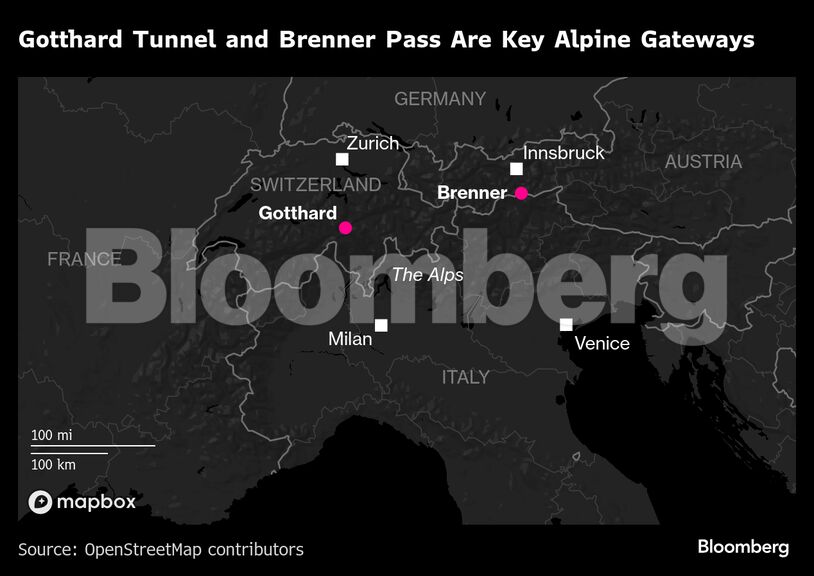
Stadler’s proposal aims to ease traffic by charging extra for motorists passing through Switzerland without staying overnight. License plates would be scanned at the border, and dynamic pricing would be applied based on time of day or season.
Ask me anything
Explore related questions