One year after the inspection conducted by the Minister of Culture Lina Mendoni at Kasta Tomb, we have the good news of the redevelopment of the wider area through ongoing projects aimed at showcasing the archaeological site and turning it into a landmark. This effort is further strengthened by the construction of dedicated infrastructure, connecting the areas via pathways, and the erection of a special museum-exhibition center.
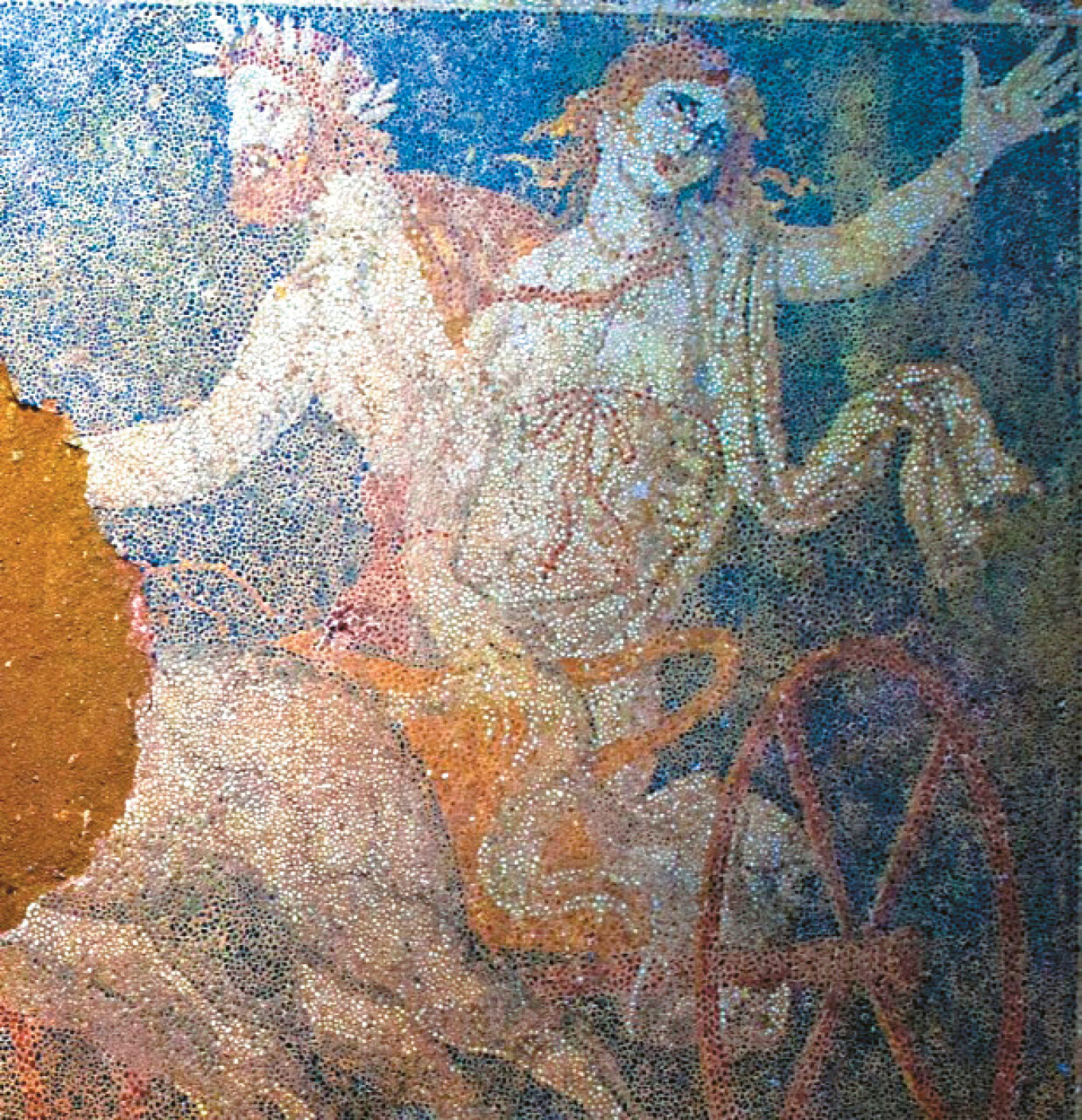
The mosaic depicting the Abduction of Persephone by Pluto
The internationally recognized site of Amphipolis, of immense archaeological significance, will now be able to welcome visitors from around the world. By 2027, the Tomb monument itself will be accessible, currently open only by appointment due to interior works. The overall infrastructure project budget for Kasta Tomb exceeds €10 million, marking a new chapter not only for Amphipolis but for northern Greece as a whole.
The Immense Significance of the Projects
A visit to the broader archaeological site of Amphipolis, extending well beyond the immediate Tomb area, is enough to grasp its historical importance. It served as a connection point between Macedonia’s fertile lands and southern cities, and later, from the Roman period onward, between East and West. Written records by Herodotus and Thucydides attest to the region’s remarkable renown, stretching from ancient Amphipolis to the edges of the Strymon River.
The significance of the area is already evident to visitors: the Tomb, the highly important Acropolis, the cemetery, and the wealthy houses with stunning murals—surpassing even those of Pompeii in beauty and craftsmanship. Once the infrastructure works connecting these pathways and highlighting the individual areas are completed, Amphipolis’ topography will serve as a model for other archaeological sites, linking its history with the rich natural surroundings that still showcase its unique charm.
€10 Million Projects
According to a recent announcement by the Ministry of Culture, restoration and enhancement works at the Tomb are ongoing, along with stabilization of the monument’s perimeter. According to “THEMA” sources, surfaces have been cleaned, cracks filled, and marble fragments reassembled.
Additionally, a significant section of the perimeter has been restored, and the entrance has been redesigned to facilitate visits. Studies are also underway—architectural, structural, electromechanical, visitor infrastructure, museum space, museology, and exhibition design—with a total project budget exceeding €10 million, funded by the Regional Operational Program of Central Macedonia – NSRF 2021-2027 and national resources of the Ministry of Culture.
According to the studies and overall project design, the visitor experience will be unique. Besides exemplary reception and information facilities enhanced with digital applications, visitors will explore the site through special pathways connecting archaeological landmarks with the beautiful natural environment.
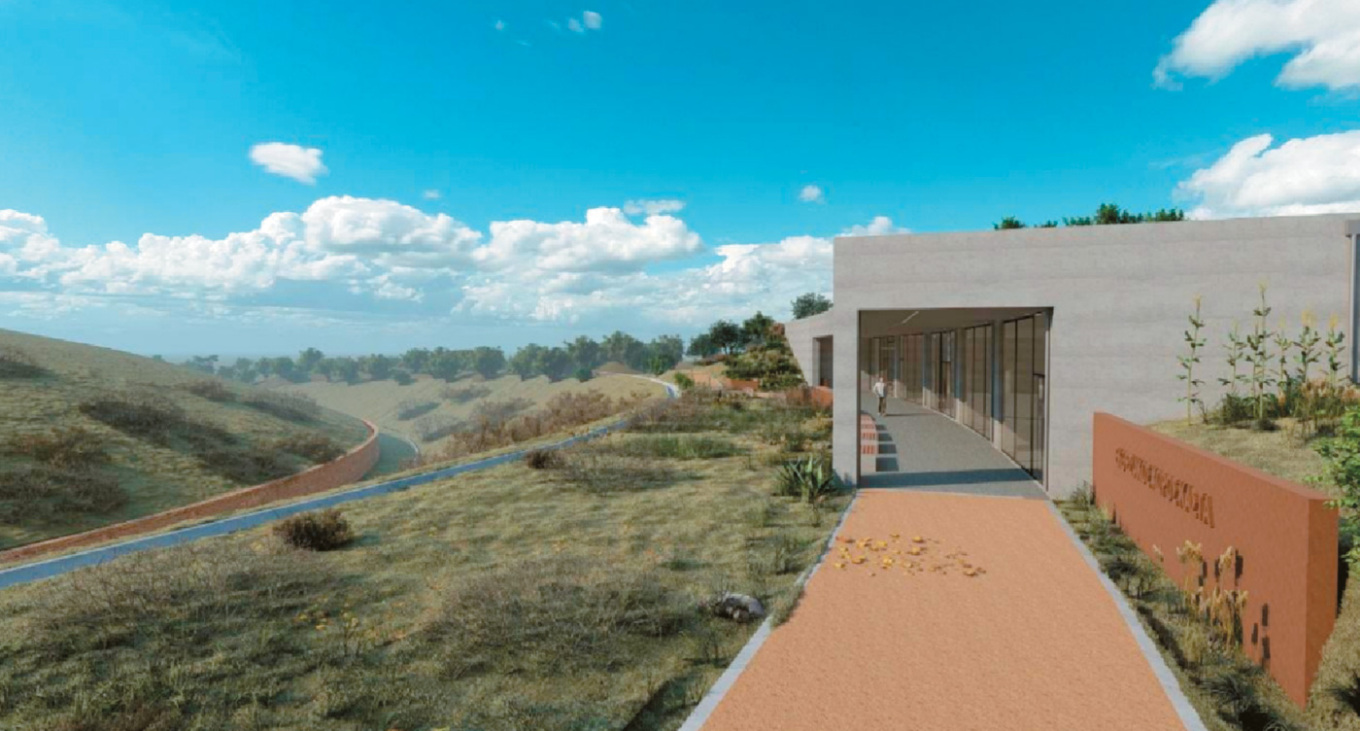
The archaeological exhibition in the museum space will narrate the tomb’s history, offering insight into the monumental significance of Kasta Tomb.
The visitor pathway will run around the perimeter at a sufficient distance to allow full views of the Tomb, offering a comprehensive perspective of Amphipolis as an archaeological site. One part of the route will organically connect to the Kasta Tomb exhibition space, leading directly to the tomb entrance, while another part will lead to Macedonian Tomb III, which is being preserved, showcased, and integrated into the broader visitor area, creating a holistic visitor experience. Importantly, the space will be accessible to people with disabilities.
Who Is Buried There?
Thus, Amphipolis’ contribution goes beyond the Tomb, encompassing a region of immense symbolic value, with significant monuments, parallel pathways connecting historic sites to nature, and the new museum space. Ancient myths suggest that the area from Amphipolis to Philippi was revered by the gods and contested by various conquerors and historical leaders.
The myth of Zeus transforming into a golden shower to impregnate Danae, filling the Pangaion foothills with gold, explains why Athenians and Spartans fought fiercely over Amphipolis’ natural wealth. These rich and highly contested mines later allowed Philip to mint coins that would make Alexander’s successor powerful across the known world.
It is no coincidence that Athenians conquered Amphipolis in 432 BCE, during their peak dominance, recognizing the area as a source of endless wealth—from timber for ships to gold and silver mines, and vast fertile plains. In short, Amphipolis was not only a sacred site but also a coveted area for any leader—hence the countless theories about who is buried in the famous Kasta Tomb. Evidence suggests it is a prominent figure, possibly an official or companion of Alexander the Great.
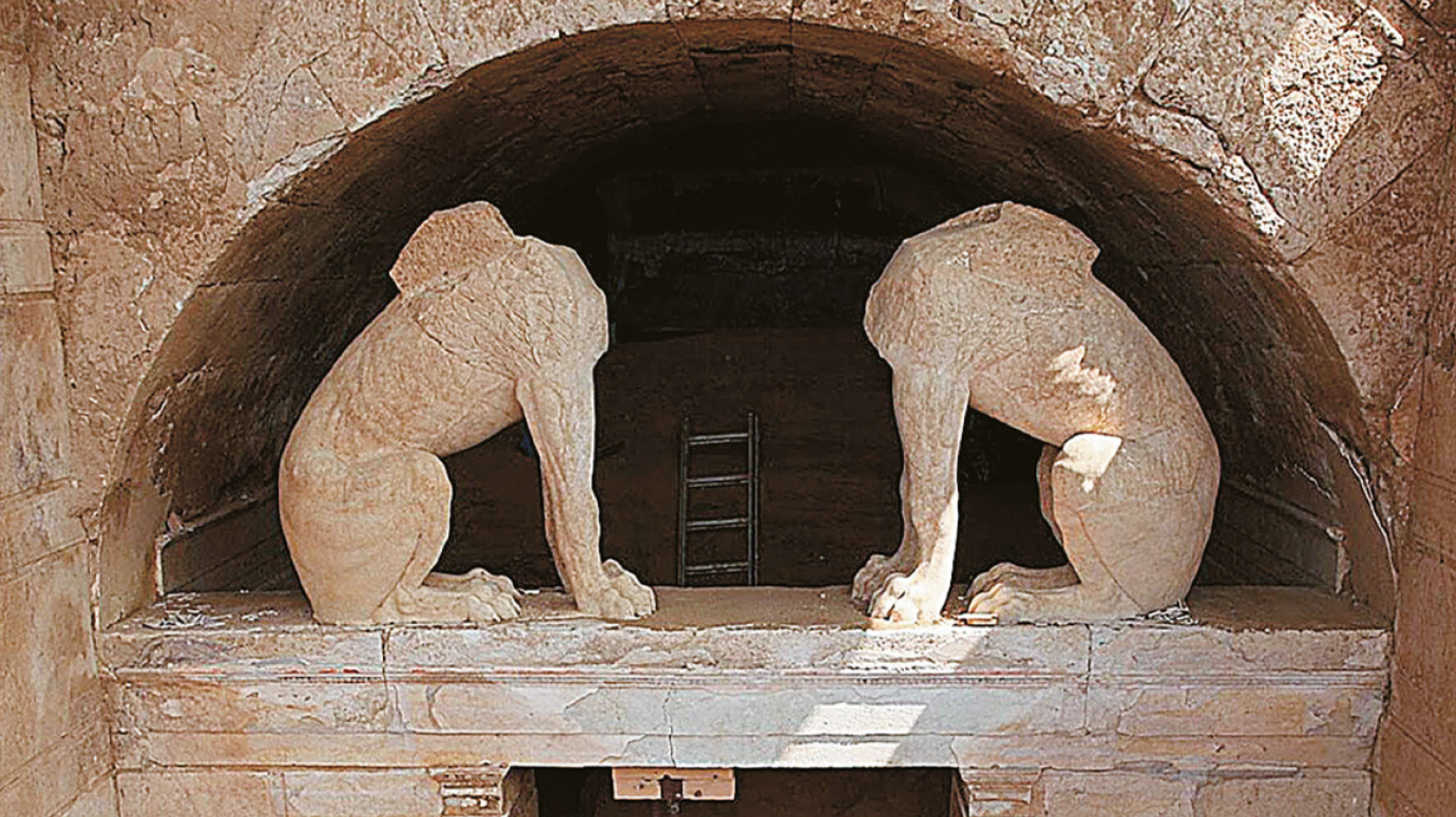
In any case, it is someone of high status, as evidenced by the marble Sphinxes guarding the entrance, standing proudly at the gate leading inside, which is divided into three sections—uncommon for such a monument. The mosaics with marble pieces and red cement adorning the interior are beautiful, a feature found throughout Macedonia, along with the Thassos marble ceiling, floor, and wall cladding.
Much discussion has centered on the famous mosaic depicting the Abduction of Persephone by Pluto, with Hermes as psychopomp dominating the space. This is another clear indication of the tomb’s grandeur, comparable to the Tomb of Persephone in the palaces of Aegae.
Mendoni: “Holistic Approach”
As the Minister of Culture notably states:
*”Kasta Tomb is an emblematic monument of great historical and archaeological value and significance, requiring a unified holistic approach—tomb, circular perimeter, and monumental burial structure—to ensure its full protection and make it accessible. The construction of the exhibition space is part of the broader set of planned visitor infrastructure for Kasta Tomb. Due to the uniqueness of the monument, the exhibition space must meet visitor needs while also regulating the flow of visits to the Tomb, which, due to limited space, will allow visits only in small groups.
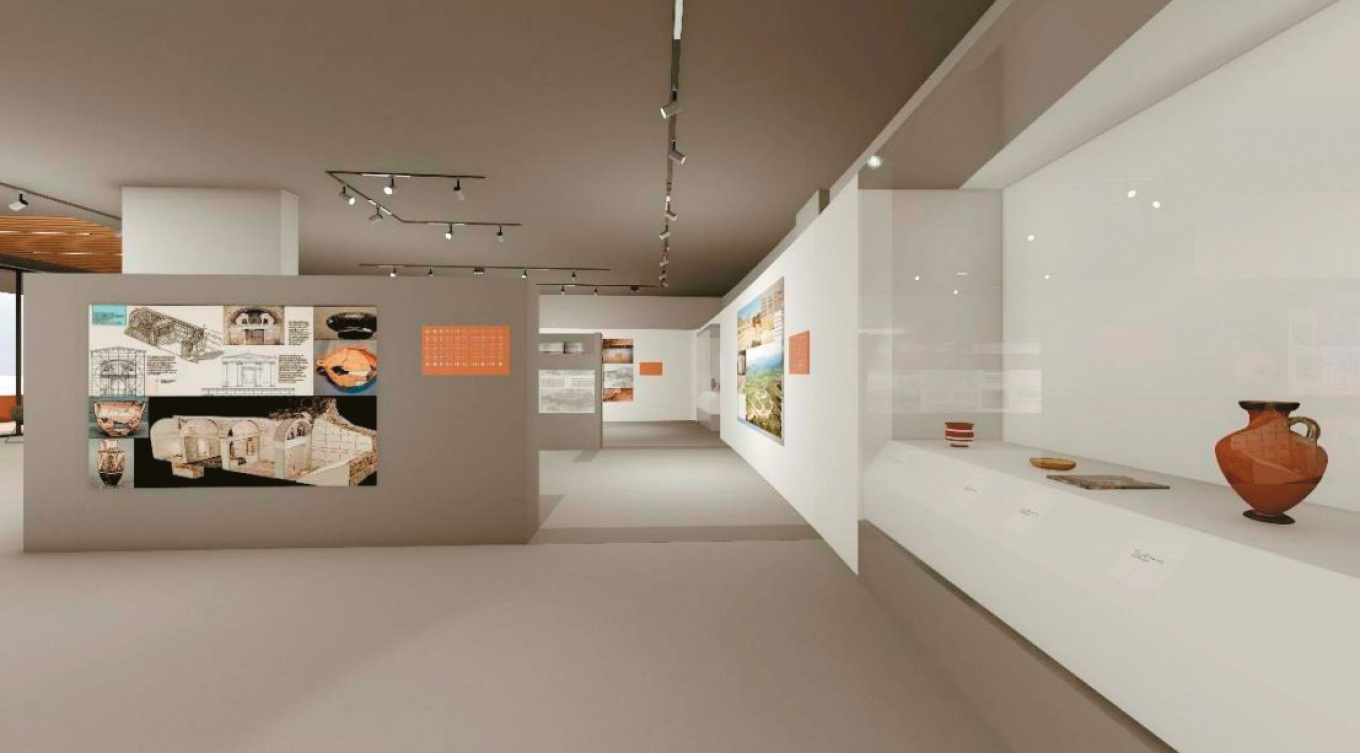
The exhibition space, designed according to modern architectural principles and bioclimatic approaches, aims to allow visitors to admire the monument’s significant finds, understand the site through digital applications, and access facilities that ensure a comfortable and enjoyable stay. The accessibility and infrastructure improvement study aims to protect the archaeological site and the natural environment, highlight the values of this monumental space, ensure the integration and accessibility of the monuments, and provide access for all, including visitors with disabilities.
The placement of Kasta Tomb’s exhibition space takes into account both the visitor’s comprehensive experience and the preservation of the historic environment of the monument, which remains untouched by new visible constructions. Public interest in this monument is particularly high, and the project undertaken by the Ministry of Culture will not only protect and showcase the monument but also enhance visitor engagement and traffic for the wider, highly significant archaeological site of Amphipolis. I thank former regional governor and current EU commissioner Apostolos Tzitzikostas for his ongoing support of the unique Kasta Tomb monument, as well as regional governor Athena Aidona and the Managing Authority of the Region of Central Macedonia for their consistently excellent collaboration.”*
What We Will See in the Museum
From all these prominent, beautiful elements of the underworld—Persephone, the proud Caryatids, the Sphinxes—it is evident that this is a burial monument with its own story, which visitors will be able to explore in detail through special digital applications interacting virtually with the monument. In fact, the entire archaeological exhibition in the dedicated museum space will narrate the tomb’s history and allow visitors to appreciate the significance of Kasta Tomb’s monumental ensemble.
The exhibition will be divided into three sections and, according to sources, will include, besides the famous Sphinx head currently housed at the Archaeological Museum of Amphipolis, the much-discussed inscribed frieze, the Sphinx wings, and the marble door that could not fit in the museum.

The Intervention Area at the Amphipolis Acropolis
Specifically, in the first section, Hall 1, finds from the monument will be displayed in showcases with information fully and equally accessible to all. In the second section, Hall 2, visitors will engage in virtual interaction with the monument through new digital applications. In the third section, the open colonnade overlooking the monument, visitors will gain a comprehensive understanding of the Tomb and see the perimeter section preserving the original marble facade.
The Inscribed Frieze
Regarding the finds from the Tomb that will be displayed in the museum—besides the Sphinx head, wings, and other archaeological finds—the inscribed frieze is particularly notable. We all remember the impact of the frieze’s discovery nine years ago, explained by architect and ancient site restoration specialist Michalis Lefantzis, who detailed the building’s intricate architecture. Specifically, he revealed that the seven sections of the frieze were found on the east side of the third chamber, with a height of 25 cm on the east and 20 cm on the west. From the reliefs and other depictions, such as the Delphic tripods, it is believed that the space was connected to special ceremonies and an important priestess, and later to burials.
The frieze depicts the life of a hero, providing insights into Macedonian customs and practices, showing horsemen wearing characteristic helmets with weapons set aside, as well as a quiver and arrows guarded by a Sphinx.

Visitor Infrastructure of the Gymnasium in Ancient Amphipolis
Additionally, a unique scene in the frieze shows a deified deceased and other elements, making this relief truly unique. An important detail shows a second deceased figure in a red cloak, clearly representing a king, who is ultimately deified and depicted seated on a throne with the gods of Olympus! All these elements heighten interest in the Tomb’s great mysteries and unmatched beauty, making the announcement of the new museum space and the overall enhancement of the area a landmark event.
Ask me anything
Explore related questions