Four years after the completion of the tender for the long-term concession by the Public Private Property Development Fund and three years after the final signatures and delivery of the property, one of the most talked about investments for Kythnos is now underway at the most historic property on the island.
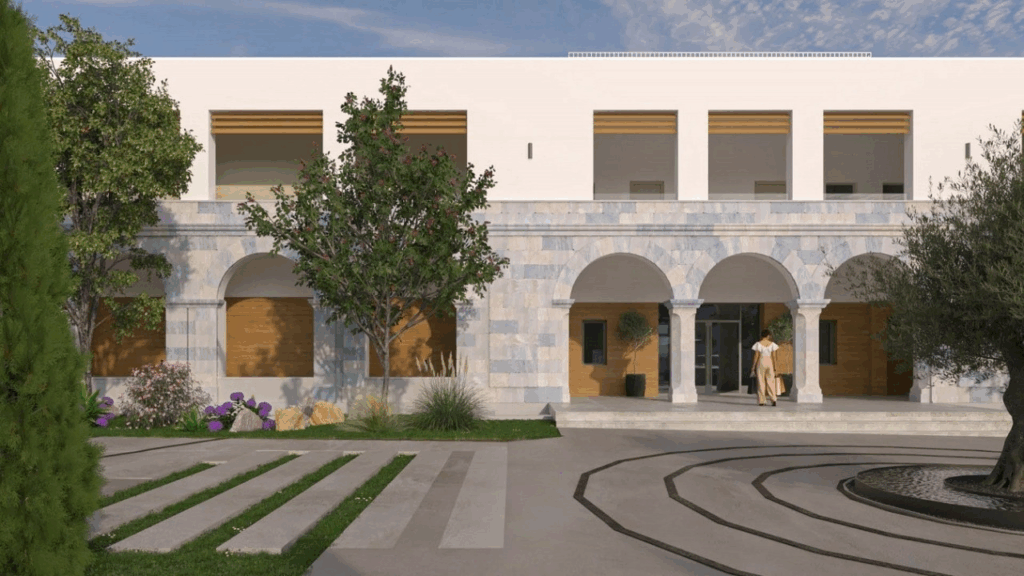
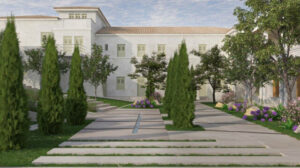
The reason is the XENIA Kythnos, where the Israeli investor Mr. Avraham Ravid has now secured a permit from the Directorate of Architecture, Building Regulations and Licensing (DAOKA) of the Ministry of Environment and is about to start work immediately on the restoration of the historic property. The aim is to reopen with very high standards, enhancing the profile of Kythnos as a destination for spa tourism. The total investment is put at around 30 million euros, including the new tourist residences that are planned to be built on neighbouring plots of land, which have been purchased for this purpose.
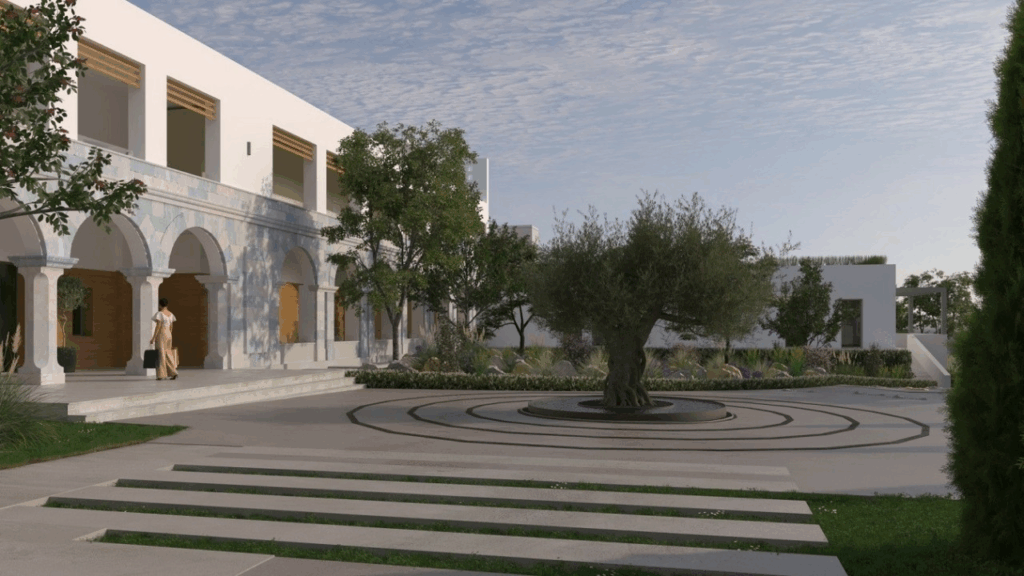
According to reports, the first phase of work will begin with the restoration of the historic Xenia Hotel in Kythnos, with a projected completion timeline of around three years, given the demanding nature of the project. The construction of luxury tourist residences will follow at a later stage, as permits are still pending.
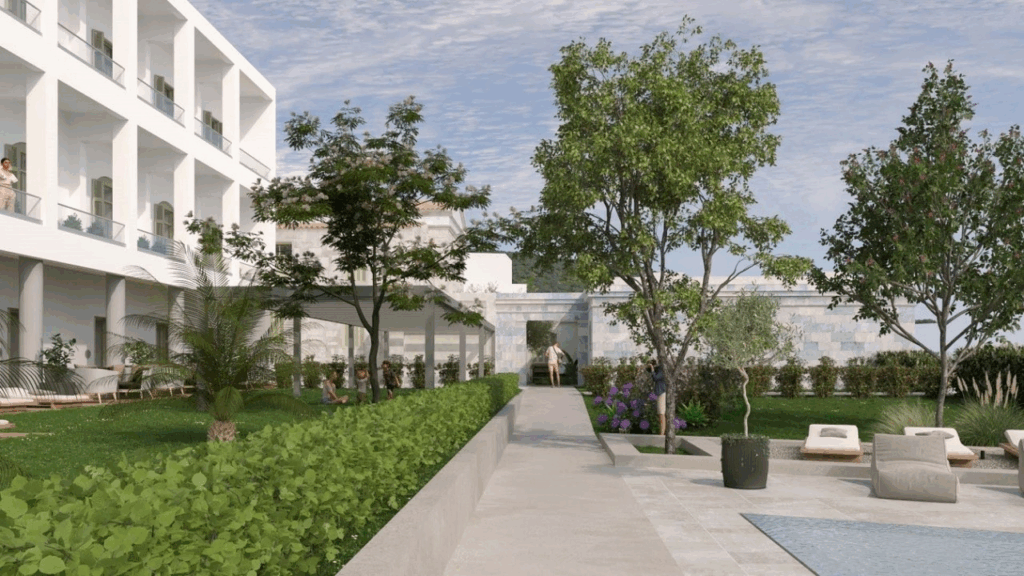
Key figures involved in the project include architect Georgios Gogolos, head of the engineering and architectural consultancy TEXNEDROS; Tresor Hospitality, led by Panos Pantazopoulos, which collaborates with major international hotel groups; and legal advisor Christos Pliatsikas, representing investor Mr. Ravid, among others.
Greece’s First Thermal Tourism Infrastructure
The Xenia Hotel at the thermal springs of Kythnos, along with its two natural spa sources, is regarded as Greece’s first dedicated thermal tourism infrastructure. The property carries significant historical and cultural value, having been originally constructed during the reign of King Otto by renowned Danish architect Christian Hansen. The complex was later modified by Ernst Ziller between 1871 and 1891.
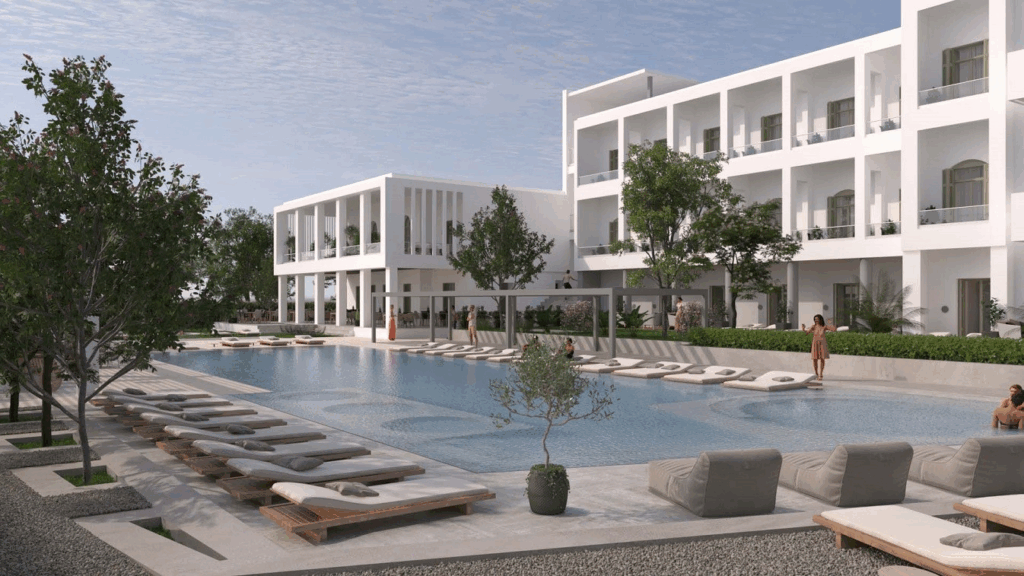
Designated as listed monuments of cultural heritage, the facilities are considered “remarkable examples of architecture directly linked to the history of the Kythnos baths.” The hotel, which ceased operations in 1999, is housed in a three-story building with 46 rooms. Within the property lie two thermal springs: the saline spring of Agioi Anargyroi and the iron-rich spring known as Kakavos.
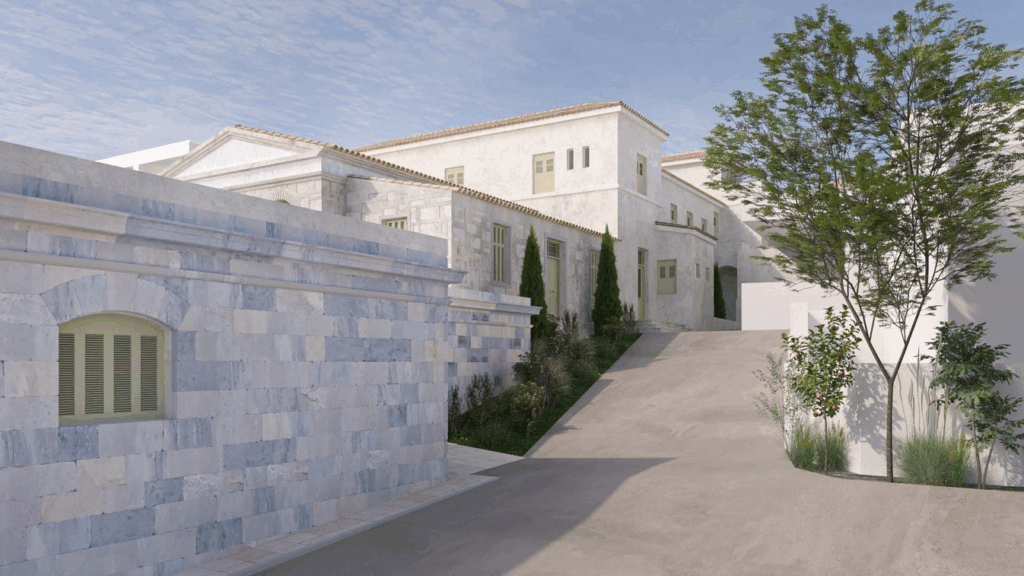
Expansion Plans and Approvals
In order to upgrade the investment into a five-star project and improve profitability—particularly by creating larger guest rooms, as the original Xenia complex followed outdated specifications with very small spaces—developers decided to complement the restoration with the construction of tourist residences. These, however, require special permits, as they are located within the wider protected zone of the historic Kythnos baths and the old hotel complex.
Last spring, the Ministry of Culture approved the development of residences with private pools on six of the seven acquired plots. However, approval was denied for the planned subterranean residences on the seventh plot. The ministry’s reasoning was that the architecture of such dwellings was inconsistent with the morphology of the Loutra settlement and would significantly alter the natural terrain.
Additional Works
Beyond the restoration of the historic Xenia, the surrounding environment, and the new residences, the investment body is also in talks with the Ministry of Culture and the local municipality to finalize plans for the front section of the property. The goal is to create a landscaped park in consultation with the local authorities.
Ask me anything
Explore related questions