





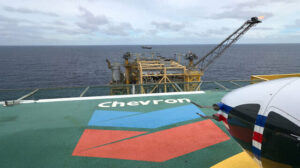
Last week’s developments raised significant expectations for Greece’s hydrocarbon sector, both in the four new offshore areas south of Crete and the Peloponnese, as well as in “Block 2” in the Ionian Sea, which is at a more advanced stage of exploration. The four new areas, following the completion of the international tender announced in June, are set to be awarded jointly to Chevron and HELLENiQ Energy. For Block 2, Energean CEO Mathios Rigas officially announced that the initial estimate of potential resources is 7 trillion cubic feet (around 200 billion cubic meters) of natural gas.
Beyond the economic importance (investment, jobs, energy self-sufficiency, and reduced spending on hydrocarbon imports if development proves feasible), these developments are of major geopolitical significance for Greece. As Prime Minister Kyriakos Mitsotakis noted last week during his meeting with U.S. Secretary of the Interior Doug Burgum, Chevron’s interest in exploration south of Crete reaffirms Greece’s sovereign rights in the area.
Domestic hydrocarbon production would also make Greece a pillar of EU energy security—not only as a transit hub for energy resources, which it already is, but also as a supplier.
The tender for the four blocks (“Block A2,” “South of Peloponnese,” “South of Crete 1,” and “South of Crete 2”) was launched after expressions of interest by HELLENiQ Energy (for Block A2) and Chevron (for the other three). Last Wednesday, at the deadline, the two companies submitted a joint bid for all four blocks. The evaluation committee has already been formed, and the next steps will be the drafting and signing of the contracts, followed by parliamentary ratification.
In the case of Block 2 in the Ionian Sea (30 km west of Corfu, at the Greece–Italy maritime boundary), the concession agreement was ratified in 2018. The current license holders are Energean (75%) and HELLENiQ Upstream (25%).
As Energean CEO Mathios Rigas revealed during the group’s half-year results briefing for analysts, the initial resource estimate (gas initially in place, in technical terms) is around 7 trillion cubic feet, or 200 billion cubic meters of gas. However, to determine whether a commercially exploitable reservoir exists, exploratory drilling will be required. Given the cost and risk of such drilling, the Energean–HELLENiQ consortium is seeking a partner to join the project. Water depths in Block 2 range from 500 to 1,500 meters, while the existence of a confirmed petroleum system in Western Greece (West Katakolon) and in the Adriatic Sea make the area particularly promising. Energean has also requested exploration rights for the adjacent marine area on the Italian side.
With the addition of the four new blocks, the number of areas granted or under concession for hydrocarbon exploration rises to nine. The others are: Block 2 (75% Energean, 25% HELLENiQ); the Ionian block (100% HELLENiQ); Block 10 in the Kyparissia Gulf (100% HELLENiQ); and the areas west and southwest of Crete (70% ExxonMobil, 30% HELLENiQ). The onshore Ioannina block has been returned to the state, while the Katakolon discovery remains pending due to the planned designation of a marine park in the Ionian Sea. Production is ongoing at Prinos, operated by Energean.
Ask me anything
Explore related questions




