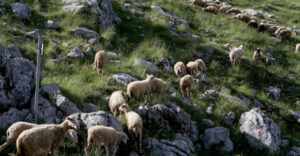
A battle against time to halt the spread of pox in herds of pigs and sheep is being fought by farmers, veterinarians, regions, and the Ministry of Rural Development, since otherwise the lockdown for Greek breeding will be a one-way street, and the consequences will be incalculable for the entire primary sector and rural economy.
Already, pox is making a second round of outbreak, and within 13 months, as of August 2024, 903 cases had been recorded in 1,148 farms, while 262,854 goat and sheep deaths had taken place. It should be noted that smallpox is a serious disease that only affects goats and sheep. The main symptoms exhibited by the animals are fever, skin lesions mainly on the hairless parts of the body, anorexia, and prostration.
Following the mass killings and outbreaks in 24 regions, there have been allegations that some people did not declare their animals sick to avoid killing their flocks, but created active outbreaks of transmission. The measures being intensively applied during the crucial ten-day period in the last attempt to halt the spread of the disease include isolation of sick animals, confinement of herds and all contact with other farmers. At the same time, biosecurity and hygiene measures must be strictly observed by all farm personnel.
In areas with confirmed outbreaks, specific measures shall be applied. The protection zone is defined as (a) a radius of five kilometres from the infected farm, while (b) the surveillance zone is defined as a radius of twenty kilometres, and (c) the further restricted zone is defined as a radius of 40 kilometres.
To manage the disease to eradicate it, the national emergency response plan is being implemented. The measures taken are as follows: killing and burial of animals on the infected farm, demarcation of Protection and Surveillance zones and further Prohibited Zones, prohibition of movement of sheep and goats and feed in these zones, informing farmers about the biosecurity and hygiene measures to be observed, declaration of the Regional Entities with outbreaks in a Special Civil Protection Mobilisation, mobilisation of veterinarians serving in the Ministry of Agriculture and Rural Development and in supervised bodies, systematic disinfection of rural roads, mobilisation of the EL.AΣ. to prohibit movement, conduct epidemiological research, set up disinfection stations at key points of the road network and set up a task force to deal with the disease.
It is stressed that smallpox is exclusively a zoonotic disease; it is not transmissible to humans, and both highly pasteurized milk and meat are completely safe for consumption.
“We want to avoid lockdown. I make this clear in every direction,” Rural Development Minister Kostas Tsiaras said yesterday and explained: “If we move to a lockdown, there will be serious consequences for Greek livestock and agriculture. We are currently in the harvest of corn, a key product of the primary sector and crucial for the production of animal feed. If this chain is disrupted, the difficulties will be enormous for the entire agri-food economy.”
At the same time, Tsiaras made an extensive reference to the course of the pandemic and pollock from the summer of 2024 to the present day, noting their key differences: “The plague virus lives up to 21 days, which enabled us to implement limited and time-specific measures. In contrast, the smallpox virus can survive up to six months on natural carriers such as animal wool or animal feed. This means that the response cannot be done in the same way.”
On compensation, Tsiaras said the government has stood by farmers with substantial financial support. “We have given compensation higher than any other European country for the animals killed. We have also taken measures to cover the cost of animal feed. We have found all the tools that will allow farmers to stand up and ensure their survival,” he stressed.
However, for their part, farmers say that the compensation for the slaughter of animals is sufficient to replace half of the livestock, since the average compensation price (the amount varies according to the age of the animals sent to slaughter) is less than 200 euros, while new animals purchased cost more than 320 euros.
Asked yesterday about vaccination, Costas Tsiaras reiterated that there is currently no scientific evidence for the effectiveness of vaccines. “The available formulations come from third countries; no European country has implemented vaccination, and clinical studies show that immunity reaches only 60% of the animals vaccinated. If we were to make such an uncertain choice, we would even endanger our exports – and especially our most important livestock product, feta cheese,” he said.
Ask me anything
Explore related questions