As a global wave of support for Palestine spreads through the international community, threats by Israel for retaliation are raising concerns, while uncertainty grows over the reaction of the US, which remains Benjamin Netanyahu‘s staunchest ally.
Yesterday, Sunday, Britain, Canada, Australia, and Portugal recognized a Palestinian state, while France and five other countries are expected to do so today – amid growing concerns about the displacement of millions of Palestinians from the Gaza Strip and the brutality of Israeli attacks there.
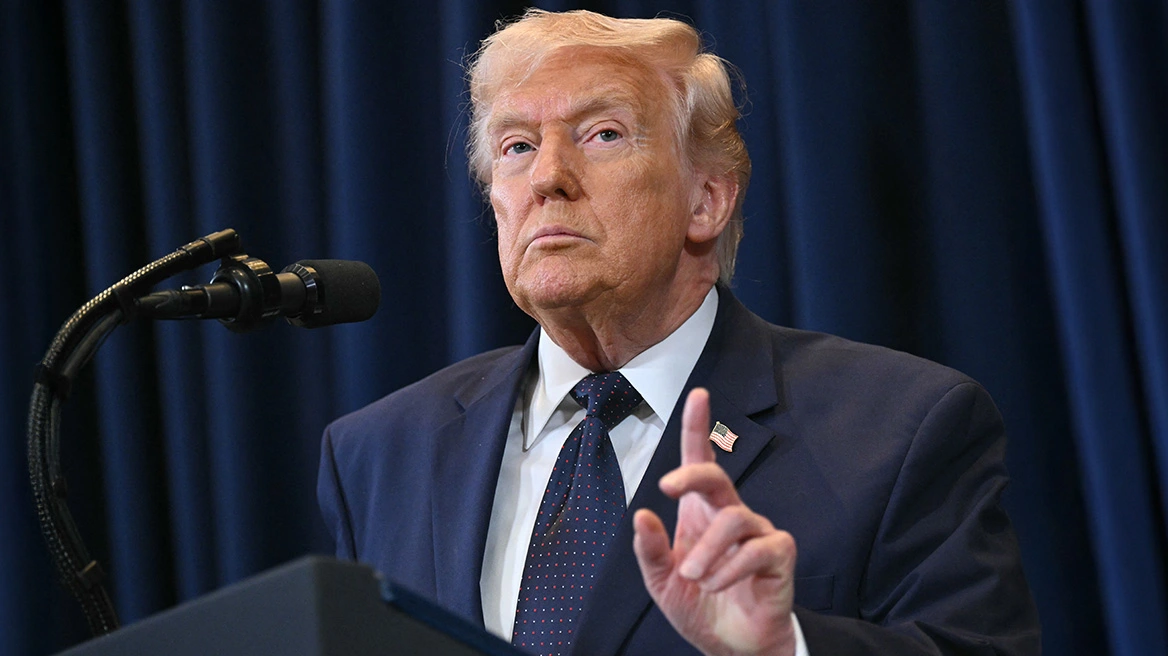
However, while nations one by one are adopting a pro-Palestinian stance, Israel remains steadfast in its stance against the complete occupation of Gaza, while maintaining the support of Donald Trump.
Guardian: Diplomatic turmoil from international support for Palestine
“Recognition of the Palestinian state by the UK, Canada and Australia will cause a global diplomatic upheaval as Israel considers retaliating with annexation of the West Bank, a move that will intensify the confrontation with Europe, widen the rift with Arab states and further distance the US from its allies around the world as the Trump administration maintains its support for Netanyahu and Israel in the Gaza war,” columnist Andrew Roth says in an analysis on Guardian.
The same analysis noted that Washington had warned its allies before Sunday’s announcement that Israel would “symbolically” retaliate, and senior officials knew that Israel’s reaction could jeopardize key Trump administration initiatives, including the Abraham Accords, which were aimed at normalizing Israel-Arab relations and are now in collapse.
Recognition of a Palestinian state against US interests
“The recognition of Palestine by some of the US’s closest allies… will raise tensions at a time when the partners are already at loggerheads over aid to Ukraine, as well as bilateral issues such as tariffs,” the Guardian analysis added.
To that risk, senior Republican lawmakers had sent an open letter to the prime ministers of Canada, Britain and Australia, warning that recognising Palestine “would put your countries at odds with longstanding US policy and interests and may trigger the application of countermeasures” – as a means of punishment.
What remains unclear is whether the US will actively support Israel’s response – including the possible occupation of parts of the West Bank – or whether the Trump administration has simply agreed not to obstruct Netanyahu, “as Israel increasingly seems to have the upper hand in its relations with the US,” notes columnist Andrew Roth.
Israeli ‘retaliation’ with West Bank annexation
Netanyahu, who will address the UN General Assembly on Friday, reiterated yesterday that there will be no Palestinian state and threatened to expand Israeli settlements in the occupied West Bank.
At the same time, two far-right ministers in his government, Itamar Ben Gvir and Bezalel Smotrich, are calling for the annexation of the region – specifically 82 percent.
However, according to Roth, even if Tel Aviv does not adopt Smotrich’s plan, “Netanyahu could at least declare a symbolic annexation of territories internationally recognized as Palestinian, possibly during his speech to the UN General Assembly” – a move that would infuriate Arab countries such as the United Arab Emirates, where officials have called the annexation of the West Bank a “red line.”
“Such a move by Israel could lead to a deterioration of diplomatic relations… It would also strengthen support for new sanctions and tariffs in the EU, raising tensions between Israel and Brussels at the same time that the US is reportedly planning to sell nearly $6 billion worth of arms to Israel, including $3.8 billion for 30 AH-64 Apache helicopters and $1.9 billion for 3,200 infantry assault vehicles,” Roth adds.
Despite Israel’s threats, UN Secretary General Antonio Guterres, in an interview with AFP, had said that “we should not be terrified by the risk of retaliation, because no matter what we do, these actions will continue,” referring to the war in Gaza and the “insidious annexation of the West Bank.”
Moreover, according to Max Roddenbeck of the International Crisis Group, any diplomatic effort to support Palestinian rights is “welcome”, but without “concrete measures” to accompany them, these acknowledgements risk “distracting from the reality, which is the accelerating eradication of Palestinian life in their homeland.”
Ask me anything
Explore related questions