





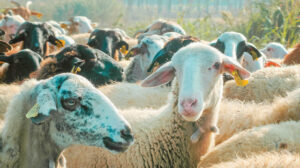
The imposition of a lockdown is now considered a matter of time in a last-ditch effort to eradicate goat pox, which is devastating entire herds, while a “ten-day blitz” by the competent authorities is underway to try to halt its spread.
Fourteen months after the first case, and after nearly 265,000 animals have already been slaughtered and farmers have abandoned their profession, the Ministry of Rural Development and regional authorities have now decided to install disinfection stations and carry out inspections to ensure compliance with biosecurity measures that should have been followed anyway. At the same time, the desperation of farmers who are slaughtering and burying their herds has reopened the discussion about vaccination. Experts describe this possibility as “suicidal,” since it will not eradicate the animal disease and simultaneously poses an immediate risk to feta, a key export product for Greece, generating over €1 billion in annual revenue. It is considered certain that many major markets, such as the USA, would close if Greece lost its “non-vaccination” status.
The delay in implementing measures is a matter of concern, and experts are surprised by the intensity of the second wave of the animal disease (which is not transmitted to humans but only to goats and sheep). It is no coincidence that the idea of a lockdown is being raised now rather than earlier. Currently, milk production is significantly reduced, many farms preparing for births are no longer producing milk at all, and there is limited demand for meat, although the small available quantities are sold at higher prices. One consequence of a possible lockdown is expected to be a further increase in lamb and goat kid prices. Herds will soon need to move from mountainous areas to winter pastures, and this mobility creates a renewed risk of disease transmission. Therefore, the timing is considered appropriate. But what exactly is goat pox, and what situation does it create for livestock farming, farmers, and consumers? THEMA documents the situation and its consequences in 10 questions and answers.
1. What is goat pox?
Goat pox is a zoonotic disease that affects only goats and sheep. It is a particularly serious disease causing significant losses in the livestock sector. There is no reason for public health concern, as it is not transmitted to humans. Infected animals show fever, skin lesions mainly on hairless parts of the body, anorexia, and lethargy. These symptoms are key indicators of the disease. The goat pox virus can survive for six months in feed or on hair, making it extremely resilient and dangerous for transmission.
2. Is milk safe for humans?
Yes, milk is safe for human consumption after high-temperature pasteurization.
3. Is meat safe for humans?
Yes, meat can be consumed without any problem. Goat pox is transmitted exclusively among goats and sheep, so meat is safe for consumption.
4. What has happened from the end of August until now?
The first cases of goat pox were identified in August 2024. By the end of August this year, i.e., within 13 months, 903 cases have been recorded in 1,148 farms, resulting in the culling of 262,854 goats and sheep. The animals are buried in pits dug at the expense of the regional authorities, usually near the farm facilities.
5. What about vaccines?
The fact that approximately 3% of declared animals have already been lost, without even slowing the disease, has sparked public discussion about vaccinating goats. Professor of Veterinary Medicine at Aristotle University, Georgios Arsenos, called it “suicidal,” a view shared by officials at the Ministry of Rural Development, including political leadership. Agriculture Minister Kostas Tsiaras stated: “Available vaccines come from third countries; no European country has implemented vaccination, and clinical studies show that immunity reaches only 60% of vaccinated animals. Choosing such an uncertain option would endanger our exports and, most importantly, our key livestock product, feta.”
Professor Spyros Kritas, microbiology and infectious disease expert at Aristotle University, responded to the Panhellenic Veterinary Association regarding vaccination: “Existing vaccines (none approved in the EU) are either ineffective against all virus strains or the vaccine virus itself can spread to other animals. Also, if used, it would be impossible to distinguish through tests whether animals are infected with the wild virus or the vaccine virus, causing trade problems. Moreover, real-world vaccine effectiveness studies are limited and poorly documented.” He added that as of last August, biosecurity measures were barely being followed by farmers or other professionals.
6. Could feta be affected?
Professor Kritas explained in a letter to the Panhellenic Veterinary Association: “The key question regarding vaccines or even the presence of infection is whether EU and non-EU markets (USA, Canada, Australia, etc.) will accept our goat products (feta, yogurt, kasseri cheese, etc.) if Greece is in an epizootic state. Animals would be seropositive—there would be no way to distinguish between infected unvaccinated, infected vaccinated, or healthy vaccinated animals. Currently, exported products come from seronegative animals. If it cannot be guaranteed (e.g., via written agreements) that these markets will continue to accept products under a new vaccination or infection regime, there is a serious problem. Associations and authorities would need to calculate what benefits the state. On one hand, we risk losing the €1.2 billion annual feta market for at least a decade and associated jobs (farming, transport, processing), totaling €12 billion nationwide. On the other hand, we save the cost of culling animals from 500 farms since the outbreak, which could be reestablished in six months if biosecurity measures are followed. Therefore, it is easy for someone—even in the EU—to suggest vaccination, without accounting for long-term harm to Greek farmers. Such practices are generally allowed only in poor, densely populated developing countries that lack alternative sources of animal protein and trade with developed countries.”
Kritas also cited the example of cattle lumpy skin disease vaccination in 2015: “After a decade, we are just now being declared free from the disease. It did not matter much because Greece had no beef exports. By contrast, we export many goat products, so our response must be entirely different.”
7. What does a lockdown mean at this time?
The cost of a lockdown is significant, as animal movement, meat and milk trade are restricted. Currently, demand for lambs and goat kids is limited (as is supply), and milk production is low, as births are expected to start next month. A nationwide lockdown could also help control transit movements, as animals from other European countries are transported through Greece for export, which may contribute to disease spread. The lockdown could also lead to increased goat meat prices.
8. What are biosecurity measures, and why were they not enforced?
Livestock farms have long-established biosecurity protocols: changing clothes when entering/exiting farms, wearing gloves, installing wheel baths for vehicle disinfection, disinfecting milk collectors, feed transporters, and using vehicle disinfection arches at farm entrances. However, almost no one follows these measures, resulting in disease spread between farms. The reason for non-compliance is a lack of risk assessment, though regions are now installing disinfection points. In Thessaly, which has been hit hardest, 17 disinfection points are expected to start operating tomorrow, nearly 14 months after the first case.
In affected areas, protection zones of 5 km and surveillance zones of 20 km are established to contain the disease. Further restricted zones of 40 km may also be designated.
9. What compensation is provided, and why do farmers complain?
Culling of animals in herds with even one confirmed case is mandatory. Animals are slaughtered and buried, and farmers receive culling compensation relatively quickly. According to the Ministry, Greek farmers receive the highest compensation in the EU. Compensation per animal depends on age and whether they are purebred. For non-purebreds (the majority), the average compensation is around €200. Farmers complain because the cost of acquiring new animals over six months old exceeds €300, making compensation insufficient to fully replace livestock. Moreover, compensation does not cover the cost of raising new animals until they produce income from milk, meat, or wool.
+1 What should a farmer do if they suspect an animal is infected?
Farmers must immediately inform veterinary authorities. The suspected animal should be isolated, the herd confined, contact with other farmers avoided, and strict biosecurity measures followed. Rapid recognition and response are critical to controlling the disease.
“Responsibility is required from everyone. When there is a case, it should not be hidden but reported immediately. Unfortunately, in many cases, veterinarians have found dead animals, which indicates transmission. This cannot continue,” admitted Agriculture Minister Kostas Tsiaras, responding to reports that farmers hide cases to save the rest of the herd.
Ask me anything
Explore related questions




