





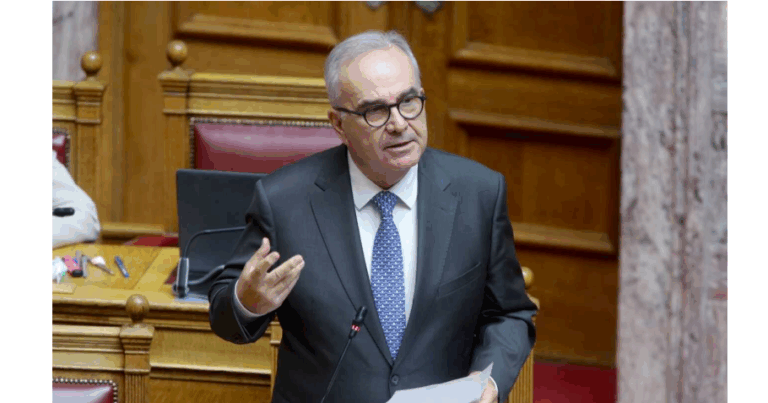
Deputy Minister of National Economy and Finance, Nikos Papathanasis, stressed during the parliamentary debate on the bill “Strengthening Development Program Services and Related Organizational and Administrative Issues” that “greater absorption of European and national funds means stronger economic growth, greater support for society, improvement in daily life, and more jobs — especially for young people.”
Responding to criticisms voiced publicly, Papathanasis emphasized that Greece remains among the top European countries in absorbing funds from the ESPA (National Strategic Reference Framework) and the Recovery Fund, citing official European Union data.
“Examine the official data more carefully and stop dismissing national efforts,” he addressed the opposition, adding that these measurable results reflect methodical daily work that is recognized internationally.
However, he stressed that complacency is not an option:
“We do not want to lose momentum. We are establishing provisions aimed at even faster processes in view of upcoming revisions and new European priorities, both within ESPA and the Recovery Fund. We must remain strong and assertive because there is an ongoing major discussion about Cohesion Policy. We cannot lose ground — we must achieve our national goals. This bill aims to reduce bureaucracy, strengthen services and management capacity, enabling even greater absorption of funds. This will allow us to redirect resources toward housing, water management, and innovation — without losing a single euro.”
On criticisms regarding operational changes, he said pointedly:
“Where is the lack of transparency when staff are selected through ASEP (the independent public employment authority)? Some opposed this because they wanted ESPA to remain a closed system. We are opening it up. Incoming personnel will be civil servants, evaluated for their roles. We need engineers, economists, and other specialists. All changes clearly target bureaucracy reduction and faster processes. For the first time, we are opening ESPA to public servants. Why is this an issue? Don’t you trust them? Don’t they have value and capability? We do this to speed up absorption. I would expect everyone to support this.”
Papathanasis also reaffirmed the Government’s commitment to preserve the public nature of the Thessaloniki International Fair and to upgrade it as a public project, funded through the Public Investment Program. The expanded Administrative Board will include representatives of workers, the Municipality of Thessaloniki, and the Region of Central Macedonia.
Additionally, an advisory committee will be formed with representatives from local organizations such as: the Hellenic Industrial Association, the Exporters Association (SEVE), the Thessaloniki Chamber of Commerce and Industry, the Professional Chamber of Thessaloniki, the Thessaloniki Craftsmen Chamber, the Thessaloniki Commercial Association, and the Greek Tourism Enterprises Association.
“Upgrading the Fair at its current location is expected to add value to the city, enhance commercial transactions, and create jobs — not only for Thessaloniki and Northern Greece but for the entire Balkans — fulfilling the developmental role Thessaloniki deserves,” Papathanasis concluded.
Ask me anything
Explore related questions




