PASOK is once again in a state of nervous crisis due to its “stuck needle” in opinion polls and the leadership’s refusal to open up the party’s internal debate. Senior officials, one after another, are sending warning signals to Harilaou Trikoupi (PASOK headquarters), as the political environment is expected to become even more competitive with the emergence of new players early next year.
On one hand, New Democracy is showing significant wear after seven years in government. On the other, Alexis Tsipras is warming up for a comeback, reshuffling the deck in the center-left. In the middle, PASOK remains almost frozen in the polls.
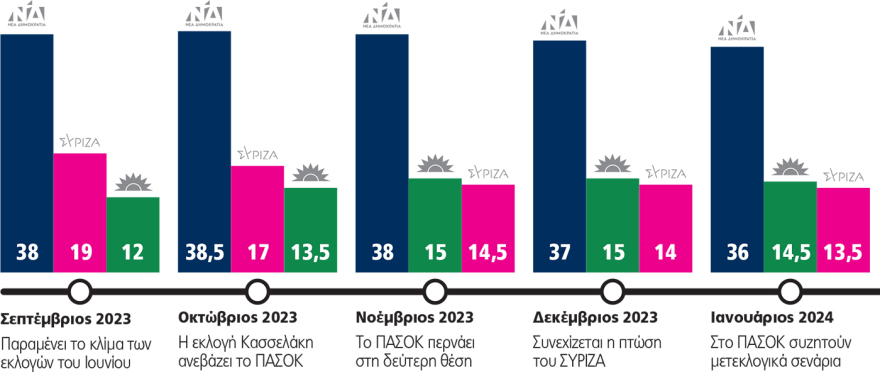
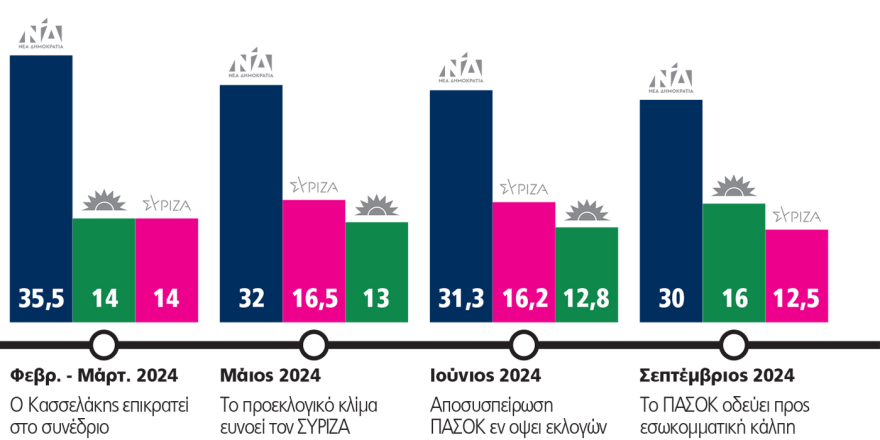
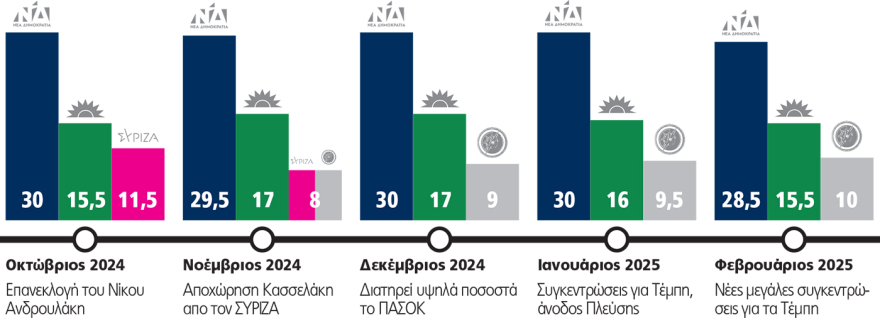
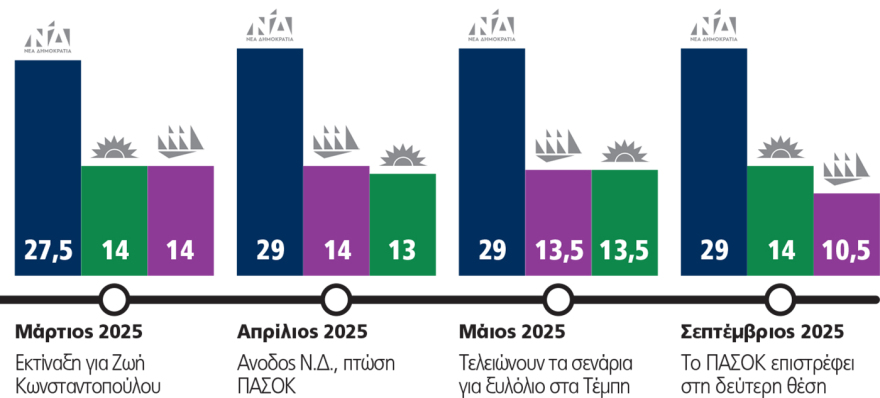
Party officials across Greece are questioning why PASOK, despite twice approaching double-digit figures, has repeatedly collapsed afterward. Following Androulakis’ election in December 2021, the party gained momentum but slid back in spring when leadership floated post-election coalition scenarios. A similar rise-and-fall happened after Androulakis’ re-election last year: a spike in November was followed by decline when Zoe Konstantopoulou, leveraging the mass protests over Tempi, began competing for second place.
Now PASOK is once again clearly the second-largest party but remains far behind New Democracy, which leads by up to 16 points depending on the pollster.
The party’s programmatic presentation at this year’s Thessaloniki International Fair was seen as a good restart, but with the “needle” unmoved, concerns grow about possible loss of momentum as elections approach. Pavlos Geroulanos’ public warning resonated with many PASOK factions, even among those who did not back him in last year’s leadership race.
Geroulanos gave the leadership a two-month deadline — until Christmas at the latest — for the needle to move, warning that otherwise developments might overtake PASOK and its electoral goals. He has pledged not to remain silent, promising constant pressure with objections and proposals.
Meanwhile, Athens Mayor Haris Doukas and former minister Anna Diamantopoulou, also leadership contenders, are working to strengthen their influence within the party. Doukas seeks to embody center-left cooperation after his mayoral victory, while Diamantopoulou appeals to reformist and centrist voters. Both recently called for a political and electoral congress, and both have criticized Androulakis for avoiding regular meetings of party bodies.
Geroulanos is pushing for a congress that openly questions the leadership rather than a “showcase event.” He has revived his seven-point platform from last year, emphasizing a “patriotic, people-centered, modern, socialist party” with democratic structures and outreach to progressive voters across the spectrum.
Doukas, while denying any intent to challenge Androulakis directly, has also pressed for a congress and clear rejection of a post-election coalition with New Democracy. He recently hosted an online meeting with about 100 party officials to coordinate ahead of the congress.
Diamantopoulou, meanwhile, sparked controversy by warning against populist drift, saying “PASOK will not become Karystianou or Konstantopoulou.” Some in the party accused her of alienating center-left forces, while others supported her call for PASOK to guarantee political stability and reforms.
Finally, PASOK’s think tank led by Filippos Sachinidis is set to release new research on what “progressive” means today, likely fueling further debate inside the party. Leadership insiders suggest the congress will be accelerated for November, while downplaying talk of expelling dissenters despite pressure for “drastic measures.”
Ask me anything
Explore related questions