





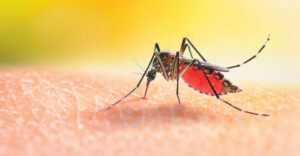
For the first time in history, mosquitoes have been spotted in Iceland – an event that scientists directly link to rapid global warming. Until recently, the country was, along with Antarctica, the only areas of the world without a mosquito population.
Icelandis warming at a rate four times the northern hemisphere average, now making its cold environment more hospitable to species that previously could not survive. The warming has already led to melting glaciers and the eappearance of warmer fish, such as mackerel, in Icelandic waters.
As Guardian reports, the first mosquitoes identified belong to the species Culiseta annulata, known for its resistance to cold. EntomologistMatthea Alfrensson, from the Icelandic Institute of Natural Sciences, confirmed the identity of the insects sent by a citizen. “Three specimens, two females and one male, were found in the Kintafel area in Kios,” he said, explaining that they were collected with special traps commonly used to attract moths.
Culiseta annulata can survive Icelandic winters, finding shelter in basements and warehouses. Amateur naturalist Bjorn Hialtason, who first spotted the insects, described how “one October afternoon I saw an unusual fly on the trap tape and immediately knew what was happening.”
The appearance of mosquitoes in Iceland is yet another symptom of global warming. As the planet warms, species once confined to the tropics are spreading further north. In Britain, for example, eggs of the Egyptian mosquito (Aedes aegypti) and individuals of the Asian tiger mosquito (Aedes albopictus) have already been spotted this year.
Ask me anything
Explore related questions




