





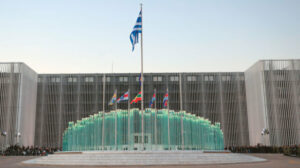
From now on, the Pentagon will be visitable once a week, likely on weekends, as its new bioclimatic façade combined with the “Ark of National Memory” — the commemorative monument for Greece’s 121,692 war dead — compose an open-air museum at the natural headquarters of the Armed Forces. The aesthetic rebirth of a public building with the symbolic weight of the Pentagon however opens the road for the further showcasing of the Tomb of the Unknown Soldier as well, following the passing of the relevant amendment.
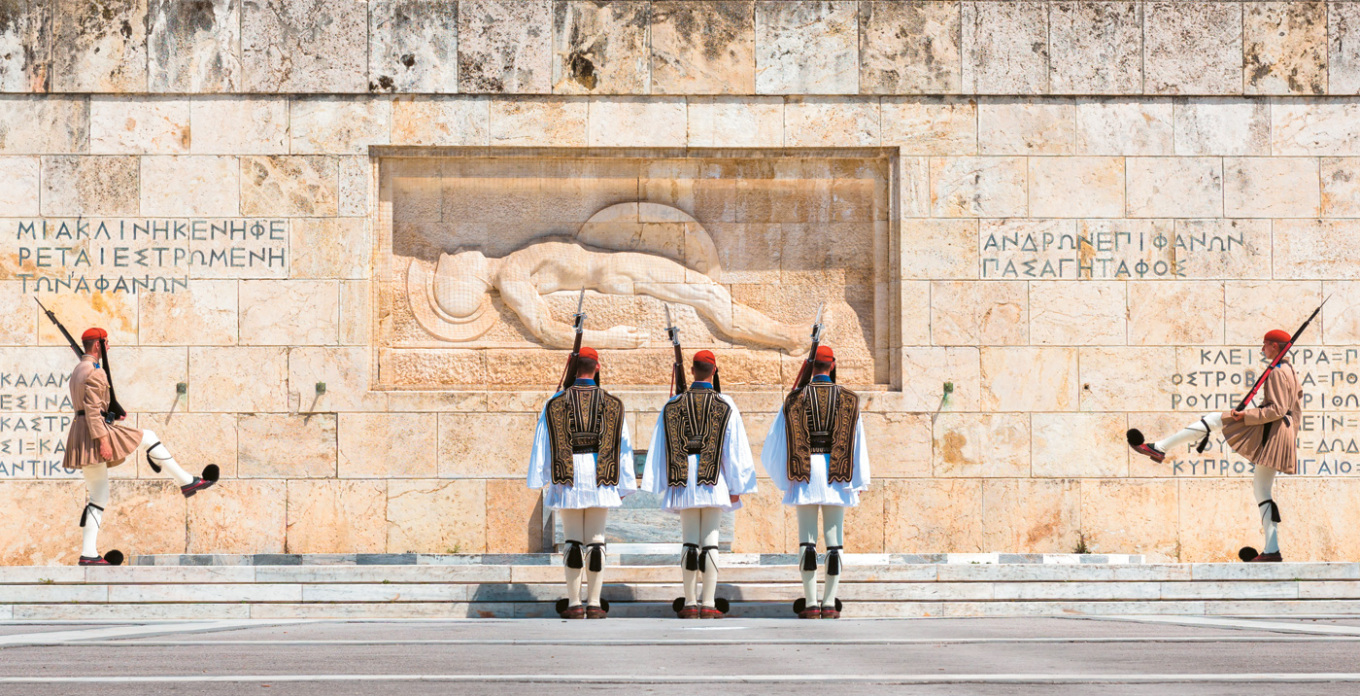
This “dialogue” between the new Pentagon and the Tomb of the Unknown Soldier is fed by their common reference point: the nation’s struggles. The Ark of National Memory contains all the fallen by name, while the Tomb of the Unknown Soldier refers to the heroic battles that shaped the victorious outcome of the participation of the Greek Armed Forces in the wars of the last centuries, with the invisible thread of Modern History connecting these two monumental symbolic sites.
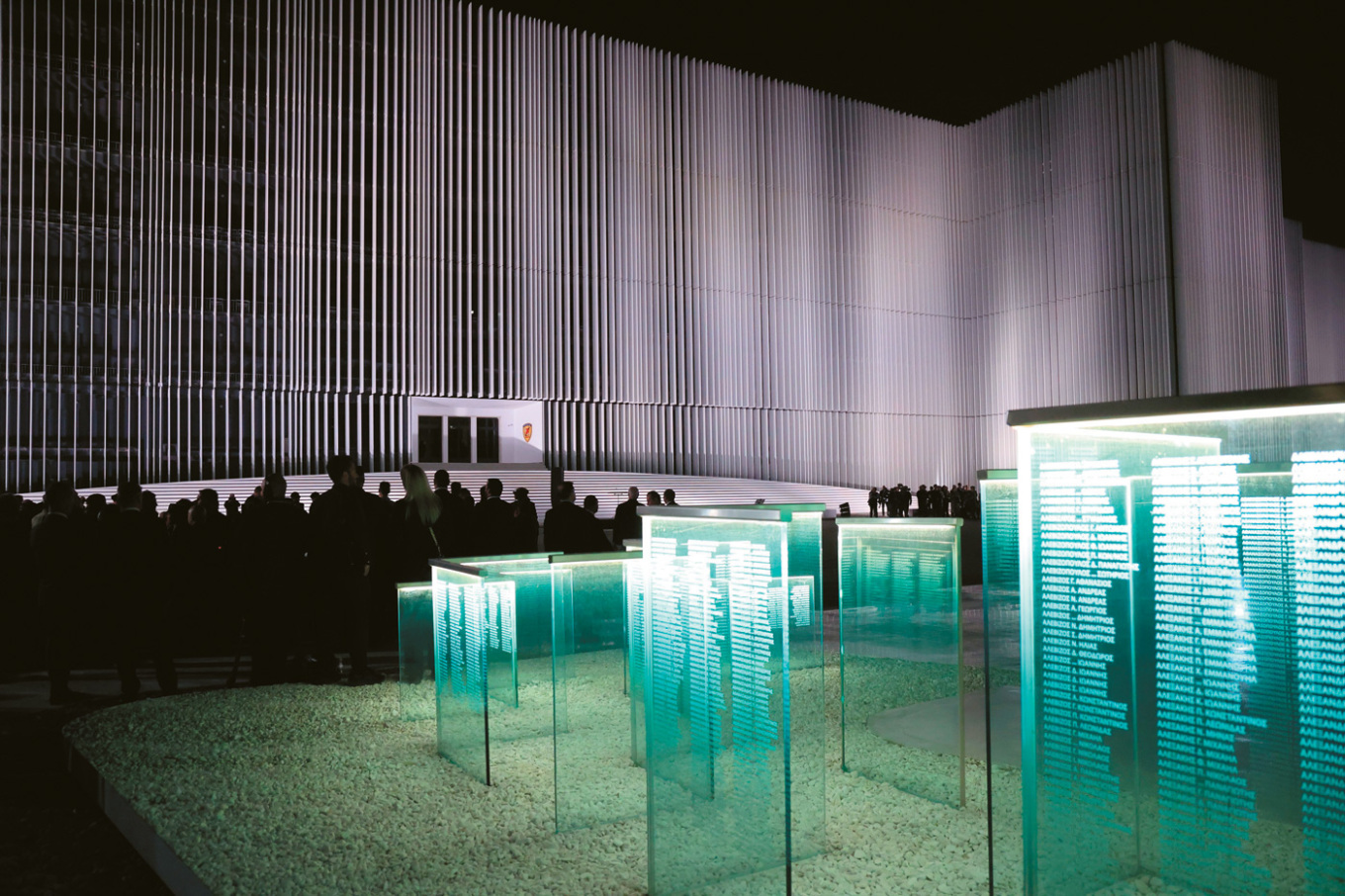
The “Ark of National Memory” bears the names of 121,692 dead in Greece’s wars
Under this prism, “the Ark of National Memory will become immediately accessible to the wider public so that every citizen can pay tribute to those who sacrificed for the homeland. Just as they pay tribute at the Tomb of the Unknown Soldier,” Defence Minister Nikos Dendias stated characteristically during the presentation of the Pentagon’s new bioclimatic façade. He also announced that “very soon a competition will be announced for the elevation of the Tomb of the Unknown Soldier and its role as a point of national unity and shared historical reference.” “A reference of memory and respect to the unknown dead of Greece’s wars,” as he stressed.
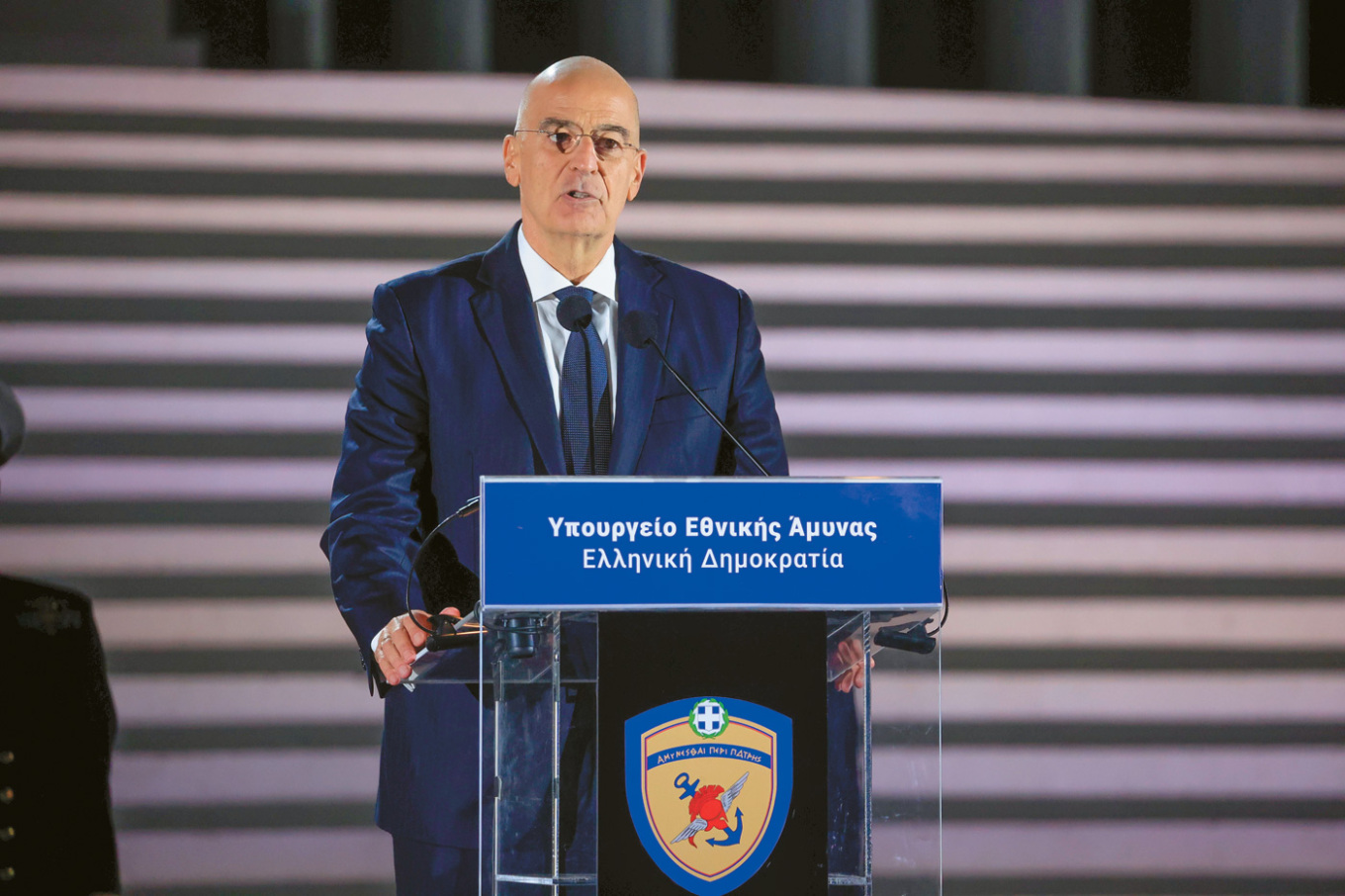
Nikos Dendias: “Very soon a competition will be announced for the elevation of the Tomb of the Unknown Soldier”
According to information, the subject of the international competition will be the further enhancement of the Tomb of the Unknown Soldier — which is one of Athens’ strongest landmarks, with hundreds of visitors daily. Although the precise terms of the competition are not yet clear, the nature of the monument leaves little room for interventions on its current form due to both the location and its national character. But just as in the Pentagon case, the cost of the enhancement of the monument is expected to be assumed by a private investor, aiming at the aesthetic upgrade of the surrounding environment. In such a scenario, a mild fencing near the cenotaph is not ruled out, while what is certain is that the new image of this national symbol imposes cleanliness and meticulous maintenance.
Total facelift
Even more so, when beyond the aesthetic reasons, “the new façade of the Ministry is the architectural expression of our new narrative. The new deterrence doctrine, the new force structure, the new defence innovation ecosystem, the rebirth of our defence industry,” as Mr Dendias argued — projecting the new bioclimatic façade of the Pentagon as a symbol of strengthening the country’s soft power. At the same time, the upgrade and renovation works at the Pentagon will peak over the next period as the renovation of all interior spaces has been set in motion, with the cost to be paid by Hellenic Petroleum. And the project “Redevelopment of the Ministry of Defence’s Surroundings,” currently underway, includes the planting of two small olive groves left and right of the monument, the renovation of the reception space for ministers and distinguished foreign guests, the construction of an electronic warfare building and underground parking modelled on the Hellenic Parliament.
Green footprint
Furthermore, the energy upgrading and extension of the energy façade of the main building have already been set in motion, as well as the renovation of the interior working spaces, aiming to further increase the environmental footprint of the “Papagos” base. In this context, Piraeus Bank has undertaken the cost of completing the exterior of the building, as “the monument and the front section of the building is framed by additional green spaces with 500 new plants and saplings donated by the Municipality of Athens, improving the environmental footprint,” as the Defence Minister explained, also announcing that “they are added to the 1,000 trees we have already planted and the two small groves with 28 and 25 olive trees each — symbolising October 28th and March 25th.”
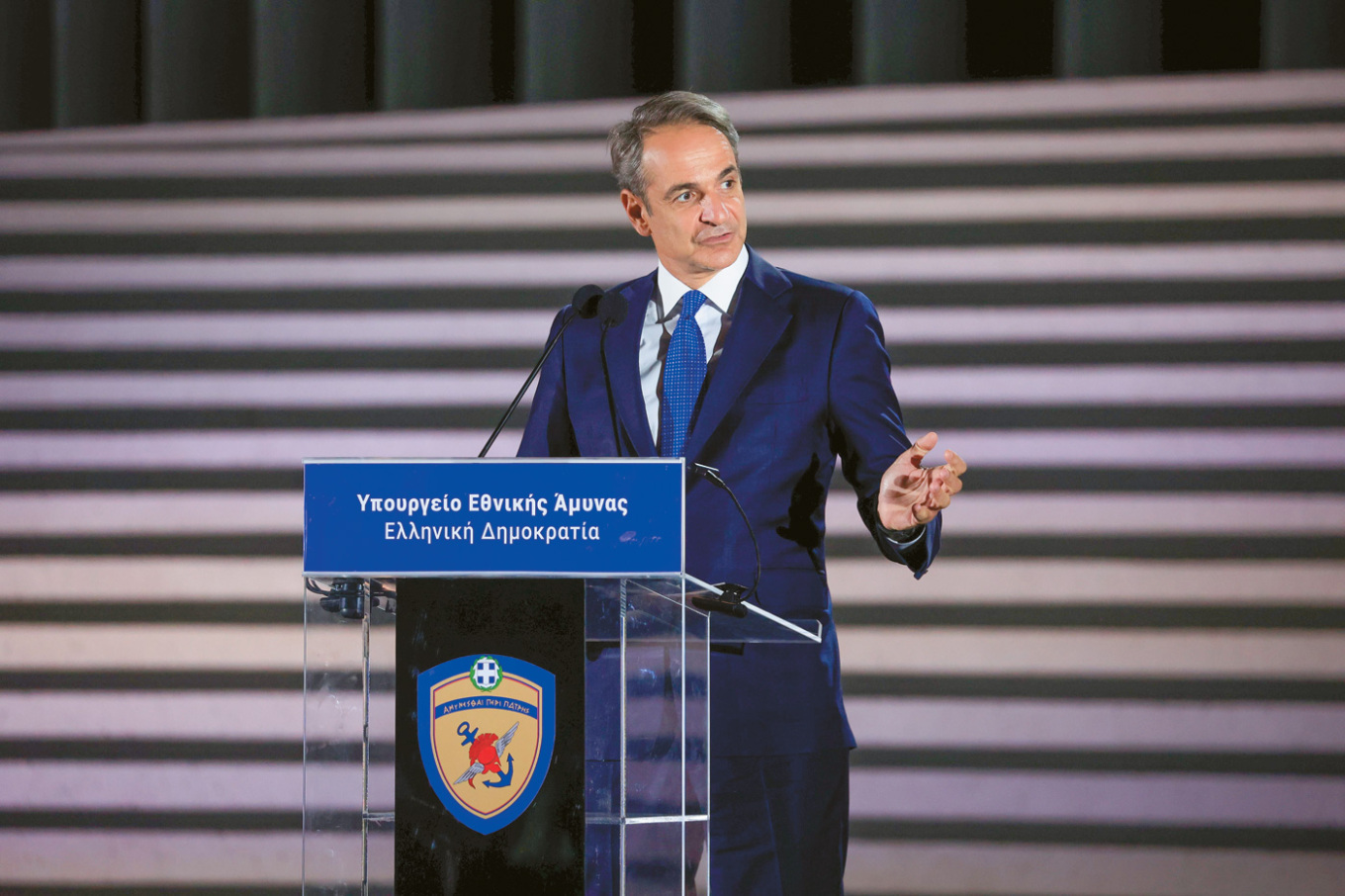
Kyriakos Mitsotakis: “The Tomb of the Unknown Soldier will acquire the new form it deserves”
National landmark
With the reborn Pentagon as backdrop, “it is an honourable duty for the Ministry to care for every landmark that is connected with our heroes, with first of course the site of the Tomb of the Unknown Soldier,” prime minister Kyriakos Mitsotakis stressed, adding that it is “a monument which, as the minister also pointed out, will acquire the new form it deserves — serving first and above all the unity and shared path of our people.” “Because it is true that our capital, as well as all our cities, need points of strong symbolism of national self confidence,” the prime minister observed, also underlining that freedom, peace, national dignity and the country’s progress “are values that demand daily protection, even though we often take them for granted.”
By the hand of Varotsos
This projection of power through the new Pentagon — at a time of total transformation in the Greek Armed Forces — would not have materialised if the new bioclimatic façade of the Ministry of Defence, as well as the Ark of National Memory, had not been envisioned by the distinguished Greek sculptor and professor of the Aristotle University of Thessaloniki, Kostas Varotsos — with the cost being a donation of Metlen Energy and Metals. Although born in Athens, Kostas Varotsos, after a creative cycle of studies and artistic expression in New York and Rome, was elected professor at the Architecture School of the Thessaloniki Polytechnic in 1999 — where the Ministry’s Secretary General Antonis Oikonomou also hails from. A true Thessalonian, Mr Oikonomou is a personal friend of the famous Greek sculptor and brought Varotsos in contact with Mr Dendias. Moreover, Varotsos came to add yet another contemporary landmark to the Greek capital by completing the new bioclimatic façade of the Pentagon — with his most iconic work being located opposite the former “Hilton,” the well-known “Runner.”
Works by the same artist have also been placed in metro stations of Athens (such as Doukissis Plakentias), in the National Gallery, in the gardens of the Presidential Mansion, and in hotel units of the capital, giving new meaning to modern materials like metal and glass. In the case of the new Pentagon, glass “with its clarity reveals the encomium to the 121,692 dead of Greece’s wars. Her glorious, translucent, radiant past,” as Mr Dendias concluded.
Ask me anything
Explore related questions




