British Museum: Egypt demands the return of the Rosetta Stone — How Greece’s claim for the Parthenon Marbles is affected
The inauguration of Cairo’s Grand Egyptian Museum has shattered the long-standing argument of the British for holding on to the Rosetta Stone
Newsroom
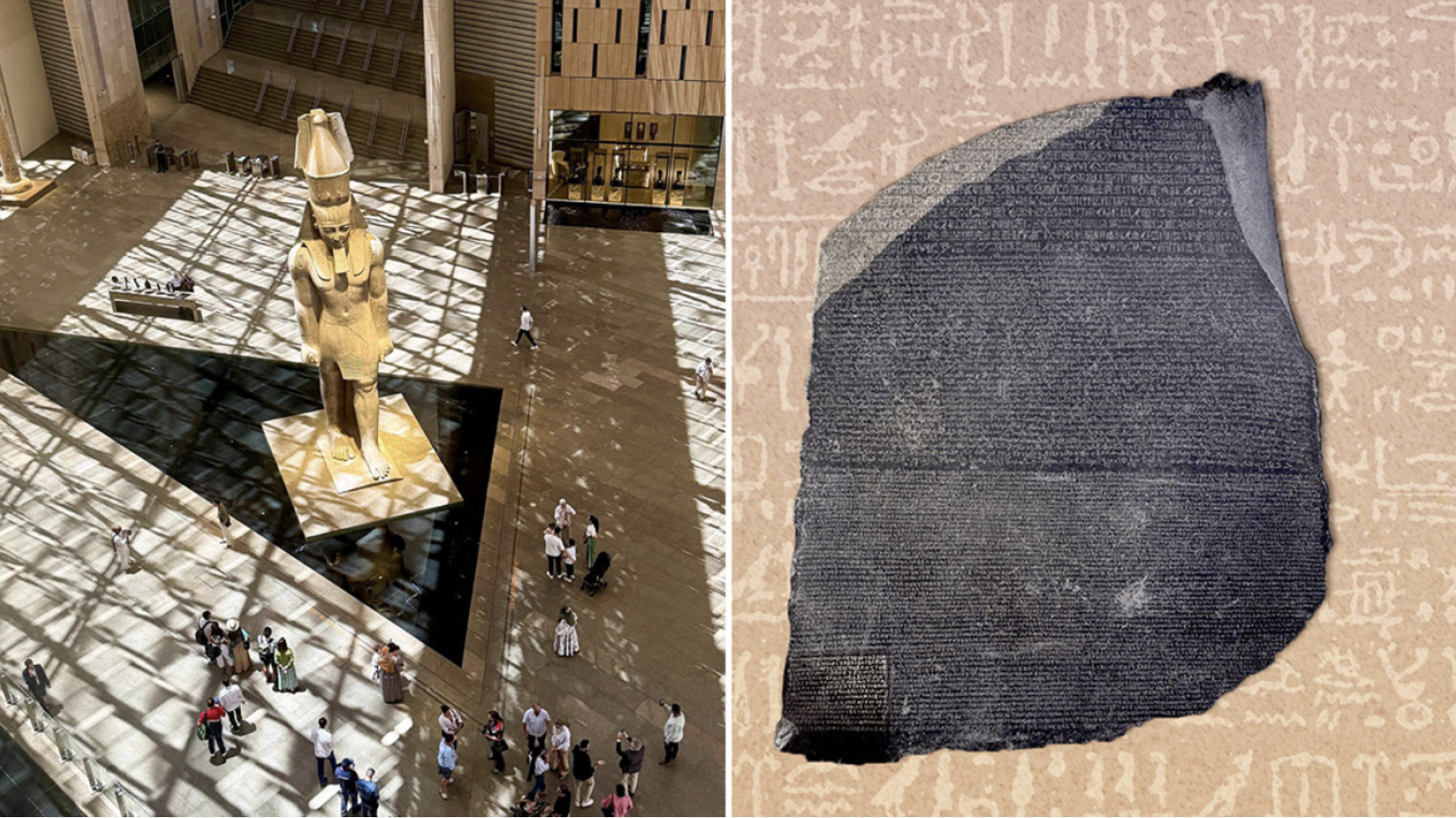
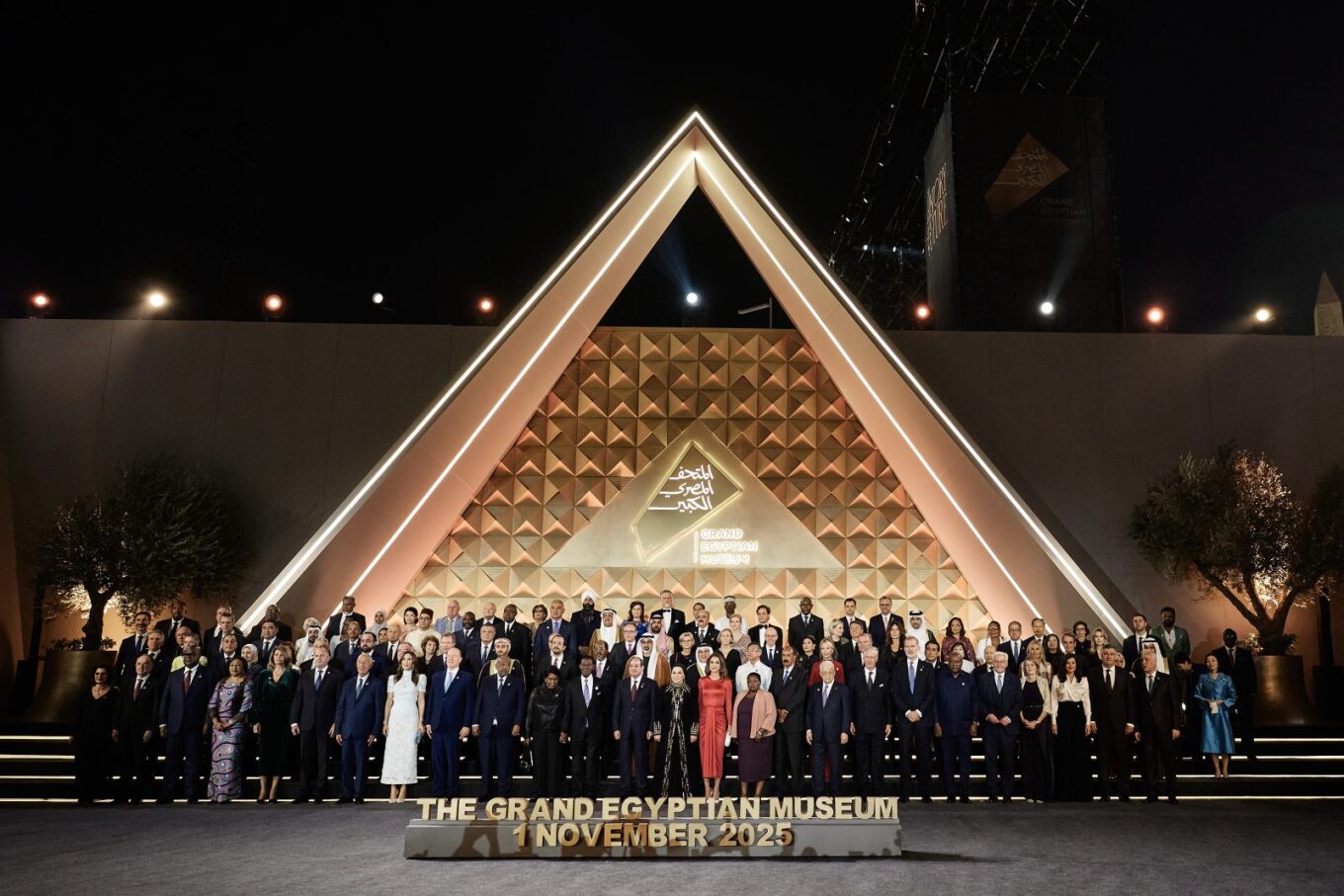
Apart from the long-standing request for the repatriation of the Parthenon Marbles — which, as the Greek side frequently points out, has been under ongoing negotiation in recent years — the British Museum is now under increasing pressure from Egypt to return the famous Rosetta Stone, following the grand opening of the impressive new Grand Egyptian Museum in Cairo.
The Rosetta Stone, currently on display at the British Museum, has long been the subject of Egyptian requests for at least a temporary loan. The 114 cm-high and 72 cm-wide slab of granodiorite was discovered in 1799 in the Egyptian city of Rosetta by French soldiers in Napoleon Bonaparte’s army. It later came into British possession as a war trophy and was soon after incorporated into the British Museum’s collection.
The importance of the Rosetta Stone lies in the fact that it was the key to deciphering ancient Egyptian hieroglyphs — a language lost for nearly 1,400 years. The text inscribed on it, written in three scripts — ancient hieroglyphic, Demotic Egyptian, and Ancient Greek — marked the birth of modern Egyptology.
When Egypt first began requesting a loan in the early 2000s, it received the same answer Greece once did before the Acropolis Museum was built: that there was no suitable space to safely host such a priceless artifact.
That argument has now collapsed — first in Greece’s case, and more recently in Egypt’s — as the country has finally completed, after two decades of work, a monumental new temple of its rich cultural heritage. Following the glittering opening of the new museum, calls for the return of the Rosetta Stone and other Egyptian treasures scattered across Europe have intensified.
Former Egyptian Minister of Tourism and Antiquities Zahi Hawass recently urged Western European museums to make amends by returning their Egyptian treasures:
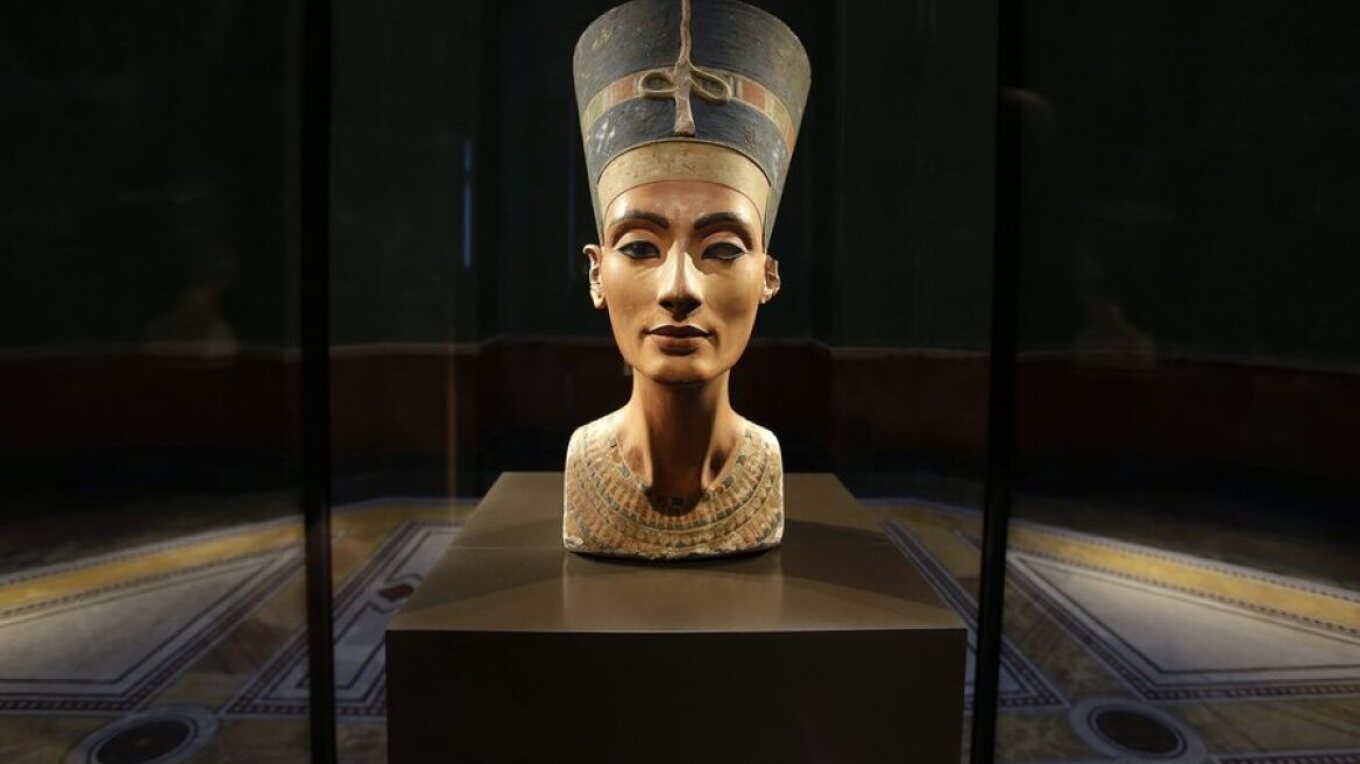
“I want two things: first, that museums stop buying stolen artifacts, and second, that three objects be returned — the Rosetta Stone from the British Museum, the Dendera Zodiac from the Louvre, and the Bust of Nefertiti from Berlin,” he stated pointedly.
Many other renowned Egyptologists share this stance, including Monica Hanna, who has led the campaign for the repatriation of Egyptian antiquities since 2022. “The opening of the Grand Egyptian Museum sends the message that Egypt has done its part — it’s now time to ask for our artifacts back,” she emphasized, adding: “Egypt should officially start the process of restitution and repatriation of looted objects.”
The British Museum, however, has seized upon the absence of an official government request to deflect growing international scrutiny. “We have received no formal request from the Egyptian government for the repatriation of the Rosetta Stone,” the Museum responded, buying itself time. It also reiterated the standard argument that the 1963 British Museum Act prohibits the removal of objects from its collection — the same defense used regarding Greece’s claim for the Parthenon Marbles.
In sharp contrast, the Netherlands recently made a symbolic gesture by announcing the return to Egypt of a 3,500-year-old stone head from the Pharaonic era, looted during the Arab Spring between 2011 and 2012.
It is now evident that mounting international pressure on the British Museum to return illegally exported cultural treasures has given new global momentum to such repatriation claims, which are gaining ever more public and institutional support.
However, the more such demands multiply, the harder they are to satisfy — since the British Museum is hardly willing to see its display cases emptied of world-famous exhibits. It remains to be seen whether the Museum will continue to play for time or finally take a definitive decision that protects its own interests — possibly through long-term exchange agreements or other diplomatic compromises.