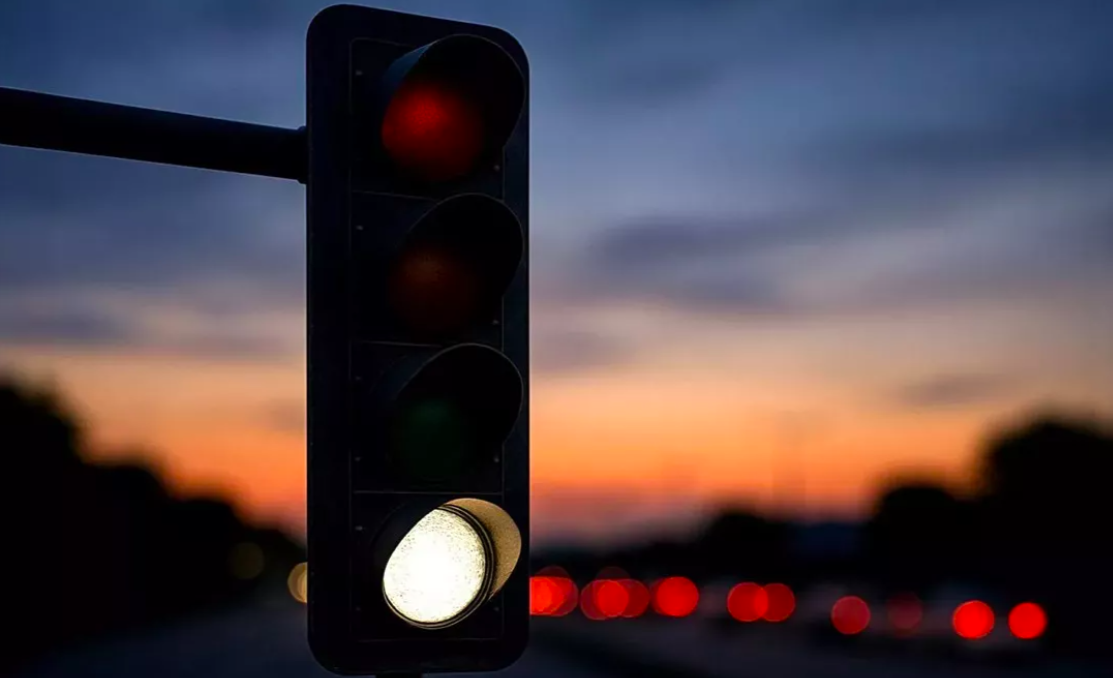
For more than a hundred years, traffic lights have relied on the familiar trio of red, yellow, and green. But the rise of self-driving cars may soon change that. Researchers at North Carolina State University are proposing a fourth color: white.
The concept is based on cooperation between autonomous and human-driven cars. When enough self-driving vehicles are present at an intersection, their systems communicate with one another to coordinate traffic in the most efficient way. At that point, the traffic light would switch to white, telling drivers of conventional cars simply to follow the vehicle in front of them.
In simulations, this “guided flow” approach reduced delays by anywhere from 3% to 94%, depending on how many autonomous cars were on the road. Overall traffic efficiency improved by nearly 99%, meaning shorter wait times, less fuel consumption, and lower emissions.
Even so, such a system is still a long way off. Widespread use of autonomous vehicles remains a long-term goal, and existing traffic-light infrastructure would need major upgrades.
Still, the proposal points to an important shift: if cars can “talk” to one another and to the road itself, city traffic could become far smoother and more efficient than it is today. In short, the traffic light of the future may one day… turn white.
Ask me anything
Explore related questions