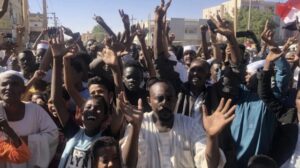
In Darfur, the isolated region of western Sudan, humanitarian workers are being forced to “choose who to save” as they lack sufficient resources to help all civilians, said Jerome Bertrand, an executive with the non-governmental organization Handicap International.
Since April 2023, when civil war broke out in Sudan between the army and the paramilitary Rapid Support Forces (RSF), tens of thousands of people have been killed and millions more displaced. The UN calls it “the world’s worst humanitarian crisis”, with the situation in Darfur even worse due to the mass exodus of refugees since the ISF took over el-Fasser in late October.
“We are forced to choose who to rescue and who not to rescue, Bertrand complained after returning from Sudan, where he had gone to assess logistical needs for aid distribution.
“It is a choice, an inhuman dilemma faced by humanitarian workers and completely against our principles, he stressed, adding that Handicap Intenational teams are prioritising “children, pregnant and breastfeeding women in the hope that the rest will endure.
Bertrand’s mission is to find ways to facilitate the non-governmental organization’s operations in order to best meet “the tremendous needs.”
And all this without an airport operating in the area and roads being impassable during the rainy season. Meanwhile, Handicap Intenational is faced with “administrative hurdles” at the border with Chad, the only access route to Darfur at the moment, prohibitive costs and inadequate funding.
“Supplying a region as large as France, with 11 million inhabitants, is partly done with donkeys, he explained, denouncing “the situation of anarchy”, “the total absence of state institutions”, security problems, “extortion, theft, attacks, arrests.”
In Tawila, a city where currently more than 650,000 civilians have taken refuge from el-Fasser or the Zamzam camp that fell into the hands of the ISPs, there are “people who now have absolutely nothing”, while “humanitarian workers are not able to meet all these needs”.
The suspension of some US international aid through USAID has reduced by “70%” the resources for Darfur and “only a quarter of the needs” are now being met, Bertrand noted.
He also described that “80,000 destitute people” are on the streets of Tawila and are subjected to violence, extortion, sometimes ransom demands, and those who arrive in the city have “signs of malnutrition, wounds from torture” or “bullet wounds.”
Ask me anything
Explore related questions