





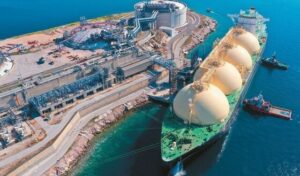
Following the recent long-term agreement to supply LNG to Romania and Ukraine via Alexandroupolis and the Vertical Gas Transmission Corridor, Greece is strengthening its role as a key player in Europe’s changing energy map. As Eurobank Research notes in a study, although the deal will have little impact on Greece’s gas market in the short term, it marks an important step towards building the country’s position as a regional energy hub.
In addition, by linking Southeast Europe more closely to more stable gas suppliers such as the US, the agreement supports EU efforts to wean itself off Russian energy and strengthen its long-term energy security. Recent concessions for offshore gas exploration projects in the Northern Ionian, Southern Peloponnese and Southern Crete further highlight the country’s potentially growing importance in Europe’s future energy mix.
In addition to initiatives in the fields of secure energy supply and investment, Greece’s role in the decision-making centres for Europe’s medium to long-term energy planning is being strengthened.
A typical example is the intervention of our country that facilitated the implementation of a complete ban on Russian gas imports into the EU from 1 January 2026 (excluding those under existing supply agreements) until the end of 2027. Adopting the Greek proposal, the Council of Europe proposed on 20 October that countries exporting gas to the EU via the TurkStream pipeline should have to prove their non-Russian origin, contrary to the Commission’s proposal, which defined importers in the countries of entry as responsible for this.
Ask me anything
Explore related questions




