The 2026 budget incorporates a fiscal package amounting to €5.94 billion – an increase of €2.9 billion compared to 2025 – with €1.76 billion of that total being the new measures announced at TIF. This package includes measures affecting salaries, pensions, taxes, living-standard criteria, ENFIA (property tax), VAT reductions for islands, pay scales for specific public-sector categories, tax relief for freelancers, and targeted incentives for the property market.
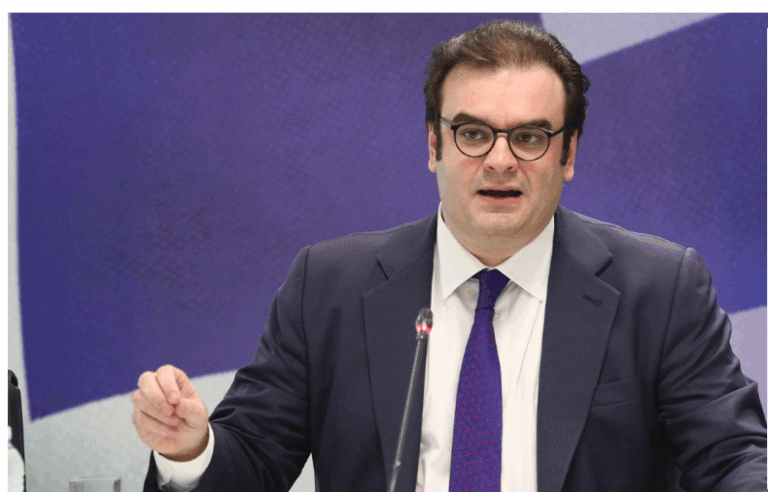
According to the presentation by the Minister of National Economy and Finance, Kyriakos Pierrakakis, and Deputy Minister Thanos Petralias, the package is divided into three “tiers”:
- the new TIF measures for 2026,
- the interventions legislated during the execution of the 2025 budget that remain in force, and
- those already incorporated in 2025 that continue to have a fiscal impact in the new year.
Detailed Measures for 2026
The 2026 budget includes:
• A major reform of the income tax scale, with emphasis on families with children, young people and the middle class, with a fiscal impact of €1.218 billion.
• Gradual abolition of ENFIA in settlements with up to 1,500 inhabitants (€38 million for 2026).
• Reform of living-standard criteria (“tekmeria”), yielding €40 million.
• Non-offsetting of 50% of pension increases with the “personal difference” (€75 million).
• A 30% VAT reduction on islands of the Northern Aegean, Samothraki and small Dodecanese islands (€25 million).
• A 50% reduction in the minimum taxable income for freelancers in small settlements (€10 million).
• New salary scales for the Armed Forces (€162 million).
• Savings from the new structure of the Armed Forces (€77 million).
• Increase of conscript compensation (€25 million).
• Pay-scale reform for the Security Forces (€127 million).
• Salary adjustment for the Ministry of Foreign Affairs (€30 million).
• Special-duty allowance for correctional staff (€6 million).
• Recognition of integrated master degrees for polytechnic and other five-year university programs (€7 million).
• Tax-free library allowance for university faculty and researchers (€6 million).
• Creation of a Pharmaceutical Innovation Fund (€50 million).
• Abolition of the subscription-TV levy (€22 million).
Measures From 2025 That Continue Into 2026
Also included in the 2026 budget are measures legislated during 2025 that continue to have fiscal impact:
• One-month rent reimbursement (€230 million),
• Annual €250 support paid every November (€360 million),
• Increase of the national Public Investment Programme (€500 million),
• Higher pharmaceutical expenditure ceiling (€100 million),
• Health-sector measures, pharmaceutical coverage for low-income pensioners, support for uniformed personnel, and building-renovation incentives.
Measures Already in Effect From 2025
A third category includes measures already in force from the previous budget cycle:
• Across-the-board salary increases in the public sector,
• Pension increases,
• Reduction of social-security contributions,
• Abolition of the business-activity fee,
• ENFIA reductions for insured properties,
• Innovation incentives,
• Tax relief for new parents,
• Incentives for doctors in remote areas,
• Extension of VAT exemption for new buildings,
• Increases in student housing allowances,
• Strengthening of military academies.
Altogether, these combine to form the €5.94 billion package for 2026, composed of €1.76 billion in new TIF measures, €1.51 billion in measures legislated during 2025, and €2.67 billion in measures already incorporated from the previous budget.
Deputy Minister Petralias emphasized that the 2026 fiscal plan closes with full utilization of the available fiscal space, leaving room for new measures in 2027 only if growth rates, debt reduction, and anti-tax-evasion results continue on track.
Ask me anything
Explore related questions