





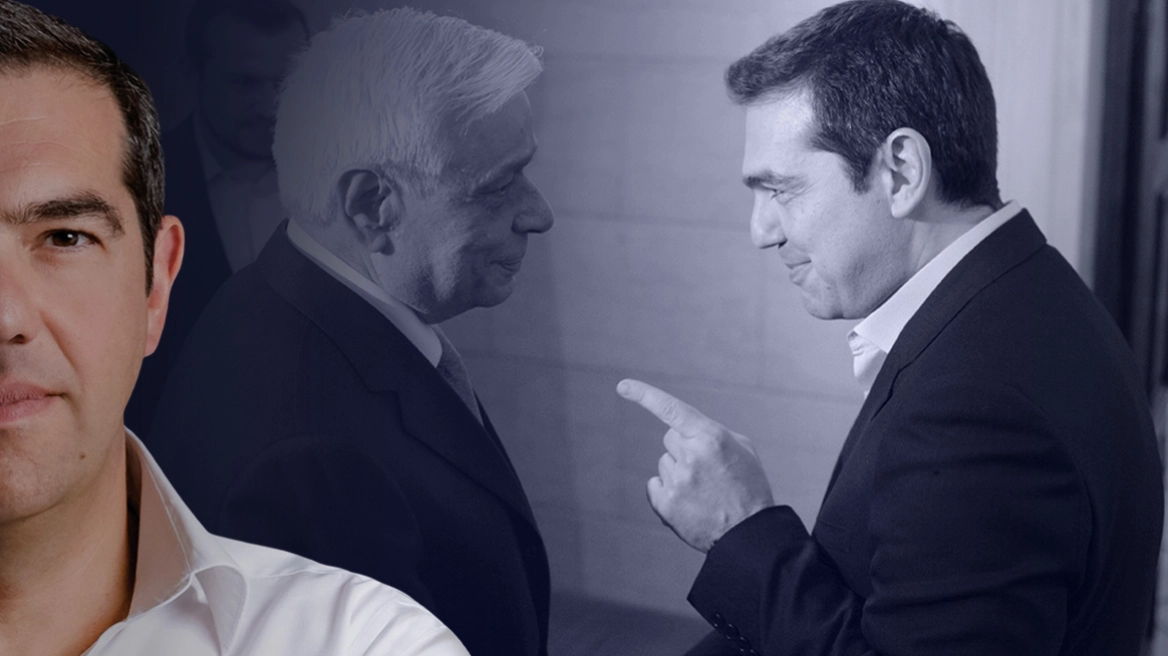
As Alexis Tsipras emphasizes in his Ithaca, the murder of Alexandros Grigoropoulos and the unprecedented unrest that followed the tragic event in December 2008 played a decisive role in SYRIZA’s subsequent rise.
Among other things, amid the flames of the barricades in the center of the capital and the accusations that SYRIZA was fueling the chaos, Tsipras discerned in Prokopis Pavlopoulos — later President of the Republic — an outstanding political figure. As Tsipras reveals, he was in daily contact with Pavlopoulos while Athens was burning.
The relevant excerpts from Ithaca:
As time went by, SYRIZA and its meteoric rise in the polls remained at the center of public discussion. Nearly ten months had passed, and this momentum showed no sign of stopping. But what Papandreou’s maneuver at PASOK’s Congress failed to achieve with his proposal for post-election cooperation — which was rejected — December and the shocking events after the murder of Alexis Grigoropoulos accomplished.
Those events were etched indelibly in my memory. On the afternoon of 6 December 2008, we were putting up the Christmas tree for the first time in our new home, at 40 Giannitson Street in Ano Kypseli, where a year earlier Betty and I had decided to live together. Suddenly, a phone call from a friend who happened to be having a drink somewhere on Valtesiou Street in Exarcheia interrupted our family calm: “A 16-year-old kid was shot by a police officer. Exarcheia is exploding.”
Within minutes, the news spread everywhere. The storm didn’t take long to break. From the balcony of the sixth floor on Giannitson Street, thick smoke could be seen rising at scattered points across the city center. The following days were days of rage. The reaction wasn’t limited to the narrow circles of left-wing and anarchist groups but spread across the country and especially among the younger generation. Schools closed, students and their parents took to the streets en masse, not always peacefully. Anger and a desire for revenge for Alexandros’ unjust death dominated.
At first, all parties condemned the police repression. But as soon as the television stations began focusing on scenes of destruction and violence, things changed. SYRIZA, which by then had shaped the profile of a youthful, radical, and disruptive party, could not distance itself from the massive presence of young people in the streets. And it didn’t.
It attempted to distinguish its stance from the acts of violence, but without rejecting the demonstrations of protest. However, the extent of the destruction was such that pressure from the political and media environment quickly intensified. Especially when, adopting the climate of most media outlets and the government line, Aleka Papariga rushed out of the Maximos Mansion to directly blame SYRIZA, claiming it tolerated and fueled the so-called “troublemakers.” It was perhaps a good opportunity for the Communist Party (KKE) to halt SYRIZA’s rapid rise. And it was also a first-class helping hand to the Karamanlis government. In the end, the latter managed to handle the major crisis without irreparable damage — something far from certain at the start.
A decisive role in this was undoubtedly played by the level-headed stance of the then Minister of Public Order, Prokopis Pavlopoulos, who, in contrast to extreme recommendations that even called for the army to be deployed on the streets, showed composure and restraint.
Pavlopoulos, as a professor of Public Law at the Athens Law School, had both experience and an understanding of youthful impulsiveness, as well as of how one could communicate with various groups of the extra-parliamentary Left and the anarchist scene. In those hours he was in constant daily communication with me, sincerely intent on avoiding the worst — namely, preventing the violence from escalating into completely uncontrollable forms that would lead to more victims and greater destruction.
It was then that a relationship of honesty, mutual respect, and meaningful communication began to develop between us — a relationship that, over time, would play a decisive role in my decision to propose him for the position of President of the Republic.
Ask me anything
Explore related questions




