





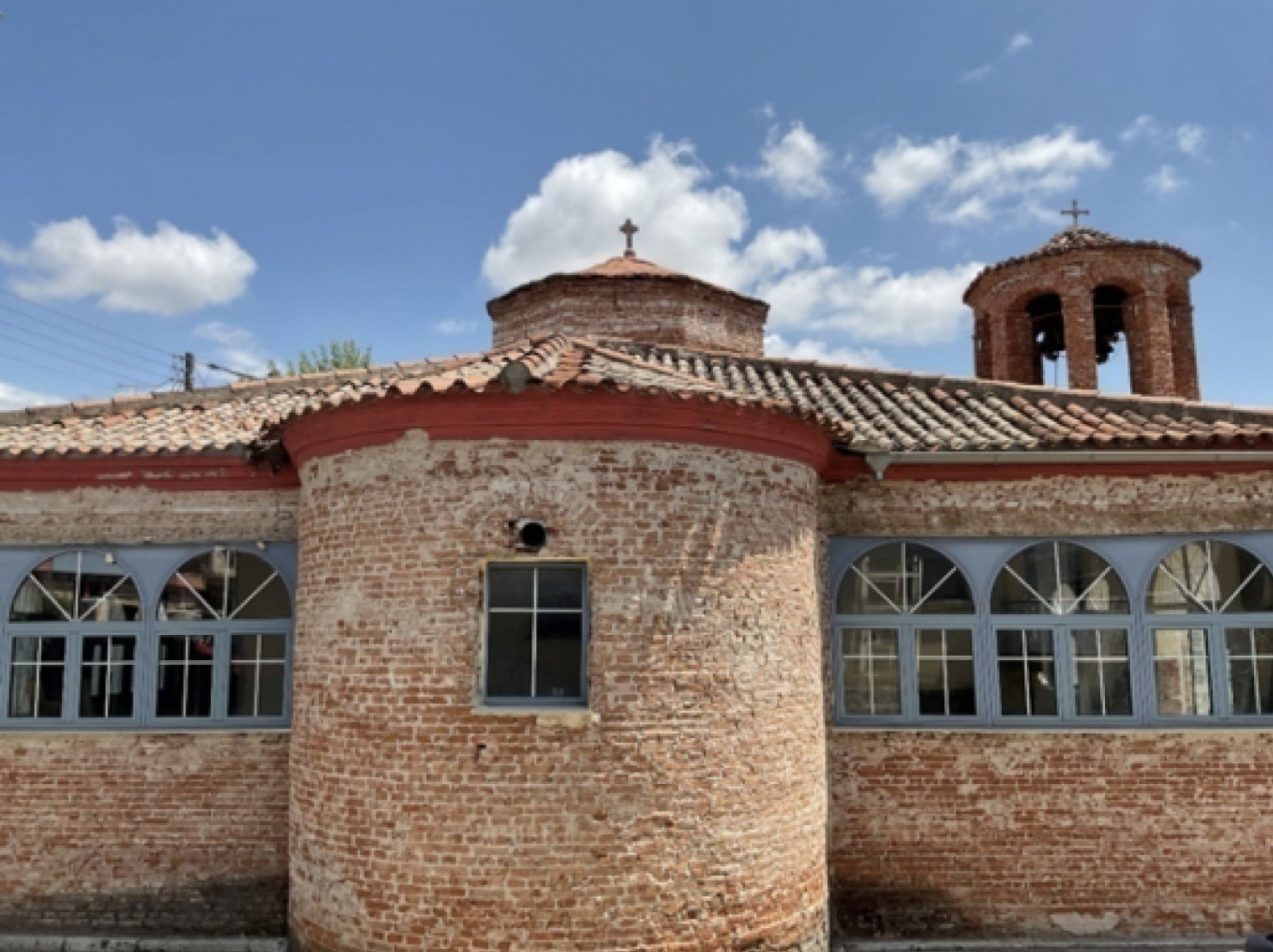
The Church of Agia Sophia in Drama, the city’s most important Byzantine monument, is being restored and promoted by the Ministry of Culture. The project, with a budget of €1,084,000, aims to highlight the monument’s historical, religious and aesthetic value – a landmark of the historic city centre.
In the city of Drama, a group of monuments – religious and fortification structures – dating from the Early Byzantine to the Late Byzantine period, as well as post-Byzantine monuments and Ottoman mosques, survive, documenting the city’s long-standing presence and importance in Eastern Macedonia. The Church of Agia Sophia dates back to the 10th century. It is believed to have been the katholikon (main church) of a Byzantine monastery and is a characteristic example of domed church architecture, bearing witness to Drama’s prosperity during the Middle Byzantine period. Today, it functions as a parish church of the Metropolis, a use that is expected to continue in the future.
The Church of Agia Sophia went through five main construction phases that shaped its present form. During the first phase (4th–5th centuries), a three-aisled Early Christian basilica was founded. In the second phase (9th–10th centuries), a domed Byzantine church was built on the foundations of the basilica, forming the core of the present church. In the third phase (10th–19th centuries), a southern side chapel, probably funerary, was added, along with various interventions and alterations that demonstrate the church’s continuous use. The fourth phase (1829–1913) was marked by its conversion into a Muslim mosque, with extensive alterations and destruction of features that testified to its original form. In the fifth phase (1913–today), after the restoration of its Christian function, extensive conservation and renovation works were carried out, bringing the monument to its current state.
In terms of its condition, the monument is generally considered to be satisfactorily preserved, thanks to ongoing maintenance. However, problems have been identified due to aging materials, weather conditions and later interventions. The Byzantine core shows cracks in the piers and minor settlement, with no evidence of seismic damage. Damage is mainly found in the bricks and mortars, which have deteriorated due to moisture and long-term exposure to weather.
The restoration project aims to safeguard and highlight the monument, respecting its particular characteristics. It provides for structural reinforcement and conservation, the removal of later additions that distort the monument’s character, morphological restoration of masonry and openings, conservation of the painted decoration, and comprehensive enhancement of the surrounding area, including accessibility for people with disabilities. At the same time, the interventions are expected to ensure the protection and presentation of the archaeological remains of the underlying Early Christian basilica.
“Agia Sophia in Drama is a living testament to the city’s long history and spiritual radiance. The restoration and promotion of the monument is not merely a technical project, but an act of respect for the cultural heritage of the area,” said Minister of Culture Lina Mendoni, adding: “The first phase of archaeological excavation brought to light the Early Christian phase of the monument. The new project aims at the structural and morphological restoration of the church, in order to highlight its form as it had been preserved until the 19th century. At the same time, it ensures the protection and promotion of a monument of exceptional historical, architectural and spiritual value for the city and its residents. With the implementation of the project, the city’s cultural identity is strengthened, while an extremely important monument will be returned fully restored to Christian worship. I would like to thank the Regional Governor of Eastern Macedonia and Thrace, Christodoulos Topsidis, for including the project in the Region’s NSRF (ESPA) programme and for our excellent cooperation.”
Ask me anything
Explore related questions




