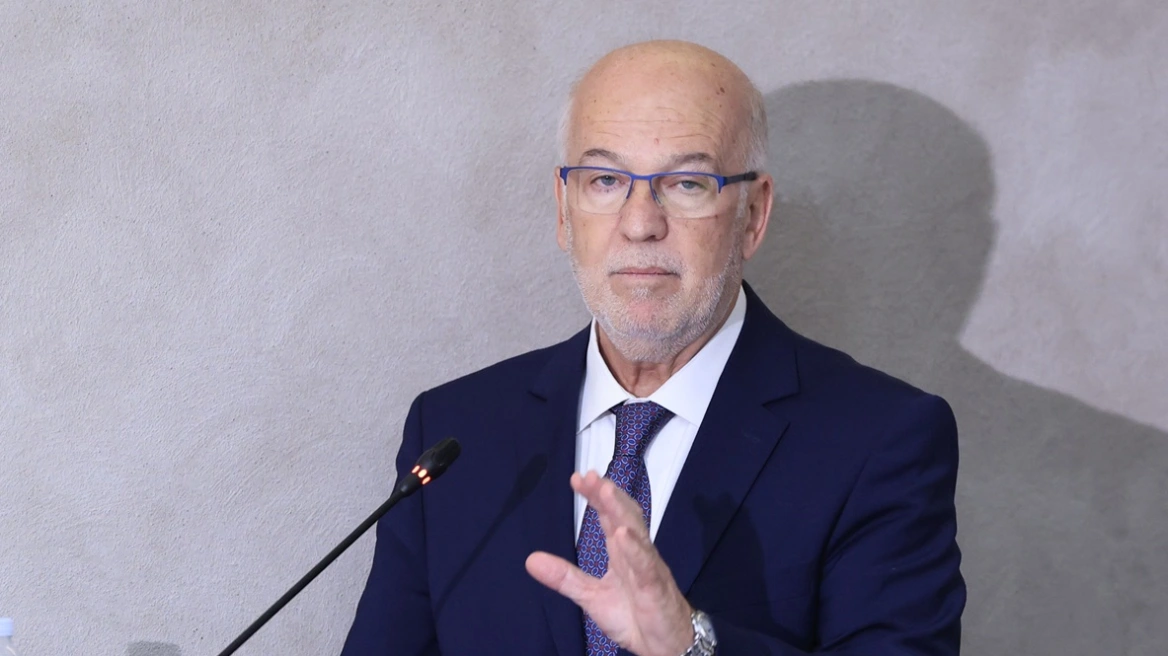
The Minister of Justice, Giorgos Floridis, presented significant changes to inheritance law — the first in 80 years — speaking on ERTnews, emphasizing that the new regulations “adapt the Civil Code to modern social and economic conditions.”
A key focus of the reforms is the protection of heirs from excessive debts, the introduction of inheritance agreements for the first time in Greek law, and new provisions for partners living together without marriage or a civil partnership.
Mr. Floridis stressed that under the new arrangement, inheritance debts burden heirs only up to the value of the estate, noting that “an heir is never burdened with their own personal assets.”
As he explained, any debt exceeding the value of the inheritance will be written off, “providing a definitive solution to the huge problems caused to thousands of families by incorrect assessments or late renunciations.”
Inheritance agreements for the first time in Greek law
The Minister clarified that from now on, a testator may, while alive, agree with their heirs on how the estate will be distributed, through a notarial act that “cannot be revoked.” This procedure, he highlighted, “prevents posthumous conflicts, saves businesses, and enables smooth succession.”
Additionally, the law establishes the possibility of providing financial support to a child during the testator’s lifetime in exchange for the child waiving future inheritance rights. According to Mr. Floridis, this ensures that “someone cannot receive money now and later claim more after the parent’s death.”
Changes to the forced share and asset distribution
The Minister explained that the rule governing the distribution between the surviving spouse and the children is being modified. When there is one child, the spouse will receive one-third instead of one-quarter, due to increased needs. In the case of multiple children, the 1/4–3/4 ratio remains.
Regarding the forced share, the new regulations allow institutions or businesses that have received assets via a will to compensate forced-heirship beneficiaries without disrupting operations, including allowing the sale of assets when no liquid funds exist.
Protection for unmarried partners and prevention of will abuse
Mr. Floridis announced a special provision for partners living together without marriage or a civil union. They will now be allowed to remain in the shared home for a specific period after the partner’s death, so they are not “out on the street the very next day.”
At the same time, transferring assets via will to individuals who manage or work in care facilities is prohibited, though exceptions may be allowed in cases of at-home care “under certain conditions.”
Regarding handwritten wills, the Minister emphasized that they are not being abolished, but from now on “they must be validated by a court,” and when doubts arise, a handwriting expert will be appointed. Moreover, controversial “wills appearing out of nowhere” in cases of deaths without heirs will be excluded; the estate will pass to the State, unless a cohabiting partner has priority.
Changes to court processing times
The Minister underscored that major reductions in delays are already being recorded due to the merger of the Courts of First Instance and Magistrates’ Courts: “From four years for issuing a decision in Athens, we have gone down to one and a half years.” Across the rest of the country, processing times have dropped below 280 days. As he stated, “we achieved the 2027 target already by 2025.”
He also highlighted improvements in the publication of wills, where “400 days became 7” thanks to the notaries’ new digital platform.
Ask me anything
Explore related questions