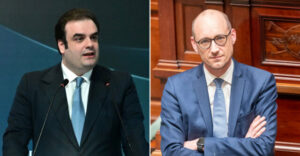
On Thursday, December 11, Kyriakos Pierrakakis will need at least 11 votes to be elected president of the Eurogroup. A statement that would have sounded almost absurd ten years ago, yet yesterday the Greek Finance Minister officially submitted his candidacy for the leadership of the body and will compete against his Belgian counterpart Vincent Van Peteghem. From being Europe’s black sheep, Greece is now considered a success story—an example of an impressive comeback. So why shouldn’t its Finance Minister also seek the presidency with strong prospects?
Both Mr. Pierrakakis and Mr. Van Peteghem belong to the same political family, the European People’s Party, and are of similar age. The Greek minister is 42, the Belgian 45. It is essentially a two-person race, as the Spanish socialist Carlos Cuerpo, also in his forties, is no longer in the running. The fact that both contenders come from the EPP removes traditional political dividing lines, but the geographical divides within the Eurogroup remain significant—despite Mr. Pierrakakis’ appeal to his counterparts to transcend traditional factional lines.
The lobbying behind the Pierrakakis candidacy
There has been intense behind-the-scenes lobbying in recent weeks, both by Mr. Pierrakakis himself and by Kyriakos Mitsotakis. Early this week, Mr. Pierrakakis traveled to Berlin, meeting the Social Democrat Lars Klingbeil and Christian Democrat MPs. Meanwhile, Mr. Mitsotakis remains in open communication with EPP leaders, and on Thursday he dined in Athens with EPP president Manfred Weber. According to people familiar with what was discussed at the NYNN restaurant, the Eurogroup matter was barely touched upon, since the president of the European Parliament, Roberta Metsola, was also present during her visit to Athens. Still, it is considered unlikely that Mr. Mitsotakis did not raise the topic privately with Mr. Weber.
Russian assets and alliances
For Mr. Pierrakakis, the Eurogroup race is a complex exercise involving constant communication. However, according to well-informed sources, things are not easy even for Mr. Van Peteghem, who had appeared to be the favorite. Belgium is not currently in the best standing with Northern and Baltic countries due to its negative stance on using frozen Russian assets. On the other hand, it is considered difficult for the southern countries to support a Central European candidate when there is also a candidate from the South. Things are not entirely linear, though: Mr. Pierrakakis may represent a strong comeback story, but the South already held the Eurogroup presidency in recent years with Portugal’s Mário Centeno. Moreover, Mr. Pierrakakis has been in office for less than a year, unlike Van Peteghem, who serves under his second prime minister and was Finance Minister during Belgium’s 2024 EU presidency.
Based on the current outlook, the Eurogroup meeting will involve a vote among its 20 members and there will be a winner from the first round. Until December 11, it is clear that Mr. Pierrakakis will not leave things to chance—even if he does not intend to publicly brandish the contacts and alliances he is building.
Ask me anything
Explore related questions