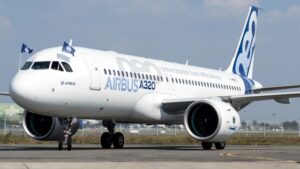
Airbus has announced that intense solar radiation can distort critical data used by the flight-control systems of its A320-family aircraft, including the A319, A320, and A321. The issue affects roughly 6,000 single-aisle aircraft, the world’s most widely used passenger planes. “Analysis of a recent incident involving an A320-family aircraft revealed that intense solar radiation can distort data critical to the operation of flight-control systems,” the company said.
The incident that revealed the issue
On October 30, JetBlue flight 1230, an Airbus A320 operating the Cancun–Newark route, suddenly lost altitude, forcing pilots to make an emergency landing in Tampa, Florida. Around 15 passengers were taken to hospital. Airbus immediately launched an investigation and notified airlines through an “Alert Operators Transmission” that urgent technical action is required, stressing that safety is “the first and absolute priority.”
According to the European Union Aviation Safety Agency (EASA), airlines must update the software before aircraft resume regular operations, while a temporary operational approval was granted until 12:59 local time on November 30 to limit disruptions to flight schedules.
Impact on airlines in the US, Europe, and Asia
In the US, major carriers such as American Airlines, Delta Air Lines, JetBlue, and United Airlines are directly affected, as they are among the world’s largest operators of the A320 family.
American Airlines reported that around 340 of its aircraft require a software update, which is being completed gradually over the weekend. Delta estimated that fewer than 50 A321neo jets would be affected, while United said six of its aircraft require intervention, causing “minor disruptions” to its schedule.
JetBlue, whose fleet consists mainly of A320 and A321 aircraft, has already started updates and is informing passengers about potential schedule changes. Maintenance work coincides with the busy Thanksgiving travel season—one of the heaviest travel periods in the US in 15 years, according to the Federal Aviation Administration.
Air India reports that the directive from Airbus could lead to “longer turnaround times and delays” in its scheduled operations.
Wizz Air warned passengers traveling this weekend that they may experience disruptions due to the update process.
Colombian carrier Avianca announced that it will suspend ticket sales for 10 days due to the problem.
British Airways stated that only three of its aircraft were affected and that its operations are not expected to be disrupted.
In Japan, All Nippon Airways (ANA) cancelled 65 flights on Saturday due to mandatory groundings. The airline and its subsidiaries, including Peach Aviation, are the largest operators of Airbus single-aisle aircraft in the country.
In New Zealand, Air New Zealand said it will operate flights with A320s “where possible” before beginning the software updates, assuring that the fleet remains safe and that the actions are preventive.
In Europe, EasyJet announced that it has “already completed” the software update on a significant portion of its fleet and expects to operate normally, advising passengers to monitor schedule updates.
The Airbus announcement
In its statement on the software issue, Airbus said:
“Analysis of a recent incident involving an A320-family aircraft revealed that intense solar radiation can distort data critical to the operation of flight-control systems.
As a result, Airbus identified a significant number of A320-family aircraft currently in service that may be affected.
Airbus has proactively worked with aviation authorities to request the immediate implementation of preventive measures by operators through an Alert Operators Transmission (AOT), requiring operators to apply the available software and/or hardware protections to ensure fleet safety. This AOT will be reflected in an emergency airworthiness directive from EASA.
Airbus acknowledges that these recommendations will result in flight disruptions for passengers and customers. We apologise for the inconvenience caused and will work closely with operators, keeping safety as our first and highest priority.”
Ask me anything
Explore related questions