





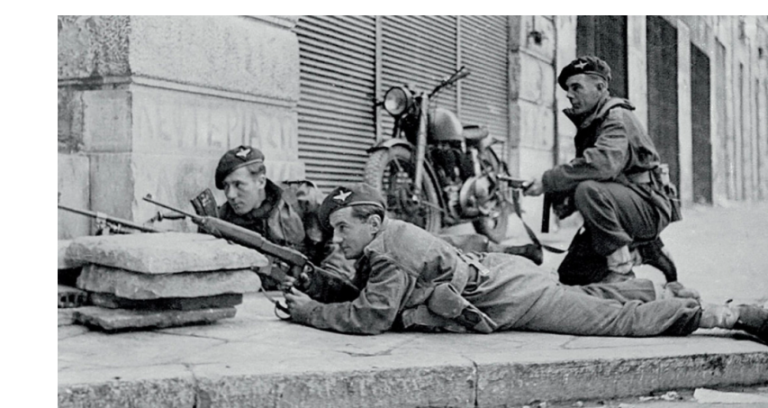
One of the most significant events of the 1944 December clashes in Athens was the attack by strong ELAS (Greek People’s Liberation Army) forces on the Gendarmerie Regiment stationed at the Makrygiannis Camp, located under the sacred rock of the Acropolis.
The December of 1944 marked a critical turning point in modern Greek history, as Athens became a battlefield in the volatile post-World War II era. Among the key episodes of the so-called “December Events” was the intense and strategically crucial Battle of Makrygiannis, fought between the Greek Gendarmerie and the forces of ELAS (Greek People’s Liberation Army). This battle, often misunderstood in its timeline and scale, lasted from December 6 to December 18, 1944, and had lasting implications on the power struggle in the Greek capital.
Background: The Makrygiannis Camp and Its Importance
The Makrygiannis Camp, located under the Acropolis’s sacred rock in the historic Makrygiannis district of Athens, was home to the Gendarmerie Regiment of Athens. Originally constructed in 1836 and renovated in 1890, the camp comprised a cluster of old military buildings that served as a critical stronghold for government forces. By the 1930s, the camp was the definitive base for the Greek Gendarmerie, responsible for law enforcement and internal security.

Control of this camp was vital. Should ELAS forces succeed in capturing it, they would gain a strategic gateway into central Athens, allowing free passage toward the Zappeion, the National Garden, the Parliament building, and the upscale Kolonaki district. Such a victory would have tipped control of the city to the communist-aligned forces, threatening the fragile government headed by Georgios Papandreou.
The Forces Involved
The exact number of ELAS fighters who participated remains uncertain. Communist sources suggest figures as high as 10,000 fighters, but historians consider these exaggerated. Colonel Georgios Samouil, commander of the Gendarmerie Regiment, estimated ELAS numbers to be around 5,000, though this too is debated. What is clear is that ELAS forces significantly outnumbered the roughly 529 gendarmes stationed at the camp.

On December 5, 1944, the Gendarmerie’s force consisted of 100 officers and non-commissioned officers and 429 soldiers, including 14 junior officers and specialists. Their weapons inventory included a limited arsenal: 165 Italian rifles, 24 Mannlicher-Schoenauer rifles, 11 Sten submachine guns, a Breda machine gun, three mortars, and a finite supply of ammunition.
Preparation and Defense Strategy
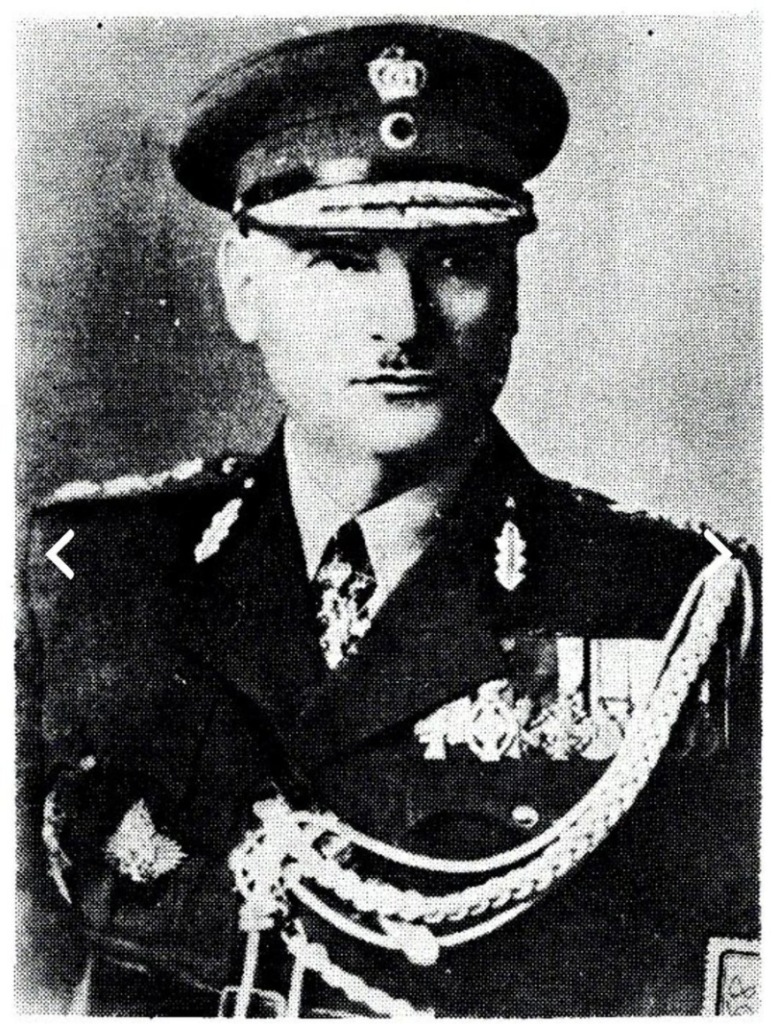
Aware of the threat, Colonel Samouil, alongside Lieutenant Colonel Evangelos Sofras and the newly arrived Lt. Colonel Konstantinos Kostopoulos — an experienced officer and former professor at the Hellenic Military Academy — devised a detailed defensive plan. This involved establishing seven outer outposts designed to slow down ELAS’s advance and inflict attrition before the enemy could reach the main camp.
These outposts, placed on rooftops and strategic locations around the camp, were manned by small teams of officers and soldiers fully aware of the perilous nature of their assignment. Despite their resolve, ELAS forces quickly overwhelmed these outposts, highlighting the ferocity of the offensive.
The Battle Unfolds: December 6–18
The initial ELAS attack began on the night of December 6. Tensions were palpable in the city, with citizens locking themselves indoors amid the sounds of gunfire and artillery. As the first volleys echoed through the streets, the gendarmes, wrapped in their cloaks and clutching their weapons, stood firm behind the camp’s walls, rallying around the slogan “They shall not pass” — a phrase that echoed the determination of defenders worldwide in history’s defining sieges.

For nearly two weeks, the camp endured repeated attacks, with the gendarmes holding their ground against superior numbers and firepower. The battle involved fierce urban combat, with both sides suffering casualties amid the ruins of Athens’ historic center.
Ultimately, on December 18, ELAS lifted the siege. While the gendarmes retained control of the Makrygiannis Camp, the wider conflict of the December Events continued to shape Greece’s post-war trajectory.

Legacy and Historical Significance
The Battle of Makrygiannis is remembered as a symbol of steadfast defense against overwhelming odds. Colonel Georgios Samouil’s leadership earned respect from various political factions, including those who ideologically opposed him. The battle also underscored the complexity of the Greek Civil War’s early phases, revealing how local and national struggles intertwined within the urban landscape of Athens.

This confrontation was more than just a military engagement; it was a microcosm of Greece’s struggle between monarchy, government forces, communist insurgents, and international influence. The resilience displayed at Makrygiannis delayed ELAS’s advance and preserved a vital government foothold, impacting the political landscape of Greece for years to come.

Why Did the ELAS Attack Fail? Insights from the Battle of Makrygiannis
Beyond the courageous resistance of the Greek Gendarmes and the decisive counterattacks, several factors contributed to the failure of the ELAS assault during the Battle of Makrygiannis in December 1944.
Urban Combat Limitations
One key reason was the difference in combat effectiveness between ELAS forces operating in cities versus those in rural areas. While ELAS was a formidable guerrilla force in the countryside, their urban units lacked the same level of coordination and fighting capacity. This limitation meant that even when ELAS succeeded in capturing strategic points such as police stations, they often could not hold them. For example, the 2nd Police Station was recaptured by government forces shortly after ELAS took control.
Lack of Coordination and Organization
According to historian Menelaos Charalambidis, a significant factor in ELAS’s failure was the poor coordination among its units. This was clearly evident during the attacks on the Makrygiannis Camp, where disorganized efforts and uncoordinated movements undermined the overall offensive.
Adding to this, the disarray among ELAS fighters was noticeable. One illustrative example involves the fighters from Piraeus, who, in a seemingly chaotic pattern, would leave Makrygiannis to head toward Kaisariani without a clear plan, then return to Piraeus to rest, only to come back the next day to fight again. Such a lack of logistical and operational planning resembled more a comedy than a disciplined military campaign.
The Role of Inexperienced Fighters
Another challenge for ELAS was the participation of the Reserve ELAS forces, which included many young and inexperienced fighters. This further weakened their ability to sustain an effective prolonged siege against the well-organized Gendarmerie defenders.
These factors combined to prevent ELAS from achieving its objectives at Makrygiannis during the critical first days of the battle. The events from December 7 to December 18 will be explored in a follow-up article, with detailed references to historical sources.
Ask me anything
Explore related questions


