





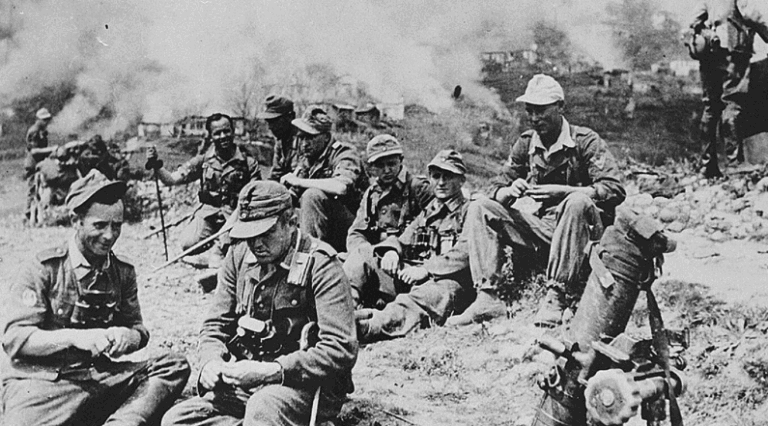
Today we continue and conclude, with Part II, the events from the end of 1943 to the beginning of 1944, focusing on the clashes between ELAS and EDES, known in history as the “Small Civil War.” As previously stated, most of the information comes from the book by Solon Neokl. Grigoriadis, History of Modern Greece 1941–1974, Volume I, which is among the few that extensively detail the events of that time.
The First Round of the German Offensive
From the summer of 1943, the Reich authorities had intelligence that the Allies might invade Greece. Although such an invasion never took place, the Germans received significant reinforcements in the country.
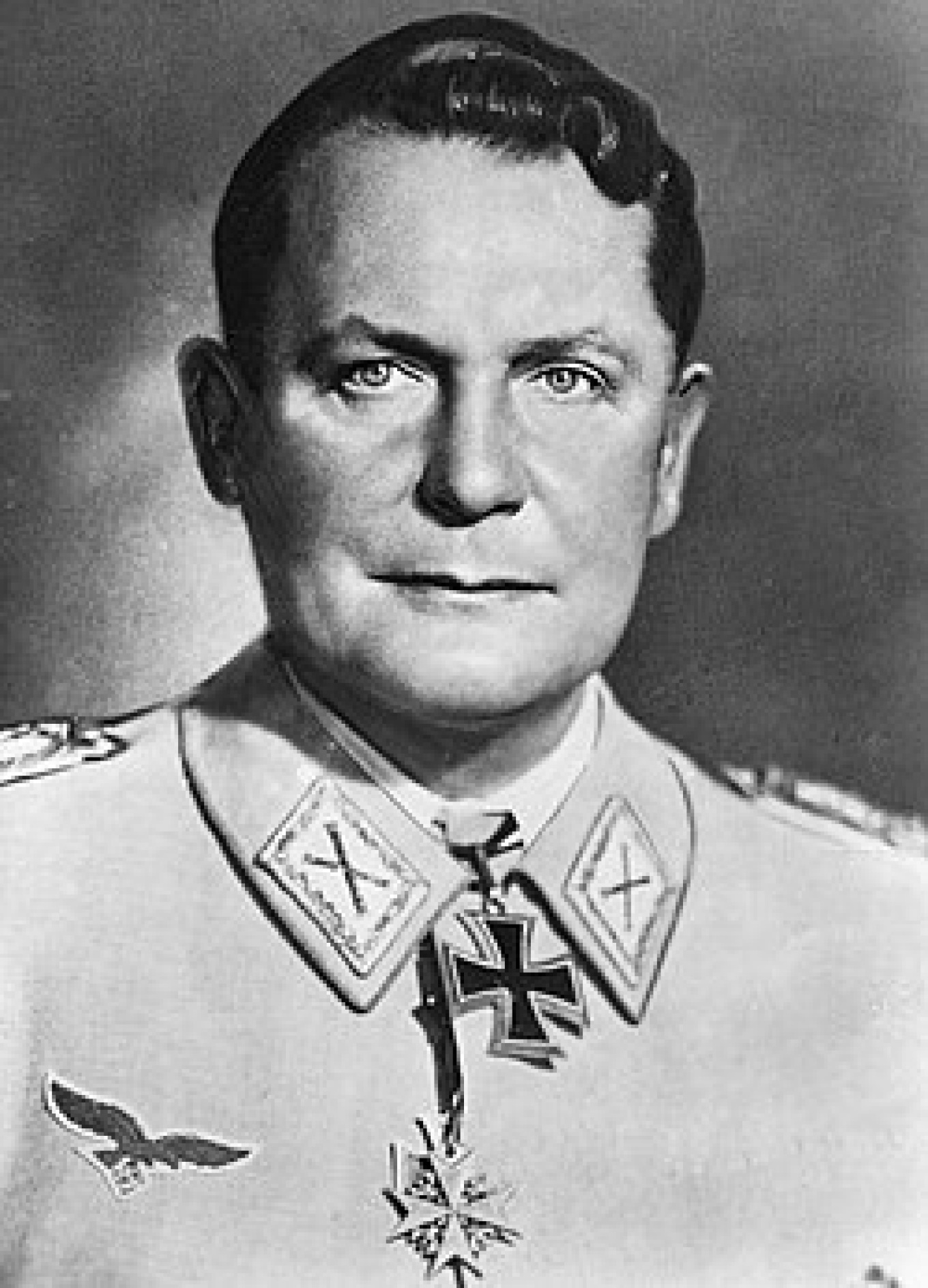
Hermann Göring, whose nephew was killed in Greece
These reinforcements helped the Germans neutralize the Italians and prevent Greek partisans from seizing Italian weapons. On September 11, 1943, German forces entered the Valtos region but were repelled by EDES units under the command of Stylianos Choutas. Simultaneously, EDES and ELAS forces received orders from the Middle East Headquarters to carry out sabotage operations on telephone and telegraph lines between Agrinio–Arta–Igoumenitsa and to strike the airfields at Ioannina, Paramythia, and Agrinio, aiming to relieve the Italian Acqui Division on Cephalonia, which was already under Nazi attack. Among the numerous diversionary attacks, a standout was the ambush by EDES (battalion of A. Papadopoulos) in which a German colonel and three other officers were killed. Their vehicle fell into the Louros River, and all aboard died. It was later discovered that the colonel was the nephew of Hermann Göring, head of the German Luftwaffe. The Nazis retaliated by attacking the historic town of Peta, where Lieutenant Leonidas Petropoulakis, one of EDES’s bravest officers, was killed. Despite the efforts of the Greek partisans, the Acqui Division was massacred by the Germans. At the same time, the Nazis launched attacks in Thessaly, targeting both the Greeks and the Italians of the Pinerolo Division. Their offensives across the Thessalian plain were fierce. When they attacked Porta (Pili) in Trikala, they were met with unexpected resistance by ELAS partisans led by Infantry Captain Grigorios Geroukis, who used an artillery unit of the Pinerolo Division to destroy a German artillery piece, forcing the Germans to retreat.
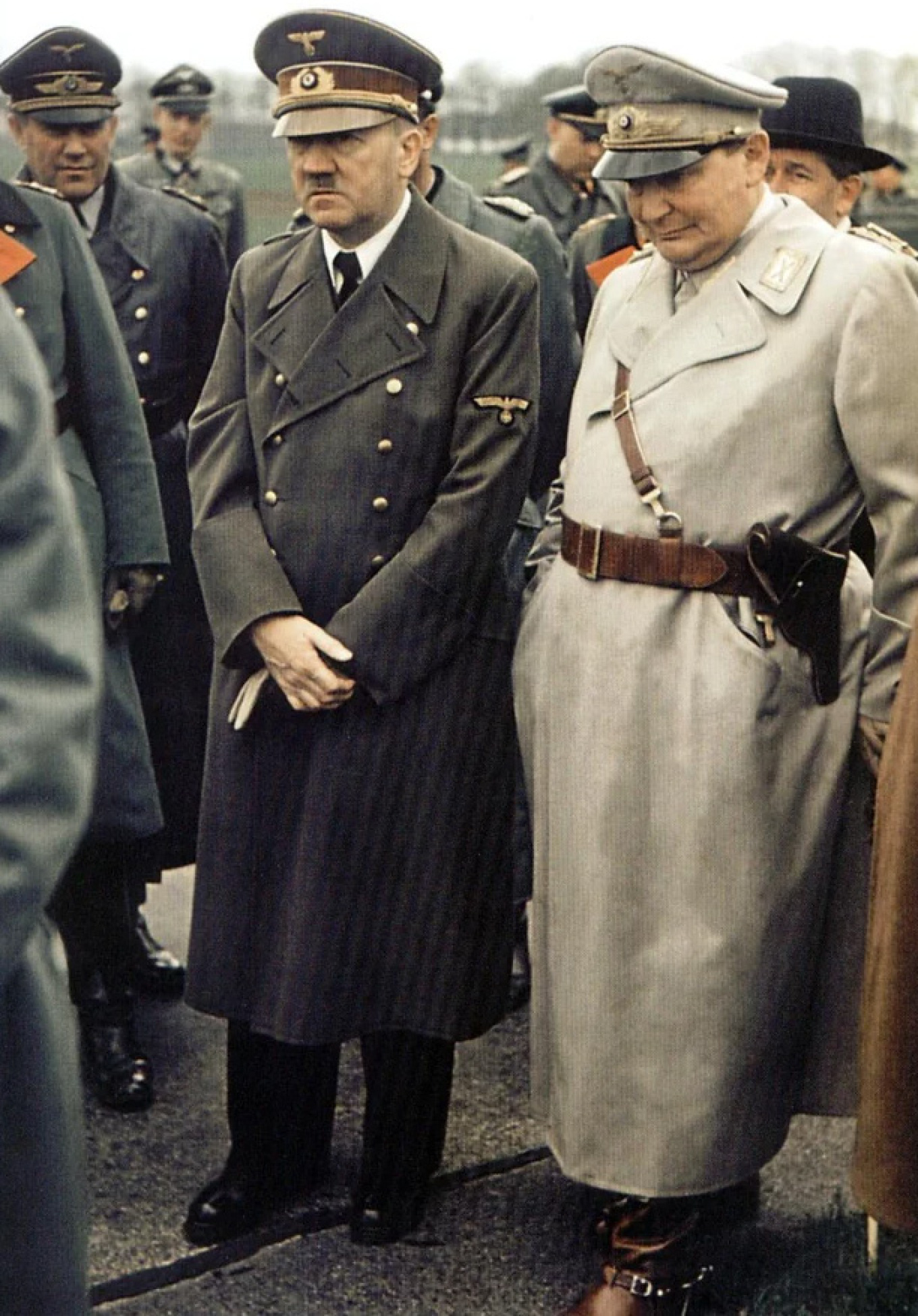
At the same time, the Germans moved against the 500 Jews of Athens, who had taken refuge in the Dervenochoria region, led by Chief Rabbi Barzilai. The attack was brief but devastating. Dozens of villages were set on fire in Parnitha, Elikonas, Parnassus, and Kallidromo.
Wishing to redeploy their forces elsewhere, on October 12, 1943, the Germans withdrew from Amfissa and Lidoriki, temporarily leaving the two towns free for a few months. The first round of the fierce German offensive cost the lives of approximately 40 partisans. After a week-long lull, the second and more intense round began.
The Second Round of German Attacks and the “Alliances” of the Partisans with the Nazis
On October 17, 1943, the second and most intense phase of the German offensive began. Having learned of the civil conflict among Greek partisans, the Germans cleverly began spreading rumors that they had allied with one organization or the other. They even went so far as to issue forged documents suggesting they were in negotiations with either side. These documents were circulated among resistance members, resulting in total confusion within ELAS and EDES, and fueling hatred on both sides.
S. N. Grigoriadis writes:
“Thus, ELAS and EDES hurl insults at each other, calling one another collaborators and traitors, which intensifies the heat of their conflict and deepens the gulf between them… for as the Germans attack indiscriminately everywhere, each partisan group is under the impression that it is fighting both the rival group and the Germans at the same time.”
The primary objective of the Germans was to open the Ioannina–Trikala route, via Katara Pass, which had been consistently blocked by ELAS. On October 17, the Germans launched a fierce assault using infantry, artillery, tanks, and air support, attacking from both Ioannina toward Trikala and vice versa.
The column from Trikala encountered strong resistance from ELAS’s 4th Regiment, armed with Italian weapons, and one battalion of the 5th Regiment. These forces, however, were limited, as the main body of the 1st Division, led by Aris Velouchiotis, was attacking Zervas, leaving the “gates” of Pindos unguarded.
For a full week, the 4th Regiment, under Lt. Colonel A. Papathanasiou, fought bravely. Their artillery, using Pinerolo shells, provided critical support. Second Lieutenant Stavros Pannés, commander of the battery, was killed while directing his men’s final volleys.
The ELAS fighters eventually abandoned their artillery, taking the breechblocks to render the guns unusable. The Germans captured Kalabaka and then advanced to Kastania, where the 1st Division’s HQ was located. They burned down the village, along with nearby Ventista (Amarantos).
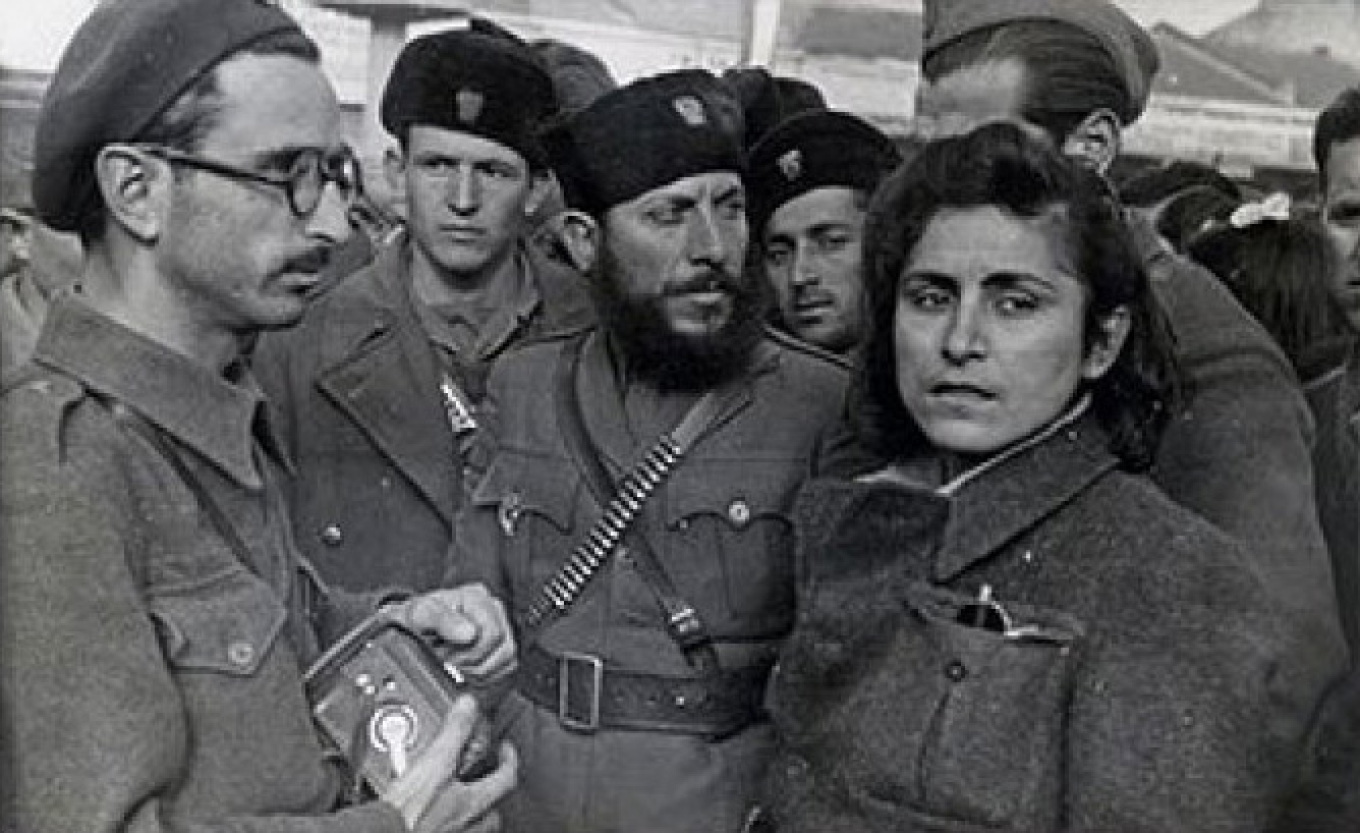
Amidst all this, there was also a major financial loss for both the Greeks and the British.
The headquarters of the Thessalian Division and the detachment of the Allied Military Mission moved toward Kranea. The British insisted on having their tea (!) at 5 p.m.
While they were preparing their “tea kit” in the forest between Ventista and Kranea, they were attacked by the Germans. The detachment, which ignored the Greeks’ warnings, abandoned a highly valuable cargo: 100 okades (128.2 kilograms) of gold sovereigns, along with the mules carrying them…
Meanwhile, the Germans who had started from Ioannina occupied Metsovo two days later, where ELAS forces were present. The two German columns joined forces and advanced toward the area where the “little civil war” was taking place.
The situation changed dramatically.
The III Division of ELAS and the units directly under Aris Velouchiotis abandoned their pressure on EDES and moved toward the Gardiki–Mesochora axis.
There, they faced intense aerial bombardment and suffered heavy casualties.
At the same time, the Epirus Expeditionary Force of ELAS, led by Papastamatiadis, came under German attack and was pushed back to the eastern bank of the Achelous River.
ELAS found itself in a dire position.
It proclaimed that EDES had allied with the Germans against them.
S.N. Grigoriadis writes:
“But this was a fundamental error—whether intentional or not. Because at the very same time, the German battering ram was striking EDES with equal force. And its main thrust was directed toward the region of Vourgareli, where the General Headquarters of EOEA was located…”
The German Attack on Vourgareli
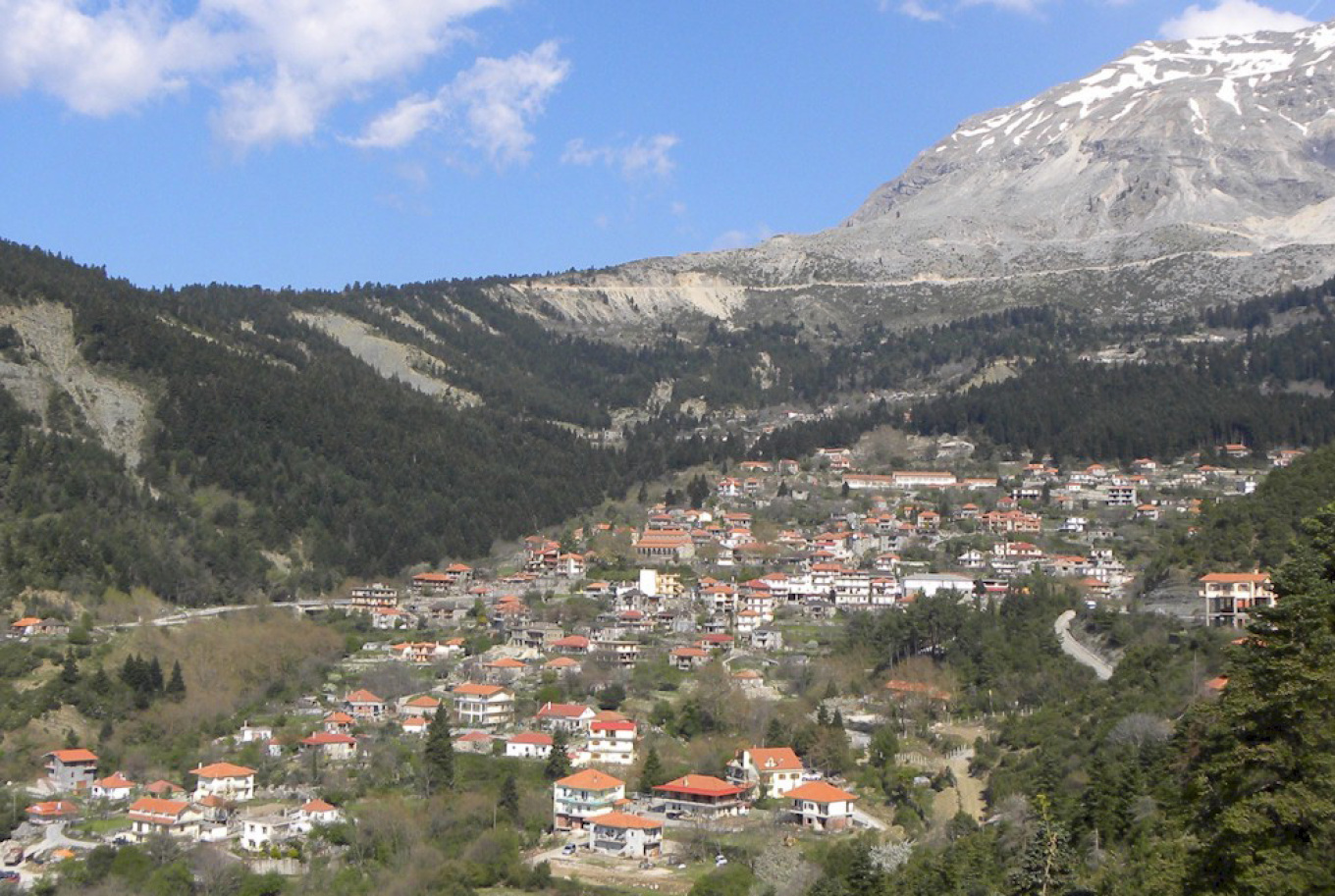
Vourgareli today
In the Tzoumerka region, EDES had significant forces:
- The local command under Cavalry Captain Agoros,
- Three battalions from the General Headquarters, well-equipped,
- And the Officer Cadet School, led by Lt. Colonel K. Konstantopoulos, with 30 officers and 180 cadets.
Within Vourgareli, the bulk of these forces was gathered, along with hundreds of Italian deserters, numerous political figures, and visitors from Athens of both sexes. Also present was the “Pinerolo” military band, adding a festive air to the setting.
But on October 22, the Germans launched their attack. By October 24, moving rapidly through Gavrovo, they burned the villages of Kastania and Seklitsa, and appeared before Nevropoli Tetrakomis. The Officer Cadet School, stationed on the surrounding heights, fought bravely. However, the fight was unequal. One Major, two other officers, and 19 cadets were killed.
On October 25, EDES forces retreated toward Stavros Theodoriana.
The advancing Germans burned villages, captured the EOEA field hospital at Agia Kyriaki, executed immobile hostages, and by the morning of October 28, 1943, had reached the outskirts of Vourgareli. They did not enter the town, however. Instead, they bombarded it with mortars and then withdrew. But on October 30, as Zervas’s forces returned to Vourgareli, two strong ELAS columns advanced against them—from Gavrovo and Mesochora. Zervas believed the Germans had already retreated to their bases. But he was mistaken: Shortly after his return to Vourgareli, his forces came under renewed German attack from troops who had hidden in nearby forests and ravines.
Zervas barely managed to escape. He reached Theodoriana, and from there Neraida, in the Thessalian Pindos. He now had only 79 officers and partisans with him! The rest had either returned home or been captured. Suddenly, Zervas and his remaining men found themselves face to face in Neraida with Aris Velouchiotis and the harsh, fanatical Kapetan Koziakas…
German Attack on Pertouli – ELAS Maneuvers
The German offensive against both EDES and ELAS unexpectedly benefited Zervas’s organization, as it disrupted ELAS’s plans.
Simultaneously with the attack on Vourgareli, the Germans attacked Pertouli, where ELAS’s headquarters was located. Three German columns outflanked the 4th ELAS Regiment, the VIII Division, and Velouchiotis’s Expeditionary Force. On November 1st, the three columns converged at Pertouli and burned it down. The Little Civil War 1943–1944, Part II: Did Velouchiotis stab EDES in the back and did Zervas ally with the Germans?
Zervas with his associates With a bold maneuver, the General Headquarters of ELAS managed to reach Koryschades in Evrytania via Karditsa – Rentina – Karpenisi, and from there to Kerasovo.
This relocation of 500 partisans, along with large amounts of equipment, through areas where German patrols were rampant, was a remarkable feat. However, the Nazis dealt a heavy blow to ELAS.
General Sarafis wandered around Thessaly for days, returning from Macedonia, without being able to locate ELAS Headquarters!
The snow-covered Pertouli today
Despite setbacks, ELAS continued its attacks on the Germans, inflicting serious losses.
On November 13th, an entire German engineering unit, repairing the Nea Koutsoufliani bridge on the Kalambaka–Metsovo road, was wiped out by ELAS. 72 officers and soldiers were killed, and the bridge was destroyed. A convoy of 32 German vehicles, sent to assist the engineers from the Mourgkani bridge, also suffered heavy losses, as 11 vehicles were destroyed. After the end of operations in Thessaly and parts of Epirus, the Germans—about 20,000 men—returned to their bases. They had secured full control of the Kalambaka–Ioannina road and inflicted heavy casualties on ELAS, which lost around 500 fighters, but even greater losses were suffered by EDES.
German tank troops in Greece
Both resistance organizations soon regrouped.
Besides Thessaly, the Germans turned their attention to Western Macedonia and Roumeli, where only ELAS forces were active. On November 7th, 1943, they entered Karpenisi, partially destroying it.
At the same time, another German column moved out from Agrinio. Eventually, on November 13, the Germans withdrew to their bases in Lamia and Agrinio, and ELAS fighters re-entered Karpenisi. The Germans also carried out operations in the Nevropoli region, without discovering the secret airfield at Neraida, and in the Pieria Mountains. By late November, the German clearing operations came to an end.
The ELAS–EDES Conflict Temporarily Ceases
The ELAS–EDES conflict was temporarily halted. Their demarcation line was the Arachthos River.
On November 23, Zervas established his headquarters in the villages of Plaisia and Kalenzi. Despite the heavy blows both suffered from the Germans, both sides began reorganizing, aiming to clash again. Notably, ELAS received moral support from EKKA (Greek Republican League) led by Dimitrios Psarros, who was assassinated a few months later by Major Zoulas, and from the Union of People’s Democracy (ELD), the second most influential party in EAM, after the KKE, with strong presence in Roumeli.
British, American, and Soviet Appeals for Unity
As expected, the “little civil war” alarmed the Allies, who, while lavishing praise on the Greek people and their resistance, demanded an end to the ELAS–EDES clashes and called for united resistance against the “horrid Germans.” The first to speak was General Wilson, Commander-in-Chief of the Middle East, on October 21. He was followed at the end of December by U.S. Secretary of State Cordell Hull, who, after congratulating Emmanouil Tsouderos on the formation of a government, clearly stated that the ELAS–EDES conflict must end.
Initially, Moscow did nothing. When Soviet Foreign Minister Molotov was asked by his American and British counterparts to send a congratulatory message to Tsouderos—which would imply condemnation of the civil strife—he refused, according to Reginald Leeper, the British ambassador to Athens, saying:
“Unfortunately, I cannot do so, based on the information I have from Greece.”
However, on December 31, 1943, Radio Moscow broadcasted an “Appeal to the Greeks”, urging them to unite their blows against those who had enslaved them. Implicitly but clearly, Moscow called for an end to the civil conflict. Indeed, from that point on, ELAS significantly scaled back its actions…

Ask me anything
Explore related questions




