





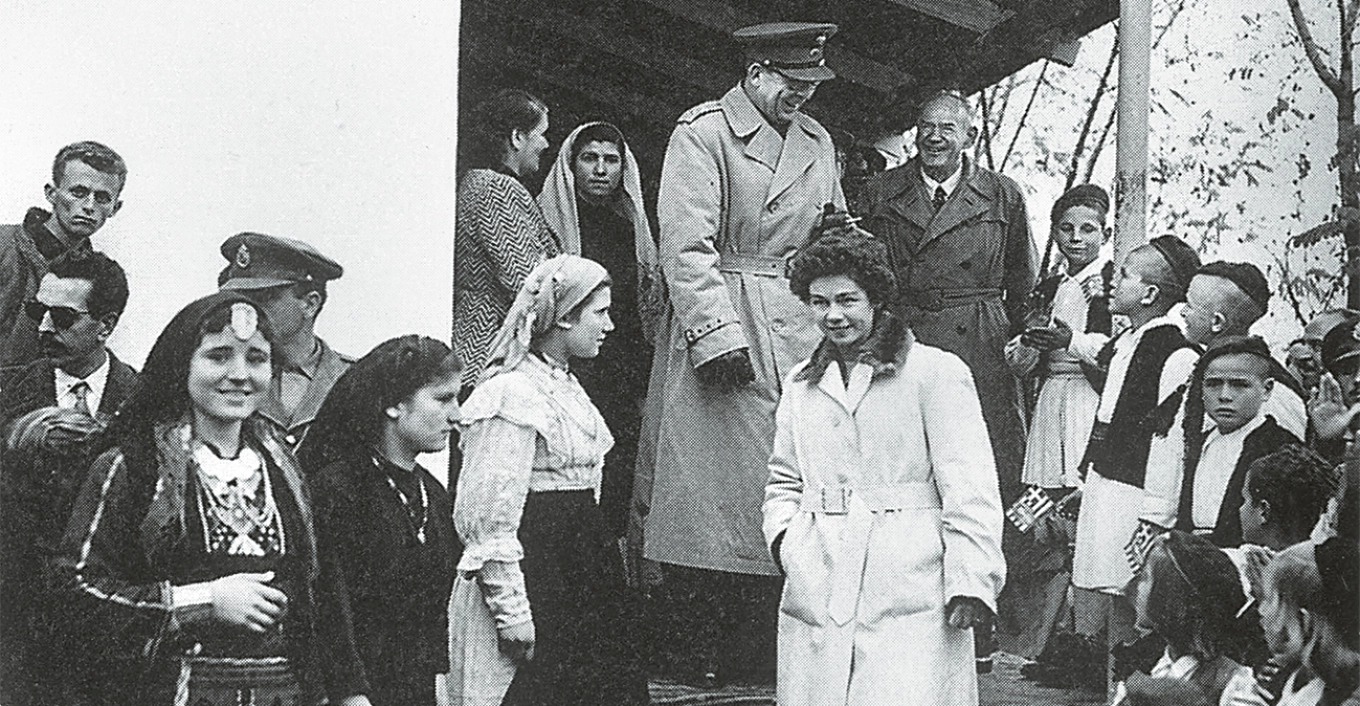
Her strong-willed and forceful personality, along with her tendency toward intrigue and her influence over powerful men around her, did not simply make her an easy target. They led to her demonization, to such an extent that the truth about her life has become almost inseparably mixed with exaggeration and myth.
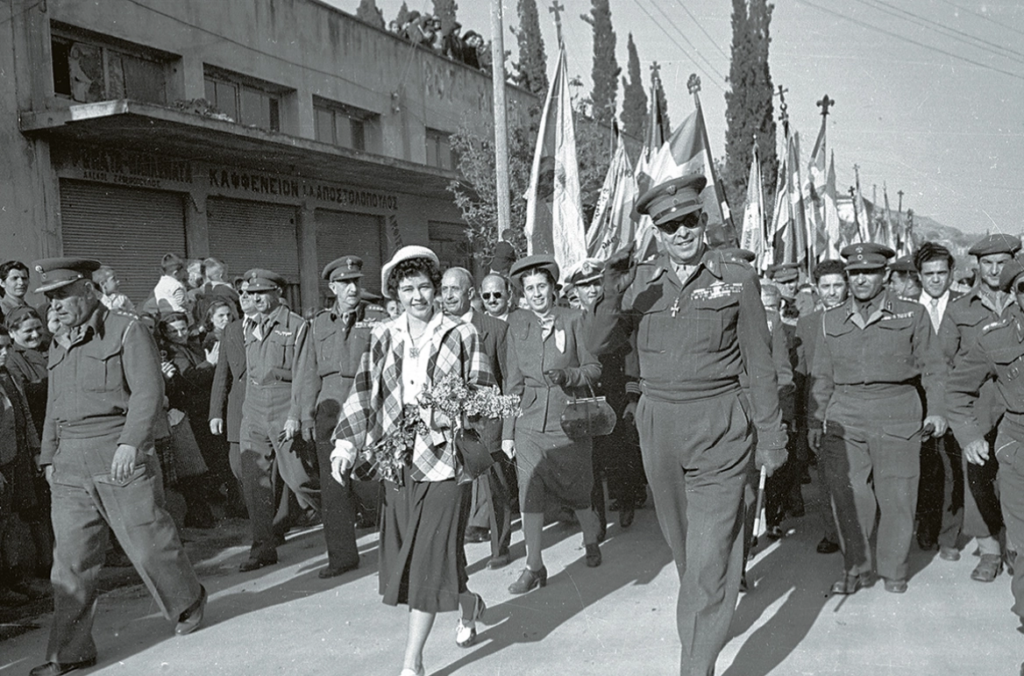
Did she, in effect, rule by overshadowing her frail husband, King Paul? Did she have extramarital affairs with figures like General George Marshall or CIA station chief Allen Dulles? Why did she clash in 1964 with Constantine Karamanlis, once considered her ally? And what exactly were her intentions in establishing a vast network of “child cities” (paidopoleis) across Greece during the Civil War?
Questions surrounding her true role, influence, and power continue to challenge Greek historiography and will likely do so indefinitely.
At the same time, somewhat paradoxically, there is still no fully documented, scientific biography of a woman who undeniably loved her adopted homeland, Greece, with passion.
Frederica devoted her life to the country from 1938—when she married Paul—until her relatively early death at age 64 in February 1981. Officially, she was Queen of the Hellenes from 1947 to 1964. She had been born in Germany on April 18, 1917.
A diary of 1,400 pages
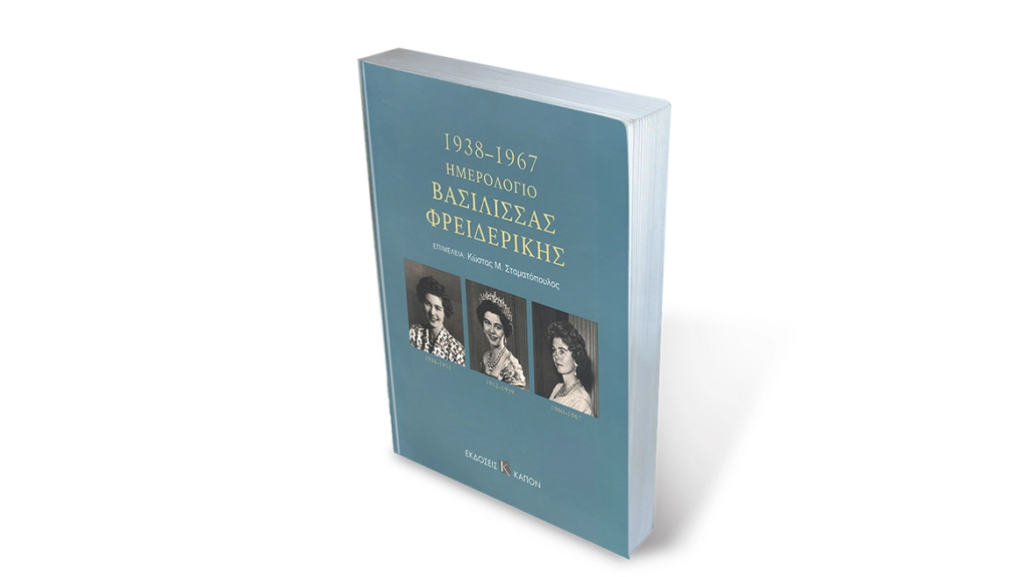
On the occasion of the anniversary of her birth, a major three-volume publication titled “The Diary of Queen Frederica 1938–1967” sheds new light on her life.
Spanning about 1,400 pages and meticulously edited by Kostas M. Stamatopoulos, the diary records her daily schedule in detail, as written by her personal secretaries.
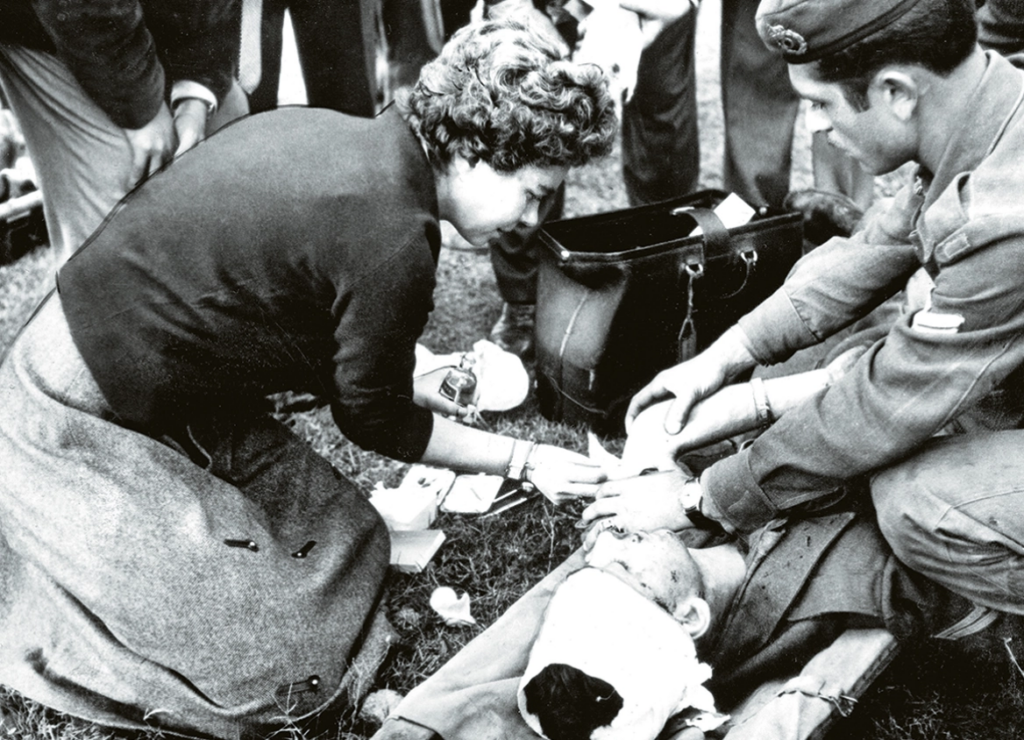
While it does not fully answer key questions about her political influence, it presents her from a different angle: as an endlessly active, ever-present figure. A woman who listened primarily to herself and acted as the master of her own fate—often intertwined with that of an entire nation.
A visit to the front (1949)
The diary includes precise, almost dry entries describing royal visits during the Civil War.
In February 1949, the royal couple traveled through northern Greece. They were welcomed enthusiastically in Xanthi, where King Paul addressed the public. At one point, a soldier even offered Queen Frederica a small deer as a gift.
Soon after, they traveled through snow-covered mountainous terrain toward Karpenisi, passing through areas where the snow reached up to three meters high—and where the bodies of fallen guerrillas still lay on the mountainsides.
In the war zone: Konitsa, 1948
In early 1948, shortly after the siege of Konitsa ended, Frederica made a daring visit to the area.
Regardless of her motives, the trip was extremely dangerous. Even during the sea journey to Preveza, her vessel narrowly avoided a naval mine.
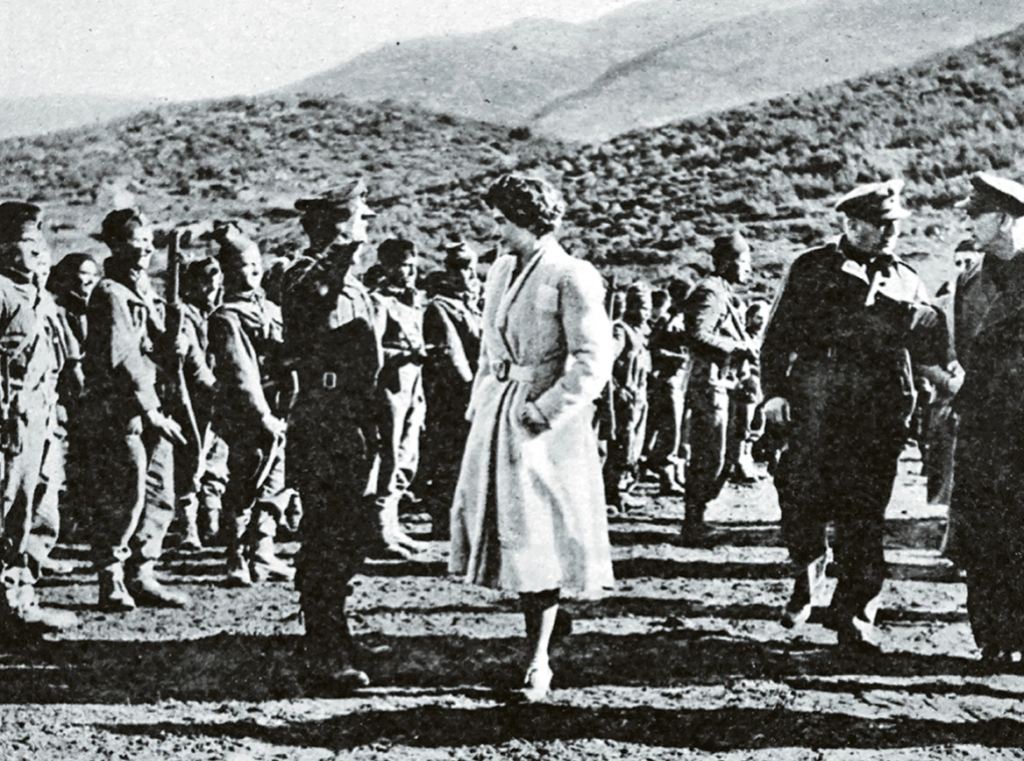
Later, she would describe the visit as “one of the greatest events of my life.”
At the time, King Paul was seriously ill, likely with typhoid fever, and confined to bed. Despite this, Frederica chose to leave his side and travel to the front, believing her presence would boost morale.
According to her own account, the renowned pianist Gina Bachauer played music outside Paul’s room, which seemed to help reduce his fever.
Diary entry: The Konitsa mission
The diary describes the journey in formal detail:
On January 7, 1948, Frederica departed Ioannina for Konitsa in a convoy escorted by armored vehicles. Along the way, she met military units and greeted soldiers, conveying the king’s message.
Upon arrival, she crossed a newly built bridge on foot to cheers from engineers and civilians. In Konitsa, she was welcomed enthusiastically by the population.
She visited wounded soldiers housed throughout the town, speaking to each one and personally awarding commemorative crosses. The visit lasted over an hour.
Standing atop a jeep in the town square, she addressed the crowd, telling them she had come to bring the king’s greetings, explaining his illness, and expressing her commitment to the people. The crowd responded with intense emotion.
Personal reflections
Her memoirs provide more emotional insight than the diary itself.
She described sharing meals with battle-worn officers, observing their courage despite injuries and exhaustion. She also admitted her fear when shown live grenades, despite her outward composure.
She later wrote that during Paul’s illness, communist forces launched a major offensive on Konitsa, aiming to establish a “Free Greek Capital.” A small military force defended the town against thousands of attackers.
Everyday life
The diary also records mundane daily activities:
- Attending social events and formal teas
- Acting as godmother to children from poor families
- Fittings with her dressmaker
- Meetings with government officials
- Receiving gifts, such as fine fabrics from prominent figures
At the same time, it captures moments of personal stress, such as her dilemma over whether to travel to London for Princess Elizabeth’s wedding while her husband was gravely ill.
A sharp tongue
Testimonies reveal aspects of her personality.
In one incident, during a protest in Lamia, a disabled man accused her of giving jobs to communists after he had lost his leg “for her throne.”
Frederica reportedly replied bluntly:
“I give work to capable people. If you lost your leg for my throne and not for your country, then you’re a fool.”
The protest ended abruptly.
The death of King Paul (1964)
On March 6, 1964, King Paul died.
Frederica was devastated. She walked alone outside the palace, appearing stunned. Later, she expressed a calm, almost philosophical acceptance of his death, telling others not to mourn but to see it as a peaceful passage.
She encouraged those around her to support the new queen, Anne-Marie, while insisting that love endures beyond death.
The junta (1967)
The diary avoids direct references to major political crises, including the 1967 military coup.
However, later accounts describe how, on April 21, 1967, a tank was stationed outside her residence. When she confronted the officer, he told her she was not allowed to leave for her own protection.
Furious, she returned wearing her highest war decoration, reminding him of her service. Despite her protest, the officer did not move.
Eventually, she managed to contact King Constantine through a car radio device, as phone lines had been cut.
A figure between history and myth
The diary offers a unique but incomplete portrait. It focuses on events rather than deeper political analysis.
As a result, Frederica remains an enigmatic figure—part historical actor, part myth. Admired by some, criticized by others, she continues to provoke debate about her true role in Greece’s modern history.
Ask me anything
Explore related questions




