





It was relatively early, on a cold Wednesday in December 1970, in Paris, when Konstantinos Karamanlis—self-exiled in the City of Light since 1963—and his wife Amalia (née Kanellopoulou) arrived in absolute secrecy at a court in the French capital.
Together with their lawyers and all necessary documents, they submitted their divorce application after 19 years of shared life through good times, but mostly through difficult ones.
The official reason given for the dissolution was “incompatibility of character and inability to cohabit.” The real reasons were never made public—largely because of the personalities of the two protagonists.
Karamanlis was known as a “sphinx” regarding his private life, while his wife, a representative of the old Athenian bourgeoisie, operated in exactly the same discreet manner.
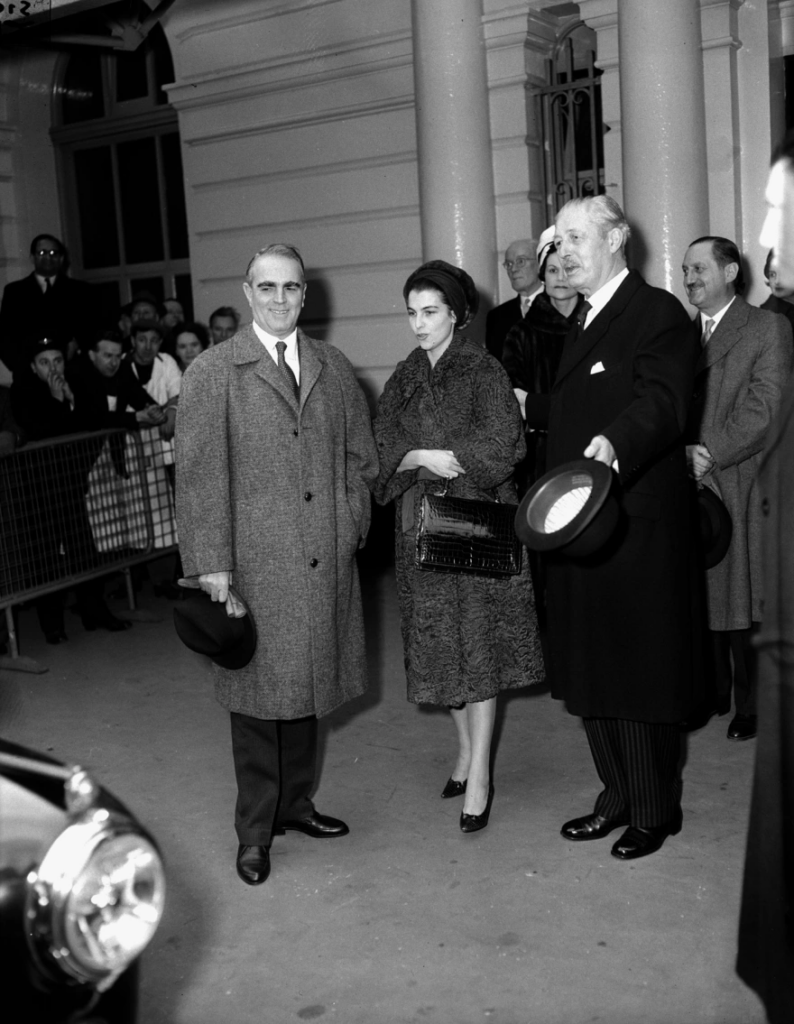
In Paris with the de Gaulles
As the niece of Panagiotis Kanellopoulos, Amalia was far from what one might at the time call a “typical Greek wife,” something the politician from Serres had understood from the early months of their acquaintance.
She had an education and personality that would never easily be placed in the “shadow” of a man—even if that man was the prime minister of Greece, Konstantinos Karamanlis.
Their marriage and private life always stayed far from public view. After the divorce, neither ever commented publicly on the matter that had shaken Greek society—it was not something ordinary at the time.
When the news became known through their representative, the magazines of the era were consumed with reports on the end of a marriage that had always balanced on a tightrope—until the day the rope finally broke.
“Amalia, shut up!”
When Karamanlis met Amalia Kanellopoulou in the early 1950s, he was 43 years old, and she was a charming young 20-year-old who would become a central figure in his life.
Her social standing and education made her the ideal woman to stand beside the discreet, elegant statesman.
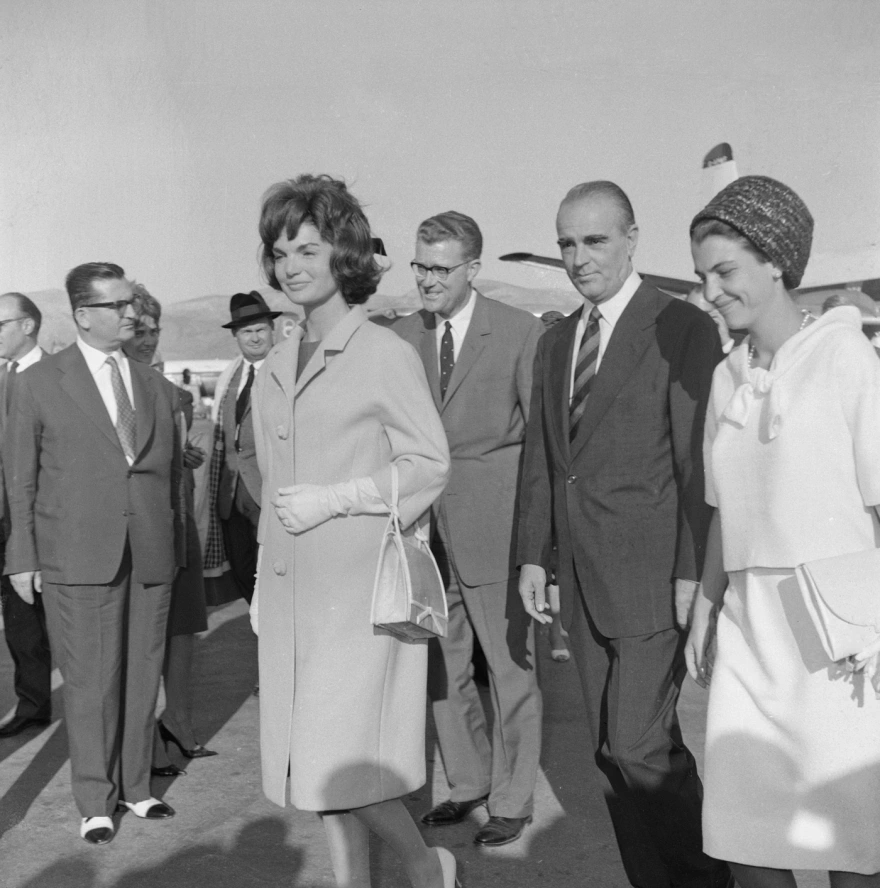
Their marriage marked the beginning of a shared journey that lasted 19 years—between two strong personalities who did not tolerate challenges lightly, something that quickly became apparent.
Amalia was not the kind of woman who would rush into the kitchen to bake spinach pie for her husband—unless she actually felt like it. She stayed away from politics and public commentary.
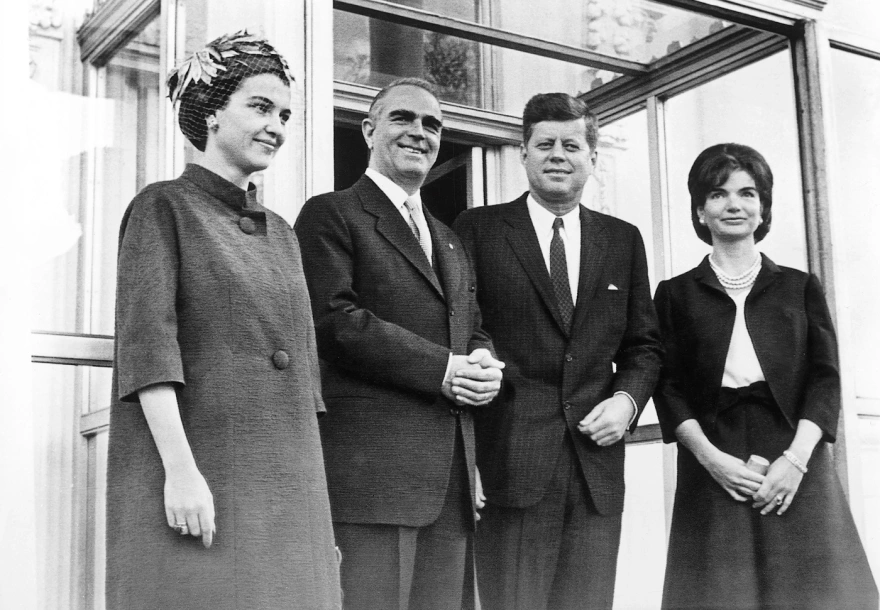
During their legendary visit to the United States on April 17, 1961, she gave the only political statement of her life, when asked about her husband’s work:
“I do not involve myself in my husband’s job because he does it very well.”
The Greek prime minister and his wife were welcomed at the White House at 11:30 a.m., and Amalia shone beside Jackie Kennedy. The next day, American media dubbed her the “Jacqueline of Greece.”
Years later, speaking about fashion, she recalled:
“On long trips, no matter what I did, I would come off the plane looking crumpled, like a homeless person. He would stand up, and his suit would be perfectly pressed as if it had just come from the cleaners. I never understood how he managed it. He searched for specific fabrics—he was obsessed with staying unwrinkled inside and out.”
Amalia shared with Karamanlis a small apartment in Kolonaki. She never accepted the public’s belief that they were an ideal couple—two protagonists of a romantic film. There were tensions and certainly quarrels. An urban legend even spoke of ashtrays that Karamanlis supposedly threw in moments of anger.
One night, while she was giving a speech from a balcony, something she said irritated him so much that he forgot the microphone was still on and uttered the now-famous phrase:
“Amalia, shut up!”
Unfortunately for him, the entire crowd below heard it. No one ever learned what was said afterward, once they returned home.
On December 9, 1963, when Karamanlis resigned from the leadership of the ERE party, naming Panagiotis Kanellopoulos as his successor, he and Amalia secretly departed for Paris.
His years of self-exile were just beginning.
Life after the separation
In one of fate’s strange twists, exactly seven years later—on December 9, 1970—the curtain fell on their marriage.
Years later he spoke about it to his close associate Takis Lamprias, who included the confession in his book “In the Shadow of a Great Man.” Karamanlis said:
“Amalia had a strong, somewhat authoritarian character. Perhaps the shipwreck of our marriage was due to our having the same temperament. Although she never intervened in public life, she supported my career with devotion.”
He added:
“What is certain is that the separation saddened me, though the responsibility was more mine than hers.”
After the divorce, their paths diverged but mutual respect remained. Amalia never spoke publicly about the separation.
In a rare interview, she said:
“What matters is that all these years I have not spoken publicly—not because I lack perception, but because it is my choice.”
Her second marriage, to gynecologist Nontas Megapanos, did not last forever, but she maintained an excellent friendship with him and was very fond of his children from his first marriage.
When she wished to discreetly announce their separation, she made a donation signed with her maiden name, by which time she had already published her first books.
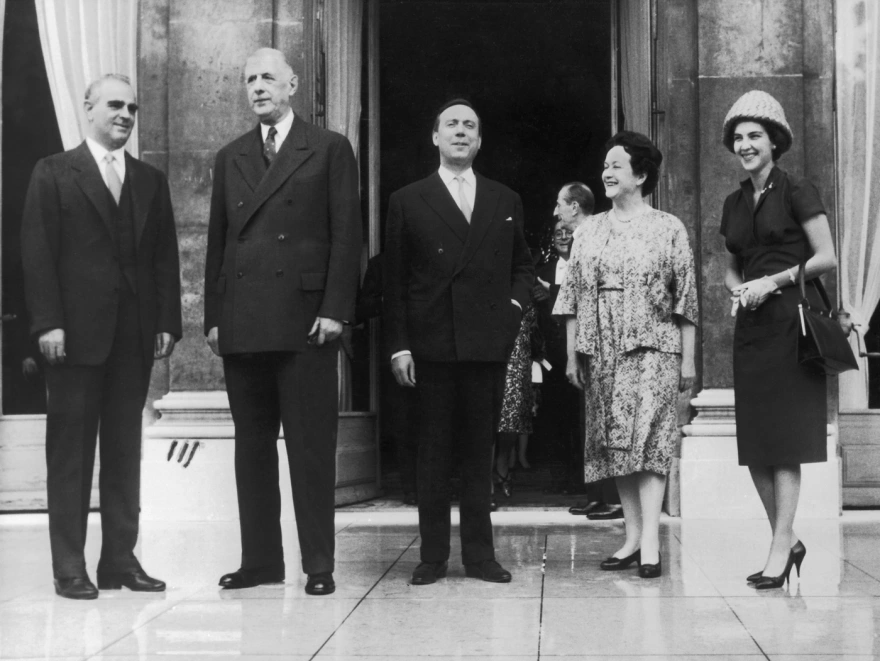
She remained elusive and elegant, avoiding frivolous social circles. Few people ever entered her residence on Vasilissis Sofias Avenue.
She attended Karamanlis’s funeral discreetly. In one of her rare references to him, she stated what many believed:
“He was a true Greek. He did what was right, not what was convenient. He listened a lot before acting. He might cut off your head for disagreeing with him—but he had listened.”
Ask me anything
Explore related questions




