





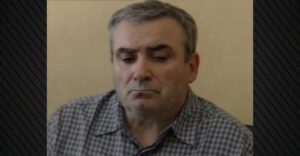
In a comfortable, four-bedroom house in the suburbs of Woking known as Homeleigh, 77-year-old Freddie Scapatici died on February 16, 2023, following a stroke. To his neighbors he was “Frank Cowley,” a retired businessman who lived quietly. In reality, however, he was – as the multi-year Operation Kenova investigation essentially confirmed – the man who for years was the most valuable British spy within the IRA (Irish Republican Army) during the Troubles in Northern Ireland. And at the same time, a torturer and assassin acting under the cover of the UK.
As Guardian, until he escaped from Northern Ireland in the early 2000s, Scappatici had a dual role: He was an MI5 agent and head of the IRA’s notorious nutting squad, the insider group tasked with identifying and “neutralizing” informants. He would threaten his victims with horrible torture, ask them to “confess” to save themselves, and then order – or carry out – their murder himself. The “testimonies” he recorded ended up with the families. At the same time, he informed the British authorities in detail of his every action.
The final conclusion of Operation Kenova, after nine years of investigation, revealed that the security services knew almost everything about his actions. Not only did they allow his activities, but in the mid-1990s, before the identity of Agent Stakeknife was revealed by press reports, they even discussed holding a… farewell dinner in his honor.
The investigation also revealed that MI5 – despite pressure from police officials – insisted that no official confirmation of his identity was ever given, adhering to a policy of “neither confirm nor deny.”
From the streets of Belfast to the role of the “golden egg”
Scapatici grew up in the “Markets” area of South Belfast, known as “Little Italy“. As a youngster, he had shown footballing talent – he even tried out for Nottingham Forest – but joined the Pioneer IRA early on. After being held without trial in the 1970s, he quickly rose through the ranks, gaining a reputation as a man of “explosive character.”
Kenova found that he began cooperating with British authorities in the late 1970s, possibly for financial gain or to avoid prosecution. Other motives are recorded in his records: a desire to end the conflict, frustration with the IRA leadership and fear for his family.
According to accounts, he was a man “nobody liked” within the IRA, a “bully” obsessed with extreme pornography. Other than the crimes he allegedly committed, the only time he saw the inside of a courtroom was in 2018, when he was sentenced to three months’ probation for possession of extreme pornography. The judge treated him with leniency, telling him that he “had not been in the justice system for 50 years.”
Protection to the end
Scapatici lived for years in England under a new identity and with financial support from the state. Kenova recorded that he was compensated with substantial sums – from fixed salaries to large one-off payments – and that he never worked again after his relocation. After his death, he was even blocked from publishing his will.
“It has not been possible to establish how much money he received in total,” the report said. “But it is documented that when he settled in Britain, he was granted a detached house, a car and the ability to live socially with people who were completely unaware of his past.”
As the families of his victims seek vindication, the picture that remains is that of a man who lived a double life: assassin for the IRA, informer for Britain, protected until after his death. A case that continues to weigh on the history of the Troubles and raises questions about the limits of state intelligence operations during a war that, for many, has yet to close its accounts.
Ask me anything
Explore related questions




